
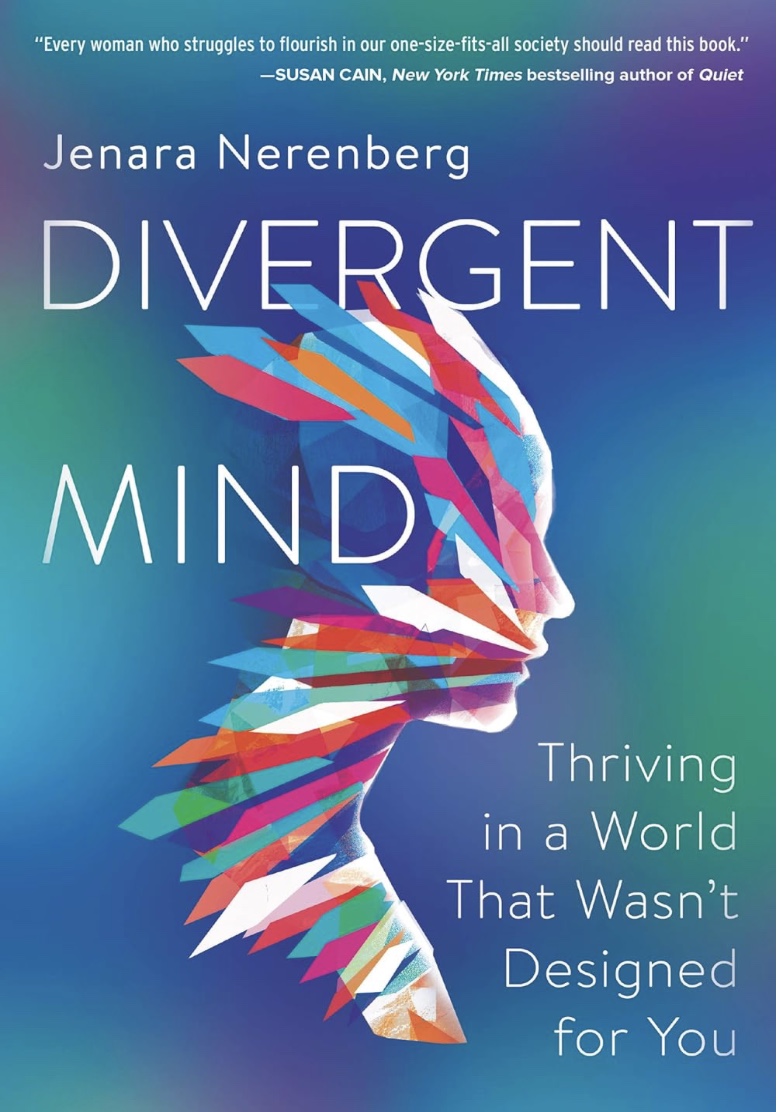
My life has changed since I read the book Divergent Mind. And since I’ve been reading Unmasking Autism, which the same Autistic client in a Ph.D. program recommended, my brain is on fire. I can feel the neurons making connections. I need less sleep. I can juggle multiple projects at the same time. I am using more of my skills, and they keep getting better. Every session has become exponentially more effective. I am in love with my life, honored and excited to fulfill God’s plan for me. Which is to free people from the prison of having to mask in a neurotypical world.
And, eventually, to learn how to fly. Like Elphaba and Neo–my two favorite neurodivergent characters.
And I am still regulated, (i.e., practicing self-care, self-soothing).
I thanked my client in session yesterday. I told her that all this change has been made possible because of her. Because she was the one teaching me about what Autism looks like in adult women, I felt I had to do my due diligence and take a deep dive into neurodivergence myself. Since I’m the one who is supposed to be helping her. But every good therapist knows that clients sometimes teach you as much, if not more, than you teach them.
I told her she changed my life for the better and clarified my purpose. So spreading this message of neurodiversity must be part of her purpose, too, since she is very effective at it.
She was pretty happy to hear this.
My client Dee, who is co-writing the book Normal in Training, has also been changed for the better by the realization that she is neurodivergent. She is also writing a blog about how this realization has helped her thrive. She’s 76 years old. As we were talking about the book a few days ago, we both mentioned that we felt smarter, if that’s possible. And it is. I’ll explain why at the end of this post.
While I was reading Unmasking Autism, the author, Devon Brice, was talking about how some of the most serious psychiatric disorders like Bipolar Disorder and Borderline Personality Disorder (BPD) are often misdiagnosed because those people are neurodivergent, and the symptoms overlap. Even though he is not a clinical psychologist, he is an Autistic social psychologist and therefore knows how to take a deep dive into any topic. And everything he said about the differences between these disorders and Autism is true.
I was one of those people who was misdianosed. Because the first psychiatrist I ever saw, who I have frequently wrote about because he was so lacking in empathy, diagnosed me with bipolar II even though I was in a depressive episode when he met me and he had never actually seen me in a hypomanic episode. (And never did see me in one.) Just because my dad and one of my brothers are Bipolar I. (Now it’s actually 2 brothers, but I didn’t realize that when I was 40.)
Luckily, with the help of my therapist encouraging me to advocate for myself with my current psychiatrist, who kept putting me on antipsychotics that were turning me into a zombie, in our next appointment my psychiatrist asked me if I thought I was bipolar. Although I told her repeatedly that I didn’t think I was in the past, I simply said no. And she finally agreed and stopped the antipsychotics and put me on a different antidepressant. And I started getting better right away. After a year and a half of intense suffering.
And I still haven’t had a hypomanic episode. Even though she’s seen me in my current state. Which, admittedly, looks pretty similar to hypomania if you don’t know all of the ways people can be neurodivergent.
And since she was brave enough to reconsider my diagnosis, as soon as I read the part in Unmasking Autism about Bipolar Disorder and BPD being misdiagnosed, I left her a message in the portal saying I think she should read these 2 books so that she can make a differential diagnosis between these conditions and Autism.
To be honest, I didn’t expect much because psychiatrists are at the top of the mental health hierarchy. So why would she take advice from a lowly clinical psychologist? Even if I do know my stuff. And her stuff, too, actually.
But she did listen to me. She ordered the books right away. I know because she left me a message saying she’d look into it. And then later left me another message asking me if she had the authors correct.
So now I think even more highly of her for being humble enough to know she doesn’t know but is willing to learn.
In addition to being able to know what your strengths and weaknesses are once you realize you’re neurodivergent, there is another reason why change is possible at any age, regardless of how many times you have failed, or how many diagnoses you have. It’s called neuroplasticity.
Neuroplasticity means that the brain is capable of being rewired. So even if you are neurodivergent, which means you were born with your brain wired differently, or your brain has changed due to head trauma or aging, it is still possible to rewire your brain so that you can function in a neurotypical world.
It takes a lot of work, time, and commitment, but most of the steps are accessible to you. They are:
- Self-care
- adequate sleep
- healthy diet
- movement
- connection
- pleasurable activities
- a spiritual practice that focuses on connection with yourself, others, and something larger than yourself— like nature, the universe, or God (not necessarily religion, in which messages can be twisted by humans for evil purposes)
- Self-soothing
- something that engages all 5 senses
- sight: e.g., something pretty
- smell: e.g., aromatherapy
- sound: e.g., a playlist
- touch: e.g., a hug
- taste: e.g., a treat
- mantras: e.g., I can do hard things. I want to practice gratitude (vs. I should be grateful).
- gadgets: e.g., fidget spinners, stuffed animals, weighted blankets, heating pads, squishmallows
- something that engages all 5 senses
- Mindfulness
- Self-compassion
- Therapy (but make sure you feel a connection with them while choosing one)
- Medication (especially if you’re constantly in fight/flight/freeze/fake (mask), have low energy, sleep all the time, stop eating, feel apathetic, and/or have meltdowns or uncontrollable anger)
- Creativity (because we forget how to play, like children)
- Meaning and purpose (so we know that we have the power to make things happen)
- Surrounding yourself with people who exemplify the kind of person you want to be (perhaps starting with your therapist)
This is possible at any time, at any age, and at every reset. You just have to commit to it. Do these things, and you will first feel mentally stable. And then you will thrive. I promise.



 Normal in Training