Tag Archives: neurodivergence

Don’t Give Up Hope. Change is Always Possible!

Photo by Yelena from Pexels on Pexels.com

My life has changed since I read the book Divergent Mind. And since I’ve been reading Unmasking Autism, which the same Autistic client in a Ph.D. program recommended, my brain is on fire. I can feel the neurons making connections. I need less sleep. I can juggle multiple projects at the same time. I am using more of my skills, and they keep getting better. Every session has become exponentially more effective. I am in love with my life, honored and excited to fulfill God’s plan for me. Which is to free people from the prison of having to mask in a neurotypical world.

And, eventually, to learn how to fly. Like Elphaba and Neo–my two favorite neurodivergent characters.

And I am still regulated, (i.e., practicing self-care, self-soothing).

I thanked my client in session yesterday. I told her that all this change has been made possible because of her. Because she was the one teaching me about what Autism looks like in adult women, I felt I had to do my due diligence and take a deep dive into neurodivergence myself. Since I’m the one who is supposed to be helping her. But every good therapist knows that clients sometimes teach you as much, if not more, than you teach them.

I told her she changed my life for the better and clarified my purpose. So spreading this message of neurodiversity must be part of her purpose, too, since she is very effective at it.

She was pretty happy to hear this.

My client Dee, who is co-writing the book Normal in Training, has also been changed for the better by the realization that she is neurodivergent. She is also writing a blog about how this realization has helped her thrive. She’s 76 years old. As we were talking about the book a few days ago, we both mentioned that we felt smarter, if that’s possible. And it is. I’ll explain why at the end of this post.

While I was reading Unmasking Autism, the author, Devon Brice, was talking about how some of the most serious psychiatric disorders like Bipolar Disorder and Borderline Personality Disorder (BPD) are often misdiagnosed because those people are neurodivergent, and the symptoms overlap. Even though he is not a clinical psychologist, he is an Autistic social psychologist and therefore knows how to take a deep dive into any topic. And everything he said about the differences between these disorders and Autism is true.

I was one of those people who was misdianosed. Because the first psychiatrist I ever saw, who I have frequently wrote about because he was so lacking in empathy, diagnosed me with bipolar II even though I was in a depressive episode when he met me and he had never actually seen me in a hypomanic episode. (And never did see me in one.) Just because my dad and one of my brothers are Bipolar I. (Now it’s actually 2 brothers, but I didn’t realize that when I was 40.)

Luckily, with the help of my therapist encouraging me to advocate for myself with my current psychiatrist, who kept putting me on antipsychotics that were turning me into a zombie, in our next appointment my psychiatrist asked me if I thought I was bipolar. Although I told her repeatedly that I didn’t think I was in the past, I simply said no. And she finally agreed and stopped the antipsychotics and put me on a different antidepressant. And I started getting better right away. After a year and a half of intense suffering.

And I still haven’t had a hypomanic episode. Even though she’s seen me in my current state. Which, admittedly, looks pretty similar to hypomania if you don’t know all of the ways people can be neurodivergent.

And since she was brave enough to reconsider my diagnosis, as soon as I read the part in Unmasking Autism about Bipolar Disorder and BPD being misdiagnosed, I left her a message in the portal saying I think she should read these 2 books so that she can make a differential diagnosis between these conditions and Autism.

To be honest, I didn’t expect much because psychiatrists are at the top of the mental health hierarchy. So why would she take advice from a lowly clinical psychologist? Even if I do know my stuff. And her stuff, too, actually.

But she did listen to me. She ordered the books right away. I know because she left me a message saying she’d look into it. And then later left me another message asking me if she had the authors correct.

So now I think even more highly of her for being humble enough to know she doesn’t know but is willing to learn.

In addition to being able to know what your strengths and weaknesses are once you realize you’re neurodivergent, there is another reason why change is possible at any age, regardless of how many times you have failed, or how many diagnoses you have. It’s called neuroplasticity.

Neuroplasticity means that the brain is capable of being rewired. So even if you are neurodivergent, which means you were born with your brain wired differently, or your brain has changed due to head trauma or aging, it is still possible to rewire your brain so that you can function in a neurotypical world.

It takes a lot of work, time, and commitment, but most of the steps are accessible to you. They are:

  1. Self-care
    • adequate sleep
    • healthy diet
    • movement
    • connection
    • pleasurable activities
    • a spiritual practice that focuses on connection with yourself, others, and something larger than yourself— like nature, the universe, or God (not necessarily religion, in which messages can be twisted by humans for evil purposes)
  2. Self-soothing
    • something that engages all 5 senses
      • sight: e.g., something pretty
      • smell: e.g., aromatherapy
      • sound: e.g., a playlist
      • touch: e.g., a hug
      • taste: e.g., a treat
    • mantras: e.g., I can do hard things. I want to practice gratitude (vs. I should be grateful).
    • gadgets: e.g., fidget spinners, stuffed animals, weighted blankets, heating pads, squishmallows
  3. Mindfulness
  4. Self-compassion
  5. Therapy (but make sure you feel a connection with them while choosing one)
  6. Medication (especially if you’re constantly in fight/flight/freeze/fake (mask), have low energy, sleep all the time, stop eating, feel apathetic, and/or have meltdowns or uncontrollable anger)
  7. Creativity (because we forget how to play, like children)
  8. Meaning and purpose (so we know that we have the power to make things happen)
  9. Surrounding yourself with people who exemplify the kind of person you want to be (perhaps starting with your therapist)

This is possible at any time, at any age, and at every reset. You just have to commit to it. Do these things, and you will first feel mentally stable. And then you will thrive. I promise.


Why Wicked Has Become My Favorite Movie

Photo by Alexander Grey on Pexels.com

I have a big announcement to make. Since 1999, my favorite movie has been The Matrix. In fact, I have referenced the scene in which Neo can read the code at the end of the movie 7 times in my blog. Well, 8 times if you include this post.

In addition, its themes of how we are destroying the earth, the rise of AI, the power of our thoughts in shaping our reality, and the importance of letting go of our fears so that we can fly are additional reasons for why I love this movie.

Moreover, from a cinematic perspective, the choreography of the fight scenes is still amazing. The chemistry between Neo and Trinity is palpable. This was the first movie to use the 365 degree camera, which made the special effects revolutionary and still entertaining to this day, despite all of the advances in CGI.

The movie Wicked shares many similarities to The Matrix.

  1. Both movies portray neurospicy people who sense that there is something wrong with the world that they live in and feel uncomfortable in it.
  2. They are both singled out for greatness and come from another world to save this new world–a common theme in many of my favorite movies like Kung Fu Panda, The Lego Movie, Avatar, and Star Wars.
  3. They both have amazing cinematography.
  4. They both have amazing choreography.
  5. In both sequels, the protagonists fly.
  6. In the end, both characters die. Sort of. (See Matrix Resurrections below.)
  7. There is a lot of chemistry among the cast. The cast of Wicked has even been teased in the media of being codependent.

The reasons that I now have to bump Wicked up to #1 are fourfold:

  1. There were more choreographed scenes in Wicked.
  2. In the genre of musicals turned into movies,
    • the singing in Wicked is as good as the musical. Unlike Les Miserables, which also had A list actors, but they did not match the vocal powers of the singers in any musical version and was therefore a disappointment to most Les Miz fans.
    • The choreography was better than in the musical Wicked, because on Broadway you have to be able to sing, dance, and act, while a movie can pick people who are just great dancers.
    • The chorus was larger, since movies can have a bigger cast.
    • The orchestra was much larger than what an orchestra pit under the stage of a theater can hold.
    • (I realize these subcategories are cheating in terms of saying the reasons are fourfold, but they all refer to musicals turned movies and therefore need to be grouped together.)
  3. The sequel Wicked: For Good is even better than the original, and Wicked, Part 1 was awesome! The Matrix, on the other hand, far outshined the other movies in The Matrix Trilogy. Although The Matrix Resurrections is my second favorite movie because it is the most similar to the original movie and also adds the theme of alternative universes, in which there are 3:
    • The universe in which Neo has created a popular video game called The Matrix and Trinity is a soccer mom.
    • The universe of the original Matrix
    • The universe in which the new Agent is controlling Earth, which is a different Matrix.
  4. While those who have freed themselves from the Matrix are clearly neurodivergent, the movie Wicked has become a tribute to neurodivergence.
    • It has a diverse cast.
    • It highlights the ways in which people who are different are ridiculed, bullied, traumatized, and terrorized.
    • Neurodivergent people are turned into villains while the true evil people mask as heroes who are doing good for their communities.
    • Neurodivergent people have compassion for other people, animals, plants, and the earth instead of being motivated by self-interest.
    • Neurodivergent people feel compelled to do what’s right, even if it means risking their lives.
    • Neurodivergent people tell the truth, sometimes bluntly, even if their honesty will be used against them.
    • (Again, sort of cheating, but for the same reason.)

The movie Wicked is a proclamation that neurodivergence (differently wired brains) is not only good, but it actually makes the world a better place. We cannot evolve without neurospicy people who push us to be better versions of ourselves and of what humanity can be, if we let them. So thanks to everyone involved in the making of Wicked. And for reminding us that the neurospicy people of the world truly add flavor to what would otherwise be a bland existence.

This is How I Roll

One of the differences between tennis and pickleball is that in tennis you get to be all matchy-matchy. Some women in pickleball wear cute outfits, but they don’t feel the need to match from head to toe and buy multiple pairs of shoes. In tennis, even the professional men on tour like Alcaraz and Sinner match, right down to their socks and shoes.

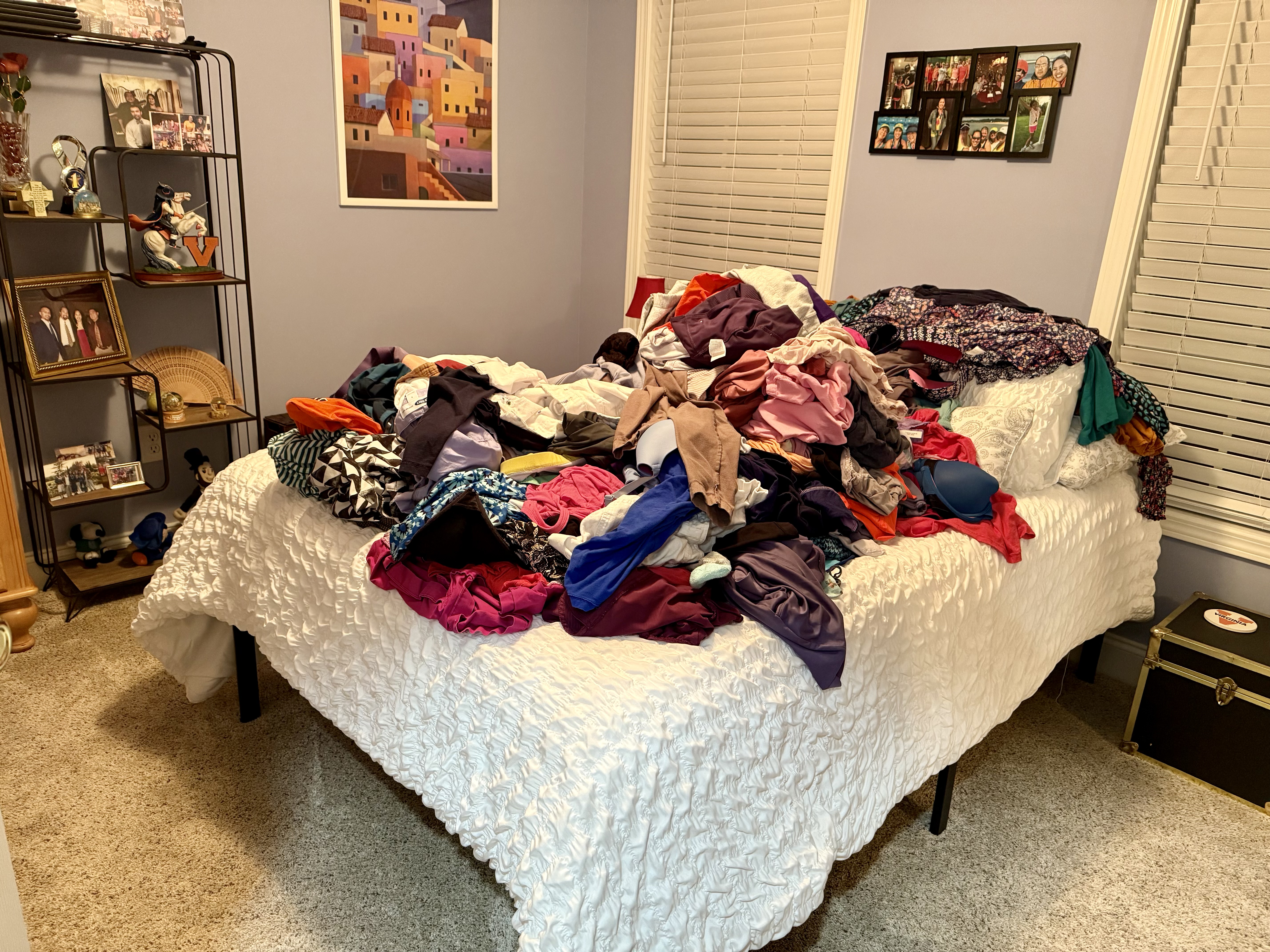
One of my neurospicy characteristics is my OCD, so I always made everything match down to my underwear, even before I started playing tennis competitively in my early 30’s. I am a little less stringent about matching now, since I work from home and all people can see is the very top of my blouse. And I hate folding clothes so they’re just piled in a huge jumble on my guest bed. And I don’t want to spend time sorting through the pile to make sure I can find a pair of underwear that’s going to match my bra and go with my outfit.

But now that I’ve started playing tennis again, my desire to match everything has come back with a vengeance. Last Monday, I decided to wear everything in 2 shades of purple for pickleball–dark purple (my favorite) and a lighter, lavender color. I debated on whether I wanted to go so far as to get my matching purple jacket and my matching purple gloves. Would people think this is too much? A bit over the top?

Ever since I have embraced my neurodivergence, I have changed. Before, I was training to be normal, like Neo being trained by Morpheus in The Matrix, since he was reborn into the real world. I didn’t trust myself. Do I really have power? Can I really be myself? Am I really all that? Neo asks himself this question over and over again, seeking reassurance from Trinity, the Oracle, and Morpheus. The Oracle tells Neo that he’s not ready. That he’s waiting for something. Morpheus says that he needs to believe. He can only show him the path, but Neo has to walk it.

In the end, there are 2 things that help Neo realize that he’s the One. First, he believes that he can save Morpheus and risks his life doing so. Second, Trinity tells him that the Oracle told her that she would fall in love with the One, and she loves Neo, so he can’t be dead. He needs to get back up and fight. So he does. And then, suddenly, he can read the code, and he destroys the Agents effortlessly.

If you haven’t watched the Matrix, I’m sorry I spoiled it for you. But in my defense, it came out in 1999. And if you haven’t watched it yet, what are you waiting for?! This is one of the greatest movies of all time! They just made two references to it in the musical The Book of Mormons, which my family and I watched yesterday. That’s how relevant it is!

But I digress.

Now that I understand what neurodivergence means, which is that some people’s brains are wired differently, I know what my superpower is. I can feel people’s neurodivergence. I have to think about their particular skills, recalling pervious sessions with them, including details they mentioned but we never focused on. The recognition of their neurodivergence, however, is instantaneous.

When I explain to people what their superpowers are, they begin to thrive almost immediately, knowing deep down that what I’ve seen is true. Just like Morpheus knew that Neo was the One.

By the time we have our next session, they have already come up with new ways to self-soothe when they become distressed. This is the biggest problem that neurospicy people have–the neurotypical world traumatizes them on a daily, sometimes hourly, basis. But once you know how to self-regulate, you no longer have to be depressed, anxious, or have a meltdown for extended periods of time. You can do whatever you need to do to self-regulate.

And then you can thrive. Because they know themselves better than I do, once they’ve been shown how to read the code, they fly. Just like Neo. And they, too, become the Ones.

What does all this have to do with me dressing up in 2 shades of purple from head to toe, including my underwear, socks, and outerwear, you ask? Well, I no longer care what other people think of me. I’m going to do whatever makes me happy. And if you think this picture of me is too matchy-matchy, too bad. Because from now on, this is how I roll.

And this is what my bed of clothes looks like. And I still have one more load to do. Which I just put in the washing machine.

Guess What? I’m Neurodivergent!

I see a lot of women diagnosed with ADHD in adulthood because they had managed to compensate and succeed with considerable effort, despite having the disorder. It took a while for adults with ADHD to be noticed at all, since the stereotype of ADHD is the boy who can’t sit still in his seat and runs to the window when an ambulance passes by. But it’s even more difficult to diagnose in women because they usually don’t have the hyperactive symptoms that lead to recklessness, impulsivity, and sensation-seeking.

Now in the literature the same phenomenon is happening with people on the autism spectrum. In fact, Autism, ADHD, and Bipolar Disorder are all a part of a larger category called neurodivergence. If that word calls to mind the movie or novel Divergent, it’s actually kind of fitting. People who were different in some way were isolated and seen as a potential danger or threat to society. Not so different from what many people think now.

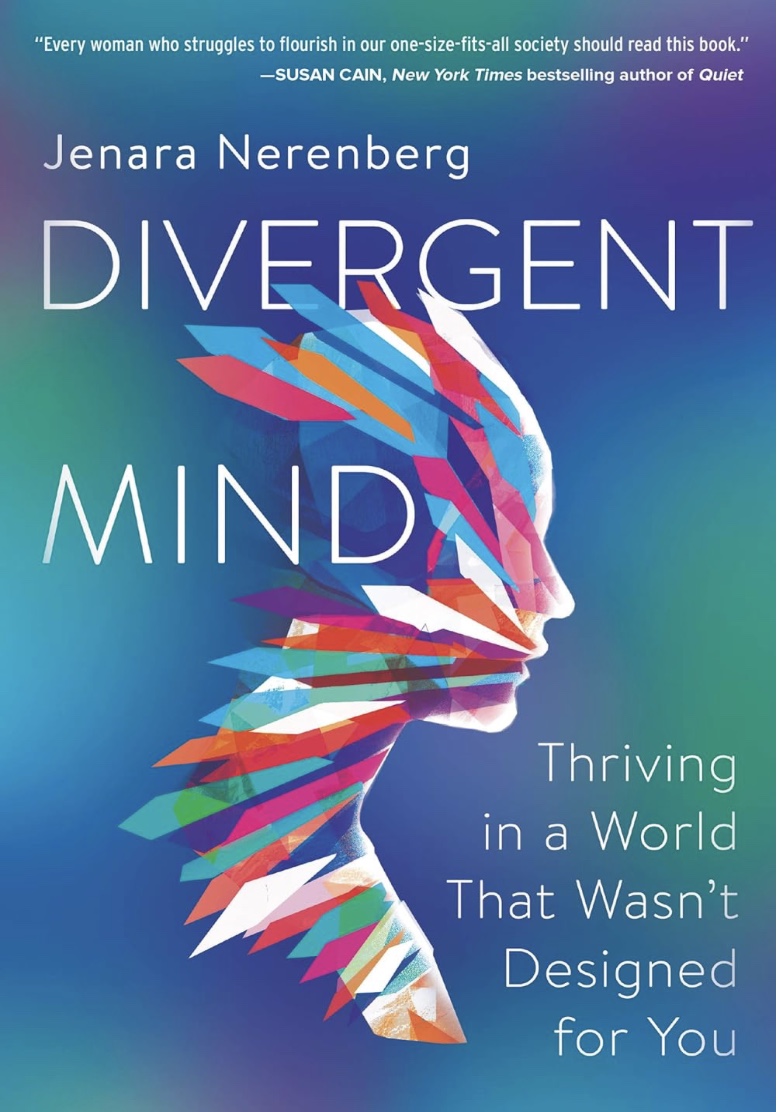
What’s strange, though, is that many of these women who show traits of being on the spectrum want to be formally diagnosed with Autism. I would explain to them that it wouldn’t really benefit them now because they are adults, and they no longer get accommodations, IEP’s, early intervention programs, and other resources that neurodivergent children can take advantage of. But after reading Divergent Mind, now I do. They wanted to know that their experiences are a known entity with a label and that other people share their sensitivities.

Because I have so many of these clients, I decided to read the book Divergent Mind. And it literally blew my mind. Like, I could feel the neurons in my brain firing, making connections between bits of information I have gathered throughout my life. It was like the equivalent of runner’s high, but a kind of intellectual high that you get when you have a Eureka moment. Or like Neo in the Matrix when he could finally read the code.

Nerenberg describes neurodivergence as simply cognitive differences rather than mental disorders. And there are lots of characteristics of neurodivergence that aren’t considered abnormal but make it difficult for people to navigate the world, nonetheless. Often they are diagnosed with depression or anxiety, because living in a neurotypical world sucks the life out of them. Or they are in a constant hypervigilant state.

The geniuses I went to high school with (you know who you are) are also neurodivergent. But since it’s not a bad thing to be brilliant, no one includes them in this category.

I kind of figured my whole family was neurodivergent, because half of them have bipolar disorder and the other half have anxiety. Some of them have both. I have known for some time that I am a highly sensitive person (HSP) because I read The Highly Sensitive Person decades ago.

In particular, I have mirror synesthesia. I can’t watch horror films because when someone’s arm gets cut off with a chainsaw, it hurts my arm. And I don’t like reading or watching anything that depicts the Holocaust in great detail, because their pain overwhelms me.

I also have a sensory processing disorder (SPD). My brother once told me I had supersonic smell. I don’t like the tickers on ESPN because I get distracted by them and stop watching the game. I don’t like hugs. I’m constantly adjusting the volume on the TV because music makes it louder.

I have insensitivities in proprioception, which means I have difficulty judging my body in space. Consequently, I have bruises all over my arms and legs and have no idea where they came from. Or perhaps because of my sensitivities I don’t have enough bandwidth to calculate my dimensions in space.

I have the same problem with interoception, which is why hunger and depression feel the same to me. And anxiety and having to pee feel the same. I tighten all my muscles when I’m concentrating even if those muscles aren’t needed when I’m playing a song with one finger on Duolingo.

None of these things are necessarily disorders. In fact, Nerenberg refers to them as potential superpowers—IF someone can learn what their sensitives are and learn how to self-sooth when they feel overwhelmed.

Medication and therapy can be helpful, but another possible resource that I didn’t know about is occupational therapy (OT). An occupational therapist can help you identify what your sensitivities are and develop specific coping strategies so that you don’t become overwhelmed and shut down, melt down, or stay in fight/flight/freeze.

After I found this out, I told all of my clients about this resource. Even clients who have stopped seeing me, perhaps because I couldn’t help them with their sensitivities. And I have to say, because I now recognize what my clients’ sensitivities are, or at least recognize that they become dysregulated because of some sensitivity, I feel like the knowledge itself has also become a superpower.

As a result, the mindfulness book that I told you I was going to write is going to specifically address people on the spectrum. Because mindfulness is about being more aware of what’s going on inside you and around you. While everyone can benefit from mindfulness, perhaps people who are on the spectrum who don’t want medication and/or therapy can read this book and learn how to develop tools on their own that can help them thrive.

So stay tuned! Reserve your copy today!

Just kidding. It’s going to take a while.

But definitely check out Divergent Mind!