Tag Archives: self-improvement

Don’t Give Up Hope. Change is Always Possible!

Photo by Yelena from Pexels on Pexels.com

My life has changed since I read the book Divergent Mind. And since I’ve been reading Unmasking Autism, which the same Autistic client in a Ph.D. program recommended, my brain is on fire. I can feel the neurons making connections. I need less sleep. I can juggle multiple projects at the same time. I am using more of my skills, and they keep getting better. Every session has become exponentially more effective. I am in love with my life, honored and excited to fulfill God’s plan for me. Which is to free people from the prison of having to mask in a neurotypical world.

And, eventually, to learn how to fly. Like Elphaba and Neo–my two favorite neurodivergent characters.

And I am still regulated, (i.e., practicing self-care, self-soothing).

I thanked my client in session yesterday. I told her that all this change has been made possible because of her. Because she was the one teaching me about what Autism looks like in adult women, I felt I had to do my due diligence and take a deep dive into neurodivergence myself. Since I’m the one who is supposed to be helping her. But every good therapist knows that clients sometimes teach you as much, if not more, than you teach them.

I told her she changed my life for the better and clarified my purpose. So spreading this message of neurodiversity must be part of her purpose, too, since she is very effective at it.

She was pretty happy to hear this.

My client Dee, who is co-writing the book Normal in Training, has also been changed for the better by the realization that she is neurodivergent. She is also writing a blog about how this realization has helped her thrive. She’s 76 years old. As we were talking about the book a few days ago, we both mentioned that we felt smarter, if that’s possible. And it is. I’ll explain why at the end of this post.

While I was reading Unmasking Autism, the author, Devon Brice, was talking about how some of the most serious psychiatric disorders like Bipolar Disorder and Borderline Personality Disorder (BPD) are often misdiagnosed because those people are neurodivergent, and the symptoms overlap. Even though he is not a clinical psychologist, he is an Autistic social psychologist and therefore knows how to take a deep dive into any topic. And everything he said about the differences between these disorders and Autism is true.

I was one of those people who was misdianosed. Because the first psychiatrist I ever saw, who I have frequently wrote about because he was so lacking in empathy, diagnosed me with bipolar II even though I was in a depressive episode when he met me and he had never actually seen me in a hypomanic episode. (And never did see me in one.) Just because my dad and one of my brothers are Bipolar I. (Now it’s actually 2 brothers, but I didn’t realize that when I was 40.)

Luckily, with the help of my therapist encouraging me to advocate for myself with my current psychiatrist, who kept putting me on antipsychotics that were turning me into a zombie, in our next appointment my psychiatrist asked me if I thought I was bipolar. Although I told her repeatedly that I didn’t think I was in the past, I simply said no. And she finally agreed and stopped the antipsychotics and put me on a different antidepressant. And I started getting better right away. After a year and a half of intense suffering.

And I still haven’t had a hypomanic episode. Even though she’s seen me in my current state. Which, admittedly, looks pretty similar to hypomania if you don’t know all of the ways people can be neurodivergent.

And since she was brave enough to reconsider my diagnosis, as soon as I read the part in Unmasking Autism about Bipolar Disorder and BPD being misdiagnosed, I left her a message in the portal saying I think she should read these 2 books so that she can make a differential diagnosis between these conditions and Autism.

To be honest, I didn’t expect much because psychiatrists are at the top of the mental health hierarchy. So why would she take advice from a lowly clinical psychologist? Even if I do know my stuff. And her stuff, too, actually.

But she did listen to me. She ordered the books right away. I know because she left me a message saying she’d look into it. And then later left me another message asking me if she had the authors correct.

So now I think even more highly of her for being humble enough to know she doesn’t know but is willing to learn.

In addition to being able to know what your strengths and weaknesses are once you realize you’re neurodivergent, there is another reason why change is possible at any age, regardless of how many times you have failed, or how many diagnoses you have. It’s called neuroplasticity.

Neuroplasticity means that the brain is capable of being rewired. So even if you are neurodivergent, which means you were born with your brain wired differently, or your brain has changed due to head trauma or aging, it is still possible to rewire your brain so that you can function in a neurotypical world.

It takes a lot of work, time, and commitment, but most of the steps are accessible to you. They are:

  1. Self-care
    • adequate sleep
    • healthy diet
    • movement
    • connection
    • pleasurable activities
    • a spiritual practice that focuses on connection with yourself, others, and something larger than yourself— like nature, the universe, or God (not necessarily religion, in which messages can be twisted by humans for evil purposes)
  2. Self-soothing
    • something that engages all 5 senses
      • sight: e.g., something pretty
      • smell: e.g., aromatherapy
      • sound: e.g., a playlist
      • touch: e.g., a hug
      • taste: e.g., a treat
    • mantras: e.g., I can do hard things. I want to practice gratitude (vs. I should be grateful).
    • gadgets: e.g., fidget spinners, stuffed animals, weighted blankets, heating pads, squishmallows
  3. Mindfulness
  4. Self-compassion
  5. Therapy (but make sure you feel a connection with them while choosing one)
  6. Medication (especially if you’re constantly in fight/flight/freeze/fake (mask), have low energy, sleep all the time, stop eating, feel apathetic, and/or have meltdowns or uncontrollable anger)
  7. Creativity (because we forget how to play, like children)
  8. Meaning and purpose (so we know that we have the power to make things happen)
  9. Surrounding yourself with people who exemplify the kind of person you want to be (perhaps starting with your therapist)

This is possible at any time, at any age, and at every reset. You just have to commit to it. Do these things, and you will first feel mentally stable. And then you will thrive. I promise.

Be Brave

Processed with VSCOcam with hb2 preset

I once saw a news story where this guy jumped into the river to save a drowning person. When asked how he was able to be so brave, he said he didn’t really think about it. He just did it. While this is an amazing thing to do, I wouldn’t necessarily call it an act of courage, because he wasn’t afraid. There isn’t really anything courageous in doing something that doesn’t scare you. What’s the risk in that?

I asked readers to share the bravest thing they’ve ever done. A lot of them had to do with taking risks like starting a business, joining the army, going back to school. Most people play it safe–stay in the career or relationship or neighborhood that isn’t fulfilling because of the fear that whatever they choose could be worse. Not many things are scarier than the unknown.

Some people said the bravest thing they’ve ever done was to embrace a painful life experience. Going through childbirth alone, without drugs. Facing a diagnosis of a brain tumor. Watching a loved one die. I had not expected this, but I guess it’s true that life will inevitably throw experiences our way that require us to be brave. No one gets through unscathed.

I would say the bravest thing I’ve ever done was to be single. I had been in a relationship nonstop from 15 to 45, and when I knew that one relationship was about to end, I would start another one so that there was no period of time when I was alone. I was ashamed of this, but I was more afraid of being by myself. And I stayed in a lot of unsatisfying relationships because of this fear. So for me, being single for 4 years was pretty courageous.

In my search to discover how to be a good person, the answer I found was unexpected. To be a good person, to be loving, we must be self-aware. We have to look inward and be with all of those things about ourselves that we try so hard not to face. Our flaws. Our mistakes. Our secrets. We have to accept them, forgive ourselves for them, and understand that this, too, is what it means to be human.

Those who do so can be loving because they know that we are all the same. We all have flaws. We’ve all made mistakes. We all harbor secrets. So who am I to say that I am better than anyone else? We’re all traveling the same road, doing the best that we can. We are all deserving of compassion.

I would say that this is the most difficult kind of bravery of all–to face what is inside us. This is the reason that people come to therapy–and why everyone can benefit from therapy. We aren’t taught how to face our demons. We are told to suck it up, push through, instead. And in the midst of a crisis, that is an important skill to have. But in the aftermath, we have to take time to make sense of what we’ve experienced. That’s when we need to spend some time looking within.

In teaching clients how to practice mindfulness, I tell them that they are learning how to feel their feelings but not respond reflexively to them. Just because we’re anxious doesn’t mean we have to avoid flying. We can still book the flight. We can be afraid but do it, anyway. We can be brave.

What will your next act of courage be?

Will Power

Like many of my middle-aged friends, I am trying to lose weight. I am not as obsessed about it as I was when I was younger and thinner because I am more accepting of my body now. But that also means I am less motivated. It’s even hard to will myself to do 10 minutes of stretching every day. 

In order to improve my motivation, I decided to look at some info on a workshop that I used to give on self-leadership. Good stuff. I ought to try it some time.

Here are some reasons why will power fails us:

1. We are more motivated to take action when things are going poorly than when things are going well. That’s why negative events stand out more than positive events: negative events require us to make some change. If things are going well, we can just maintain status quo. That’s also why anxious people like myself are often highly motivated–because almost everything feels like a crisis.

2. As we make progress towards our goal, we lose motivation because it takes more effort. This is related to the Pareto principle, or the 80-20 rule: 80% of our results comes from the first 20% of our effort. After that, it takes 80% of our effort to achieve the last 20% of the results.

For example, it is often easy for people to lose weight initially with minimal changes to their diet and exercise routine. But it takes a lot more effort to lose the last 10 pounds. So much so that people on diets are often perpetually stuck in the “I just need to lose 10 more pounds” stage.

3. The amount of will power we have is limited. Reseach by Roy Baumeister indicates that trying to exert self-control in one area of our lives leaves us less energy to exert self-control in other areas. So if you’re trying to change your eating habits, you will have less energy available to start exercising and vice versa. That’s why it’s better to focus on changing one thing at a time.

Despite these obstacles, it is possible to reach our goals. People do it all the time. So why not me? And why not you?

Here are some of the things that characterize people with willpower:

1. They try to understand why they’re not motivated. I was not motivated to lose weight for awhile because I just wouldn’t look at pictures of myself so that I could exist in a state of denial. That helped me avoid psychic pain, but now I think I need to be in a little discomfort. I don’t want to beat myself up over it, but I need to be honest with myself about how much weight I’ve gained.

2. They use their values to guide their behavior. Tennis is the greatest motivator for me. I want to play tennis for as long as I live, and doing so will require cross-training. So maybe I will try to remember this when I am feeling unmotivated.

3. They give themselves permission to fulfill their wants without feeling guilty. Because I work with students with eating disorders, I try to be careful about the message that I give about body image and I worry about how they will perceive my weight loss. But the reality is, my reasons for wanting to lose weight as a middle-aged woman are not the same as the reasons that students with eating disorders have. I can allow myself to honor my own needs. 

I know it’s still going to be hard, but perhaps writing this post will help me be more motivated. It certainly can’t hurt.

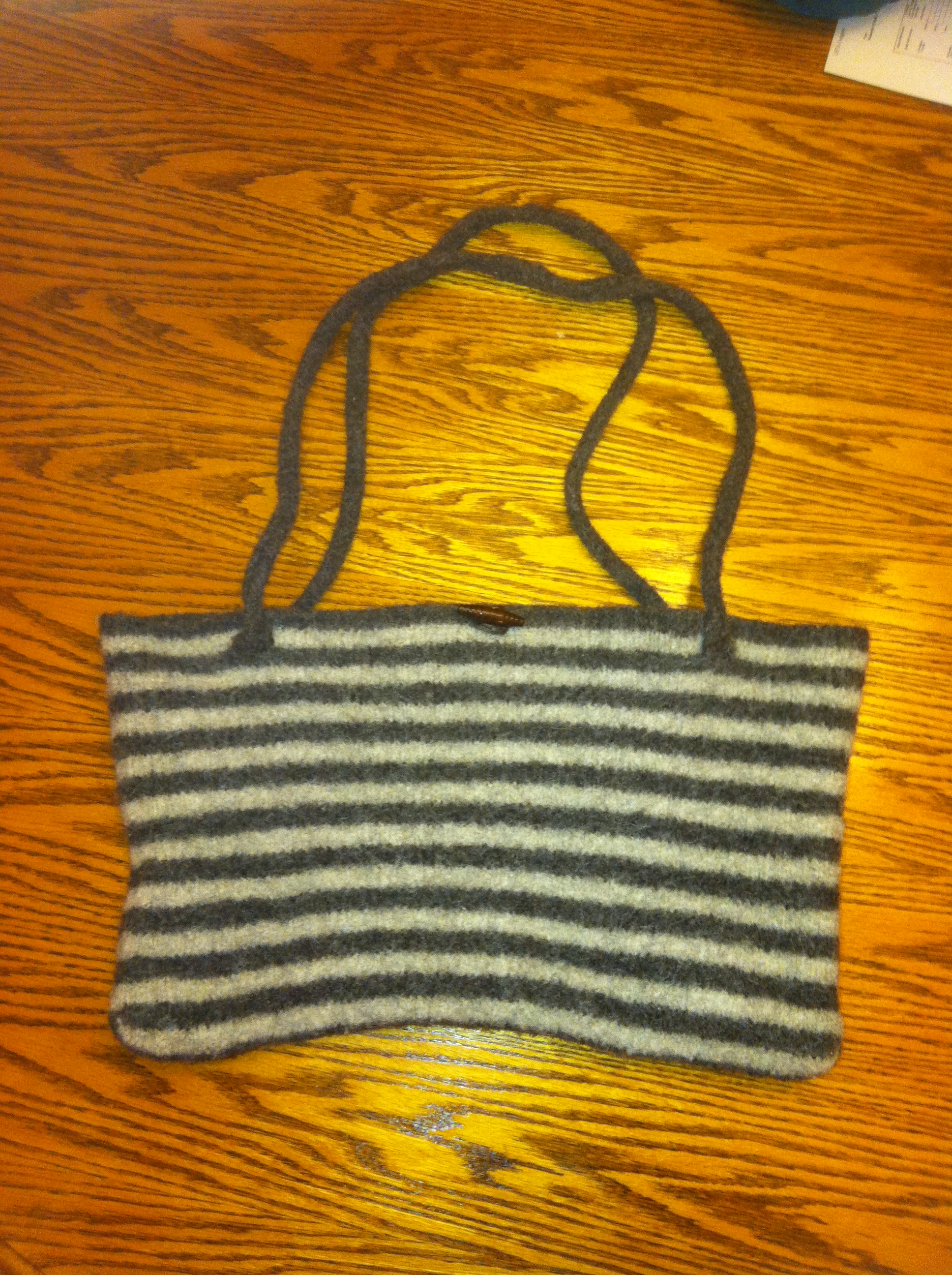
This tote has nothing to do with weight loss but it required a lot of will power because it was boring. It turned out nicely, though, so maybe I’ll knit another one.

IMG_0865

The Paradox of Productivity

Have you ever noticed how you’re actually more productive when you have less time?

I had grand plans for all of the stuff I was going to accomplish over the summer. I was going to crank out blog posts 3-4 times a week. Learn how to write a book proposal and a query letter. Find an agent.

I did skim through a book on writing non-fiction. I actually wrote fewer blog posts than I do when I’m at work because I didn’t have very many deep and meaningful thoughts over the summer. I pretty much only thought about my sleep cycle, tennis, and what I’m going to eat. You can only write so many posts about those topics.

I was going to get my jewelry business going again. I was obsessed with making jewelry several years ago and sold a lot of what I made. So I bought all these beads back in January and planned to make some new items over the summer. Take some pictures of them, even. Sell them on Etsy. The only thing I made were some earrings (the purple pair on the left) for my tennis team to match our uniform, but I didn’t make any money. I just wanted my team to look cute!

I was going to knit more. I sell some of my jewelry and knitting at my friend’s store, The Stitchin’ Post, and my knitted items have sold the best, but it takes forever to make the things that I like. I was also going to knit this cute top for myself:

This is the picture from the pattern. I haven’t finished mine yet. I’ve made it to the armholes, but by the time I finish it, I might only have a few weeks left of warm weather, because the top part looks pretty complicated.

I was going to get in better shape. Play more tennis. Add more low-impact cardio like riding my bike. Do some strength training. Throw in some yoga.

I tried to ride my bike, but I couldn’t figure how to put the bike rack on. My ex was kind enough to help me do it, but then I couldn’t load the bike onto the bike rack by myself. And it was going to take 2 weeks to take it to the shop to get a tune up. I bought something to lubricate the chain that was supposed to be easy to apply, but it still seemed too hard and messy to do by myself. In fact, the whole bike preparation experience made me feel so ill-prepared to live my life alone that I stopped trying because it was depressing me.

I did play tennis more, and I stretched almost every night, but that’s about it.

I was going to read more books. I keep track of what books I read throughout the year, and I’m way behind from where I would ordinarily be. So I started reading more when I realized I only had a few weeks left before I had to go back to work. The only problem is, since I read on my iPad, the longer I read, the harder it was to fall asleep because of the back lighting. So then I had to read less so that I could fall asleep before 4 a.m.

All in all, I fell short on almost every goal. Perhaps I was being a tad unrealistic about what I could accomplish in 2 months.

Plus, when I have less time, I get more done because I have to make the most of every minute. Squeeze in a trip to the grocery store right after work, even if I’m tired. Write a blog post if I have a no show. Read a paragraph if my client is running late. When I have all the time in the world, I tell myself that I’ll get stuff done eventually. No need to rush.

But I’m not feeling too bad about myself for falling short of my goals. It’s good for me to set goals, not because I have to meet all of them, but because it gives me something to strive for. After all, isn’t life more about the striving than the end result? At least that’s what I tell myself to feel better.

Mistakes

You know how I hate making mistakes? Well I made a big one last week, and now my inner critic is in full force. I am having a hard time forgiving myself, so I thought I’d blog about it.

Intellectually, I know that everyone makes mistakes. But my inner critic tells me that everyone else is allowed to make mistakes. I, on the other hand, am on strict probation: one mistake will lead to dire consequences–failing, getting fired, going to hell, losing everyone’s respect, etc. I don’t know what I’ve done to warrant this zero tolerance for errors, but it must have been pretty bad.

I am trying to put things in perspective. I try to remind myself that, although some people could judge me harshly, God does not have a zero tolerance policy for errors. God knows that I am not perfect and does not hold me to the standards that my inner critic does.

I gave a sincere apology for my mistake. I didn’t lie, get defensive, or evade responsibility. I acknowledged what I did wrong and that I am aware of the consequences of my error. That I am committed to making amends. While this should move my transgression into the somewhat healthier guilt category, I am still feeling quite a bit of shame about it.

My inner critic wants to make sure that I am taking this seriously. That I am not one of those people who superficially apologizes without being genuinely sorry. That is one of my pet peeves, and I don’t want to be a hypocrite by doing the same thing. So I keep reminding myself that this is a big deal–which only serves to reactivate the cycle.

I am trying to call to mind all of the sage advice on forgiveness, perfectionism, and letting go. Advice that I, myself, have given to other people. It seems to help them. Why doesn’t it help me? Why am I not improving faster? I envy people who can read an inspirational quote on social media and feel better. People who are simply able to turn off the obsessive soundtrack of shame in their head. Or who listen to a different soundtrack altogether.

So I am also trying to remind myself to honor my own timetable. That self-improvement is not a race that I have to win. In fact, I’d settle for a participation award. I tell myself that at some point in the future, perhaps even later today, I will be able to put things in perspective. And if it takes longer than that, I’m talking to my therapist on Tuesday.

Luckily, tennis is on all day today, which I am hoping will be an effective distraction until I have my moment of clarity.