Tag Archives: therapy

Self-Handicapping

Yesterday Sloane Stephens lost at the U.S. Open to Johanna Larsson, an unranked player. This is sad news for American tennis fans, because Stephens is predicted to be the next great female American player. In musing over why she has not yet lived up to her potential, the commentators observed that Stephens doesn’t play with the same intensity as the top players, perhaps because she is afraid of losing while playing her best.

I had the good fortune of attending a warm-up tournament to the U.S. Open a few weeks ago, and after looking at my photos, I, too, noticed that Stephens did not put the same effort into her shots that the top players did. For example, here is a picture of 17-time Grand Slam champion Roger Federer, hitting his famous forehand.

Notice how intensely focused he is on watching the ball and how he jumps into his shot. This is an aggressively hit forehand.

Now here is a shot of 17-time Grand Slam champion Serena Williams, hitting her equally famous serve.

Again, notice how she is in the air when she hits her serve and the intensity of her facial expression. In fact, she looked downright pissed off and scary in most of the pictures I took.

Now here is a picture of Sloane Stephens hitting a backhand.

In contrast, notice how casually she is hitting the ball. This looks more like the kind of shot you would see in a practice session, where players aren’t trying to hit that hard. So I think there is some truth to their hypothesis that she is afraid to play her best tennis.

In psychology, this phenomenon is called self-handicapping, and it is fairly common. I have worked with students who were so afraid that they would not get an A that they didn’t turn in any work and got an F in the class instead. They all believed that if they had put in the effort, they probably could have gotten an A, which helped to preserve their self-esteem. Sort of. Because they ended up on academic probation, which they were embarrassed and ashamed about.

To my knowledge, I have never sabotaged my chances of succeeding, but I can relate to the fear that my best effort might not be good enough. I have always wanted to be a therapist and thought I could be a good one–until I got to the clinical portion of my training in grad school. Then I started to worry: What if I suck at it? What if I’m no good at this thing that I’ve wanted to do all my life? What am I supposed to do then?

My worst fear came true: I did suck at it at first. I had several supervisors tell me that my anxiety was interfering with my ability to do therapy. (This was the first time I contemplated the possibility that I may have an anxiety disorder). Even though I ordinarily freak out when I’m given negative feedback, I wasn’t that upset. I knew that I could get better if I worked at it. And I think I’m a decent therapist now–although there’s always room for improvement.

The same is true for tennis. I’m not really afraid to go out there and play my best and lose, because my best performance today isn’t the best I can ever hope to play. At least I don’t think so. I always think I can get better, even as I get older. If this is a delusion, then at least it is one that serves me well. That’s why I look so intimidating in this photo:

So if you see me on the court, watch out!
In the Zone

Want to be happier? Try adding some flow to your life.

Mihaly Czikszentmihalyi’s research indicates that engaging in activities that you find pleasurable and absorbing is one of the things that makes life worth living. When you are in flow, you are focused on the here and now. You experience a loss of self-consciousness and lose all sense of time. You feel like you can handle anything that comes your way.

Flow is what athletes feel when they are in the zone. Although I don’t consider myself athletic, I have experienced flow on the tennis court. It doesn’t always happen, but every now and then, the ball does exactly what I want it to. No channeling of inner warriors required: everything is effortless, unconscious.

Flow is not limited to sports. You can experience flow at work, during artistic activities, and in nature. Sometimes I’ve experienced flow with clients in therapy: I feel so connected to them in the moment that I know what they’re trying to say before they say it. Occasionally, I’ve experienced it when blogging: the words and ideas seem to be writing themselves, and they are perfect.

And there are those rare moments–usually when I’m at some lookout point–where I have a moment of clarity. I am Neo at the end of “The Matrix,” when he breaks the code and fights off the Agents with minimal exertion. The mysteries of the universe unfold. I feel joyful and calm at the same time.

Flow can also be interactive. Like Hazel and Augustus in “The Fault in Our Stars,” you stay up all night, sharing your life stories, and time stands still. Or like when you’re catching up with your best friend who you haven’t seen in ages, but you can pick up right where you left off, as if you talked just yesterday.

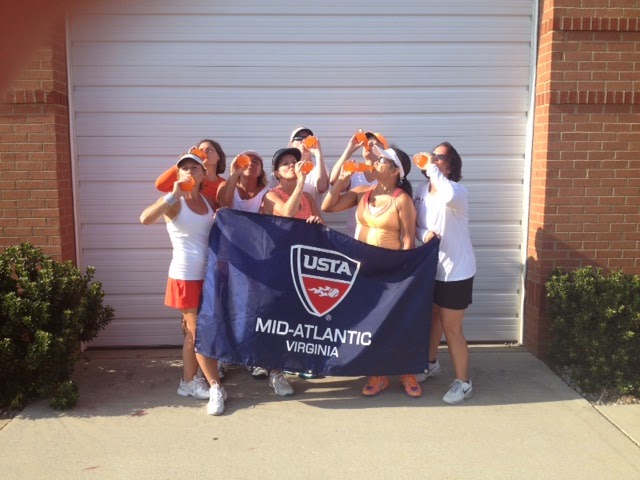
This weekend I was blessed to experience flow in all of these areas. I was at the Virginia district tournament with my tennis team, and I was in flow on the court. My team was in flow, and we made it to the finals for the first time ever. And all of the moments off the court were filled with joy, celebration, and camaraderie. Even writing about it is effortless. No self-consciousness. No demons. Just a pervasive sense that life is good.

Usually Mondays are hard for me, but today I am happy. In this moment, I am in the zone.

Orange Crush

Positively Selfish

One of the hazards of working in the helping professions is burnout. People who are drawn to helping others run the risk of giving too much of themselves. In my case, however, I run the risk of burnout in my personal relationships more so than I do at work.

There are a lot of advantages to working in a counseling center. Even though you don’t make as much money, you have access to a lot of resources that you don’t have in private practice. I have colleagues, the student health center, deans, RA’s, and peer counselors who share the load. The most stressful periods of my job are predictable and time-limited: they occur around the middle of the semester and end around finals week. There are boundaries that are built into our schedule, as well. Appointments are 50 minutes long at the most. We don’t schedule clients past 5 pm or on the weekends. Students go home for breaks. We don’t see students after they graduate.

My personal life is a different story. Many of the people I love have emotional needs that they expect me to fulfill. Appointments are not time-limited. I am on call 24-7. I usually cannot terminate these relationships, nor do I want to. I have a hard time saying no to whatever they ask of me. And in many cases, I do not feel I am getting back as much as I am putting into the relationship because their emotional resources are more limited than my own. Which is not their fault. It’s just unfortunate for me.

That is part of the reason why I want a hiatus from loving and caring for anyone or anything new. No dating. No pets. Just me and my plants. I’m burned out; I want a more solitary job in my personal life.

I was telling my therapist the other day how this makes me feel selfish. She told me that I’m being honest with myself–more authentic. That we need another word that conveys positive selfishness. Which is kind of sad, really. What does it say about our culture that there would be no word for a healthy focus on oneself?

She nominated the word selful. Full of oneself, but in a good way. More like being whole. But it doesn’t roll off the tongue the way selfish and selfless do. Plus it looks weird. So I am open to suggestions.

Beginnings and Endings, Part 2

My job follows the academic calendar, so today is my first day back at work. I was never one of those kids who looked forward to the beginning of school. I didn’t care about seeing my friends; I didn’t want to have to do homework. I didn’t want to have to go to bed and wake up early. I pretty much have the same mentality now that I did when I was in elementary school. Some things never change, I guess.

My summers follow a distinct pattern: I have a hard time transitioning from being stressed and having to be super-productive to not having a whole lot that needs to get done. Boredom doesn’t do justice to the intensity of how badly I feel during that adjustment period. It’s more like, my existence is a complete waste of time. I have nothing of value to offer to the world. I know it’s is my inner critic talking, but it still makes me question my worth. I think that’s why most people would rather be stressed than bored: it makes you feel more useful.

However, by the time I have about 2 weeks of vacation left, I start panicking about having to go back to work. I don’t want to feel stressed out again–to be on call, have back-to-back clients, rush to get my nightly routine completed. By the end of the summer, I feel like I could quit my job altogether. But I have no one to support me, so that’s not an option.

This summer I had the added adjustment of being alone for the first time. Braking down on the side of the freeway alone. Attending weddings alone. Spending holidays and weekends alone. At least when I was working, I was guaranteed to see people every day. Over the summer, I had to make plans to motivate myself to leave the house, and sometimes I couldn’t do it.

Plus, I was also going through the steps to finalize my divorce, so I no longer had the illusion that I could return to the more stable state of matrimony. I didn’t date anyone or even have someone I could fantasize about dating. Well, I guess there’s Federer, but even in his case, the most I could imagine was being one of the nannies for his new twin boys. Not terribly romantic.

Despite the struggles with boredom, reversed sleep cycles, and solitude, I think the highs and lows actually helped me tolerate my emotions better. I would remind myself that boredom and loneliness are painful sometimes, but I’ll be busy eventually. (Usually the next day, because I played in 7 tennis leagues and captained 5 of them over the summer.) And when school starts and I’m feeling overwhelmed, I’ll remind myself that I have a long break to look forward to at the end of the term.

I think it also helped that I spent the past 2 weeks on vacation with family and friends. It was the highlight of the summer, but it was also hard to be around people 24-7. Now that I am accustomed to extended periods of solitude, I realize how much I need down time to feel sane. So by the time my vacation ended on Friday, I was ready to go home. Ready to catch up on tennis, blogging, and even work.

This summer was a good reminder of how, even when something seems intolerable, that feeling will pass. And you might even find value in the experience that you hated so much at that time.

Mistakes

You know how I hate making mistakes? Well I made a big one last week, and now my inner critic is in full force. I am having a hard time forgiving myself, so I thought I’d blog about it.

Intellectually, I know that everyone makes mistakes. But my inner critic tells me that everyone else is allowed to make mistakes. I, on the other hand, am on strict probation: one mistake will lead to dire consequences–failing, getting fired, going to hell, losing everyone’s respect, etc. I don’t know what I’ve done to warrant this zero tolerance for errors, but it must have been pretty bad.

I am trying to put things in perspective. I try to remind myself that, although some people could judge me harshly, God does not have a zero tolerance policy for errors. God knows that I am not perfect and does not hold me to the standards that my inner critic does.

I gave a sincere apology for my mistake. I didn’t lie, get defensive, or evade responsibility. I acknowledged what I did wrong and that I am aware of the consequences of my error. That I am committed to making amends. While this should move my transgression into the somewhat healthier guilt category, I am still feeling quite a bit of shame about it.

My inner critic wants to make sure that I am taking this seriously. That I am not one of those people who superficially apologizes without being genuinely sorry. That is one of my pet peeves, and I don’t want to be a hypocrite by doing the same thing. So I keep reminding myself that this is a big deal–which only serves to reactivate the cycle.

I am trying to call to mind all of the sage advice on forgiveness, perfectionism, and letting go. Advice that I, myself, have given to other people. It seems to help them. Why doesn’t it help me? Why am I not improving faster? I envy people who can read an inspirational quote on social media and feel better. People who are simply able to turn off the obsessive soundtrack of shame in their head. Or who listen to a different soundtrack altogether.

So I am also trying to remind myself to honor my own timetable. That self-improvement is not a race that I have to win. In fact, I’d settle for a participation award. I tell myself that at some point in the future, perhaps even later today, I will be able to put things in perspective. And if it takes longer than that, I’m talking to my therapist on Tuesday.

Luckily, tennis is on all day today, which I am hoping will be an effective distraction until I have my moment of clarity.

Almost Whole

“Things that are broken can be made whole.” That’s my favorite line in Little Princes.

Conor Grennan did not volunteer at the orphanage in Nepal for religious purposes. When he decided to start a non-profit organization for the sole purpose of rescuing 7 of the orphans he met from drug traffickers, he still did not think he was doing God’s will. But there were so many miraculous incidents that allowed him to succeed in his mission of finding these orphans, and their parents, and reuniting their families, that he decided to buy a Bible so that he could rediscover God.

This line was actually spoken by Conor’s friend, Liz, who would eventually become his wife. She confessed to him that she was married and divorced by her mid-twenties. She felt so broken and ashamed at the time that she stopped going to church. She tells Conor that “God used that time of great sadness to reclaim me, to redeem me. Things that are broken can be made whole.”

Isn’t therapy, too, about making people whole? Isn’t that what I’m trying to do with my blog? I have never thought of it in those terms.

I have always feared that there was something fundamentally wrong with me. Like I was born with some kind of crack in my foundation that becomes apparent whenever I make another mistake. My therapist said that perhaps these cracks are there to allow me to breathe. I didn’t believe her when she said this, and I was annoyed that she was trying to turn my fundamental flaw into something positive. Those darn therapists! Always trying to see the positive side of things.

I signed and notarized the divorce papers a few days ago. Usually every step forward makes me cry, but this one did not. Not yet, at least. Maybe it was because I had it notarized by my tennis partner after our match and went to lunch with my team afterwards, which did not leave me any time for self-reflection. Or maybe I’m finally beginning to accept that this is the right thing for both of us.

In any case, I did not beat myself up for leaving or for failing to make things work, as I usually do. I did not let my inner critic tell me that this is what I deserve. I can’t say that I am at peace with the whole thing, but I am further along than I was when I wrote the first post on divorce.

In this moment, I am focusing more on my blessings than my losses. Perhaps this means I am on my way to becoming whole.

Survival of the Fittest

I’m reading Little Princes, by Conor Grennan, and it’s making me reflect on how poor my survival skills are.

It’s about this guy who decides to volunteer in an orphanage in Nepal for 3 months to justify taking a year off to blow his savings and travel around the world. He ends up doing a lot more than that–reunites the kids with their parents, opens his own orphanage–which is both impressive and a little daunting.

One of the very first things that Conor describes is eating daal bhat with his host family. It is a dish made of rice and lentils and is very spicy. He suffers through a lot more than just eating a spicy dish, but that was enough for me to conclude that I am not fit to save orphans in Nepal. My GERD alone would lead to starvation, because this is what they eat for 90% of their meals.

Last year I was reading On Gold Mountain, by Lisa See, and there was one paragraph describing how families who were riding out west in covered wagons did not stop to pick up their kids when they fell out because they needed to make it out there before winter. That’s the only thing I really remember from the book, even though it had very little to do with the story.

I had no idea that riding out west in a covered wagon was so dangerous. I always imagined that their biggest problem was entertaining themselves without movies and iPods and video games. I didn’t realize they had to fight for survival. If I were alive back then, I think someone would have “accidentally” knocked me out of the wagon, what with my allergies and asthma and all. What good could I possibly be in anything that required sustained cardiovascular effort, like killing wild animals or chopping firewood?

I guess I don’t have to volunteer in Nepal or be able to survive in a covered wagon, but these are the kinds of random things that my inner critic will use against me. The whole time I’m reading this book, it lectures me on how I should be tougher, stronger, and more altruistic like Conor. And I call myself a warrior. Puh! I don’t think so.

I am always having to demonstrate to my inner critic why my life is worthwhile. I’m a psychologist. That’s something. And I captain a bunch of tennis teams. People hate captaining, so that’s doing something helpful. And I’m writing this blog, which is also helping other people. Isn’t that enough to justify my existence?

I’d like to think that there are many ways to save the world. We aren’t all fit to rescue orphans. Maybe some people focus on saving whales. Others minimize their carbon footprint. And some help the survival of our species by having children and raising a family.

And some people dedicate their lives to helping people practice self-acceptance. To helping people realize that they are worthwhile, regardless of what they can or can’t do.

So take that, inner critic!

Hiatus

I have always prided myself on being open to love, even after heartbreak. I’ve met people who have closed off their hearts after being betrayed by their loved one, and while I don’t judge them for their decision, it is not how I want to live my life. This is also why, although I’ve had partners who have been dishonest, I still choose to start off a relationship trusting the other person.

A few weeks ago, my therapist suggested that I consider getting a cat. She thought it would help to combat my loneliness and to discharge negative energy. As I mentioned in a previous post, I am not an animal person, but I, too, have considered getting a cat. But after talking to my friends about it and imagining what it would be like to have a cat here in my darkest moments, I have decided against it. For now, at least.

I realized after this deliberation process that I am not in a place where I am ready to love, take care of, or lose anyone or anything. I am not necessarily closing off my heart, but I still feel too vulnerable, too raw to be open to love at the moment.

I don’t like the person I have been in relationships. In my most negative moments, my inner critic uses this against me as evidence that I deserve to be alone. I think it has more to do with the super-empath in me who identifies so much with how the other person feels, I cannot separate my wants and needs from theirs. I think that’s one of the reasons I convinced myself that I loved people who loved me; I became what they needed me to be.

As cliche as it sounds, I really don’t know who I am or what I want in a relationship. I am hoping that if I can be free from the wants and needs of others, I will eventually have a better sense of what my own wants and needs are. I have already been surprised by how much I enjoy my solitude–most of the time. How freeing it is not to have my mood be so tied to how my partner is feeling. My mood is all over the place as it is. I now realize how overwhelming it was when I felt everything for the two of us.

So I’m taking a long overdue hiatus from relationships. I am hoping this will lead to wiser decisions about matters of the heart. And if the hiatus ends up being longer than expected, I can always take my therapist’s advice and adopt a cat.

Guilt

I talked to my therapist last week. She gave me permission to stop feeling guilty about my sleep cycle. Told me that I have no reason to get up early, so I don’t need to worry about it. That when I have to wake up, I will do so.

It helped some. Today I woke up early for a tennis clinic. But then I took a nap afterwards, which was well-deserved but still somewhat guilt-laden. But I’m writing a blog post now, to prove to my inner critic that I am not completely worthless.

Those quotes about letting go kind of annoy me. If guilt were something I could just let go of, I would have done so long ago. It’s like telling someone who is anorexic to just eat. Put food in your mouth. Chew. Swallow. What’s so hard about that? I envy those people who find it so easy to be free of their demons.

Therapists often ask clients what it is that they fear will happen if they let go. I guess I fear that without guilt, I really will become a terrible person. Someone who doesn’t care if she hurts other people. Someone who is not living her life with integrity. Maybe I’ll go too far in the other direction. I’ve done it before.

In Shame and Guilt, Tangeny and Dearing argue that guilt is a healthy emotion. It let’s you know that you have done something wrong and motivates you to make amends, correct it. When you feel shame, however, you don’t just feel like you’ve done something wrong; you feel like there is something fundamentally wrong with you. You are broken beyond repair. Shame leads people to lash out and project their faults onto others. Or to lie and hide, avoid life altogether.

I guess I am somewhere in-between, because I worry that there is something wrong with me, but I am motivated–determined, even–to become a better person.

My latest strategy for coping with guilt about the past is to tell myself that I don’t have to continue entertaining this memory. I can take it out of the rotation. Throw that record out. Or in more modern terms, remove it from the playlist. I have enough things to feel guilty about in the present without revisiting every mistake I’ve ever made in the past.

For whatever reason, it works. In part because I think it’s funny, imagining myself tossing all these record albums behind me. It doesn’t get rid of all of the guilt, but it creates some space in my head for more guilt-free thoughts. That’s something.

Honesty and Trust, Part 2

“You should know; you’re a psychologist.”

Sometimes I don’t know. Sometimes I, too, am puzzled as to why people do the things they do.

I’ve been trying to make sense of why, despite my commitment to honesty, I remained in relationships with people who consistently lied to me. And I didn’t even like them very much. I have this tendency to try to make relationships work at all costs, even when I don’t like the person. Even when they do things that are inconsistent with my values, like lying. It’s maddening.

One of my exes told me up front that he was a liar. Still, my first instinct was to believe him. It’s too much work not to trust people, I think. But sometimes it was more costly to make myself believe that he was being honest. It’s hard not to beat myself up for trusting a self-proclaimed liar. Why would anyone do such a crazy thing?

My best guess is that I stayed with these guys because I wanted to believe in the version of themselves that they were selling. It’s who they wanted to be, and who I wanted them to be. I wanted to help them get there, even. You can do it! I have faith in you!

Plus, I knew they were lying because they were ashamed of who they really were. I was trying to do the whole unconditional positive regard thing that therapists do. Because that is the most healing gift that we can give to others. It works well in therapy, but not so much in romantic relationships. I realize now that there is a limit to how much you can allow someone to hurt you in order to prove to them that they are lovable.

I understand what it’s like to fear that people won’t love you or respect you if they knew what you’re really like. That is the purpose of this blog, after all. To challenge myself to show the world what I’m really like. And while I haven’t outright lied about who I am, I haven’t always shared the things that I’m ashamed of. Not even to my family–the people who do love me unconditionally.

So I guess we can all challenge ourselves to be more honest. Some people have further to go than others, but as long as we’re making the effort, that’s what counts, isn’t it?  Anyway, it makes me feel better about myself to frame my tolerance of dishonesty in this way, so that’s what I’m going with.

But I’m still going to be more selective about who I choose to be with from now on.