Tag Archives: God

Lovingkindness in Times of Need

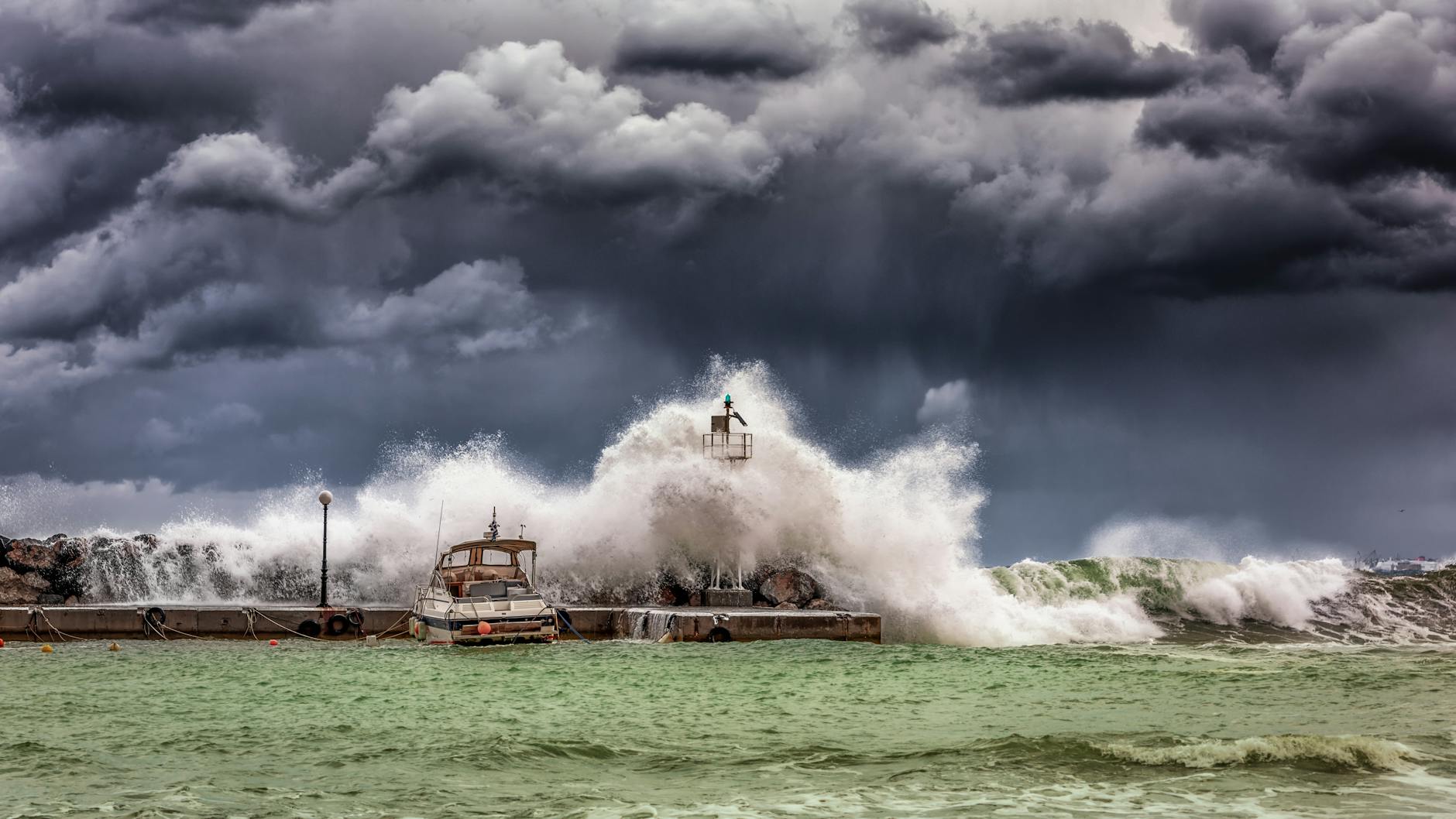
Photo by GEORGE DESIPRIS on Pexels.com

Today in our group lovingkindness meditation we made sure to include all the people affected by Hurricane Helene, from the victims to the rescue workers and volunteers. To those of you who asked about my safety, I appreciate your concern. Luckily, Knoxville was not affected, but Sadie’s college, Furman, is in Greenville, SC. Helene is the worst hurricane to ever hit South Carolina. She was out of school for over a week, and as many of you know a good portion of I-40 was washed out, as is the city of Asheville in general. It will be inconvenient for the next several years to pick her up and take her back, but that’s a small price to pay compared to those who have lost their homes, their cities, and their loved ones in the 6 states that have been affected by Helene.

I’ve heard lots of stories about people helping others in obscure places where help had not yet arrived. They were checking on one another, sharing food and resources, even though everything was scarce and their survival was not guaranteed. It seems that times of disaster often bring out compassion, tangible aid, donations, volunteers, as well as prayers and gifts of lovingkindness. I’m always moved to hear these stories. It gives me hope that maybe somehow we can cross the divide and care about other people, despite their differences from ourselves.

During this time I’ve also been reading Braiding Sweetgrass, a series of anecdotes written by Robin Wall Kimmerer. She is a Native American poet with a Ph.D. in Botany and so has studied the earth as an object of scientific investigation as well as a mother that provides for all the living creatures on earth. If you check it out, I recommend the audio book because she is the narrator. Not surprisingly, her story is filled with sexism, racism, and dismissiveness for thinking that there can be a reciprocal loving relationship between things like plants, bodies of water, trees, fish, and people. Since industrialization our relationship with nature has been anything but that. Nature’s gifts are something we feel we can take, as much as we want, without worrying about what the consequences will be when these gifts run dry.

I found out about this book because someone in our mediation group recommended it to me. There is a point during the lovingkindness meditation in which we send our gifts to all sentient beings. Things like, may they be safe. May they be happy. May they be healthy. May they live with ease. Before I practiced regularly, I defined sentient beings as all the people on earth that we didn’t individually mention. But the more I mediate, the more my definition of sentient beings grows. I realized that animals are sentient beings. If you believe that there is life on other planets in the universe, then extraterrestrials are included as well. And I thought maybe plants could feel. Possibly. After reading Braiding Sweetgrass, now I know that not only can plants feel, but they have their own language. They suffer and they thrive depending on how well they are cared for. Just like us. So now I extend my gifts of lovingkindness to Mother Earth as well.

To be in the midst of the damage of Helene and reading this book at the same time, I realized that in times of need, the angel on our shoulder is more likely to take over and we give without thinking about the categories that have become so polarized in the last 8 years. We don’t care if they are from the North or South, rural or urban, Democrats or Republicans. We remember that we are all people, more alike than different, all worth helping and saving, comforting and caring for.

But why does it take a disaster to bring out this side of us? Wouldn’t it be nice if this is the mindset we cultivated all the time? Instead of seeing the other as the enemy, in competition for goods and resources, some seeming more human than others, better or worse than others. To me, it doesn’t matter which religion you belong to, or if you just think of yourself as being spiritual in general. But however you define your spirituality, I hope that it comes with a practice.

This was my goal in creating this mediation group. I don’t know what the specific religious beliefs are of most of the people in the group, but I know that if you consider yourself a spiritual being then love must be central to what you believe in. So in this time of crisis, I hope you do practice loving in some way. And in times of plenty, I hope you do the same. I know that in this year of practicing lovingkindness more regularly, I hear a call to reach out and help more often, and my commitment is to say yes to every call. And like I said in my last post, the love always comes back to you.

If you’d like to join the meditation group, email me at cbarongan@gmail.com and I’ll put you on the mailing list.

Try a Little Lovingkindness

But I say to you who hear,

Love your enemies, do good to those who hate you.

1 John 4:8

I have decided to stick to love…Hate is too great a burden to bear.

Martin Luther King, Jr.

I’ve never been one to watch the news. I tried to change this after I was in grad school when I didn’t know that the whole Waco thing happened. And I didn’t know that we were going to have an eclipse and was wondering why the sky looked so weird, as I looked right up into the sun without any protective eye wear. My fellow students asked me if I lived under a rock. I guess I was in my own world, sticking to reruns of The Brady Bunch and Gilligan’s Island over CNN.

Now I don’t even try to watch the news–and I get minimal notifications on my phone–but I am not ashamed of it at all. In my line of work, I have to save my energy to see my clients, and I can’t allow the intense negativity of every update take up residence in my brain. I rely on my family and my clients to tell me if something important is happening, like if China is floating a balloon across the U.S. to spy on us. Maybe it makes me uninformed, but sometimes ignorance is bliss.

Still, despite the lengths I go to protect my energy, it’s impossible not to feel the divide in our country. I know we have always been a country divided, but I had never felt it so keenly as I have since Covid. And although we may no longer be living in a pandemic, pandemonium still feels very close at hand.

In every religion they say that love is the only force that can conquer hate, and it is our job to spread love. And it’s up to us to say yes to that job and to do it in a way that uses our unique talents. I know that I was supposed to become a therapist because since I’ve gone into private practice clients that I’ve seen decades ago have reached out to me to work with me again, saying I changed their lives. Yet most of the time I was at my old job I felt like a terrible therapist. The clients that I’ve seen since I’ve moved to Knoxville have said the same thing, even though the first year and a half of my time here was perhaps the darkest period of my life. Somehow, although I was barely able to function in every other area in my life, I was still able to help people. This is not about me. It’s about God. God has made sure that I’m able to do what I’m supposed to do in this lifetime–to help others in need.

But lately, with the country being divided and both sides full of hatred, pointing fingers, I feel the need to step it up a notch. I’ve started doing the lovingkindness meditation, which is a Buddhist practice in which you cultivate your ability to be loving, even to your enemies. The reason why I like it so much is that it’s empowering. I can put in the work to become a more loving person. I can make this happen. I have to admit, I’m not as diligent about doing it as I would like. It’s a lot like exercise–you have to be committed to the process. And sometimes after work I’m just too exhausted to do it.

I can feel it changing me, though, even practicing lovingkindness imperfectly. I’ll often teach clients how to do the lovingkindness mediation when they need a way to feel empowered, and for those who try this or their own spiritual practice, it changes them, too. I imagine there are more people out there who are looking for the same thing. Who want to do something other than feel anger, helplessness, and fear. Maybe there are people who want send out love to the universe but haven’t figured out how to do so yet. So I thought, well hey! Maybe there are some people out there who might want to do the lovingkindness meditation with me. I think that doing it in a group is probably similar to what Jesus said about 2 or more people praying together. It makes it more powerful. Even if one person joins me, it doubles the amount of lovingkindness that goes out into the universe. And who knows? Maybe there will be even more.

So if you think this might be a practice that you’d like to try out, I’ve decided that if even one person wants to do the lovingkindness meditation with me, I’m going to host a 30 minute Zoom meeting weekly where we can practice together. In the first 10-15 minutes I’ll teach you how to do it and construct your own mediation. And in the last 15 minutes, we’ll practice it together, silently. Or you can do whatever practice you’d like, if something resonates better with you.

If you’d like to try it out, email me at cbarongan@gmail.com and I’ll send you the day, time, and Zoom link. No obligation to stay the whole time or to come back if it’s not for you. But I hope there are some people out there who are willing to give it a shot. God knows we need it.

Adam and Eve Retold

I’ve written a lot of posts about Adam and Eve–trying to make sense of what it means to have free will, to be good, the inevitability of sin, the possibility of boredom in Paradise.  For some people, a story of a God who would put a tree in the middle of Paradise, and a snake that would tempt Adam and Eve to eat from it, and then punishes them for doing so seems fair game. For me, not so much.

But that doesn’t mean that the story isn’t meaningful to me. I believe that the Fall from Paradise is a prelude to the story of our lives. It sets the stage for the lessons that God wants us to learn about what it means to be human. So I’m going to take some liberties in retelling the story of Adam and Eve in a way that makes sense to me.

***

Once upon a time, after God had separated heaven from earth, light from darkness, and land from sea, God populated the Earth with vegetation, living creatures, and Adam. He created a place for him to live in the Garden of Eden, and in the middle of the Garden he planted 2 trees–the Tree of Life and the Tree of Knowledge of Good and Evil. He told Adam to work and keep the Garden and that he may eat from every tree except the Tree of Knowledge of Good and Evil, because he will die if he does. And that would make God sad.

Then God realized that it was not good for Adam to be alone. There was no helper fit for him among the creatures that Adam had named. So while Adam was sleeping, God took one of his ribs and created Eve. They became one flesh, naked before one another, with nothing to be ashamed of.

One day the serpent, the most crafty of all God’s beasts, approached Eve.

“Are you sure you are not to eat of the Tree of Knowledge?” he asked.

“Yes. We will die even from touching it, ” Eve confirmed.

“God would not let you die. Eating from the Tree of Knowledge will open your eyes and make you like God, because you will also know good and evil.”

Eve looked at the fruit on the Tree of Knowledge. It looked delicious. The idea of becoming wise was equally appealing. So she took the fruit and ate, and gave some to her husband, who did the same. Then their eyes were opened, and they became aware of their nakedness. They sewed fig leaves together and made loincloths to cover themselves.

Then they heard God walking in the Garden and they hid. But God called to them and asked them, “Where are you?”

“We’re hiding from you because we’re naked and afraid,” said Adam. Like that reality TV show on the Discovery Channel.

“Who told you that you were naked? Did you eat of the Tree of Knowledge, even though I told you not to?” God asked.

“Eve made me do it,” said Adam.

“The serpent tricked me,” said Eve.

Like any parent dealing with children who have disobeyed them, God was angry. But because he loved them, he was also sad and afraid for them. He had wanted to protect them from all possible harm, so that they would never know pain and suffering. But in choosing knowledge, Adam and Eve could no longer remain in blissful ignorance in the Garden of Eden. Like Neo in the Matrix, they had taken the red pill, and now they would have to see how deep the rabbit hole goes with the knowledge of good and evil.

In preparing them for the journey of humanity, God warns them of what lies ahead.

“Children will not be made from dust and ribs. Eve will have to bear them, and it will be painful. And your children will disobey you and break your heart, just as you have done to me. Adam will have to work for food. No more plants and animals free for the taking. And you and your offspring will struggle with the existential angst of how to cope with death, loss, loneliness, and the meaning of life.

But through this journey of humanity, by witnessing pain and suffering, you will develop Compassion, which will teach you to be more loving, and Wisdom, which will give you strength to endure strife. And in developing Compassion and Wisdom, you will understand more deeply my love for you. So that at the end of your journey, when you return to Paradise, I will have a celebration in your honor. For although you are lost, you will be found.”


Hanging in the Balance

9f43c43788730e9ddceb20ac0cccdbf7

You know what it’s like having a mental illness? It’s like being Homer Simpson in that episode where he ate that Fugu puffer fish prepared by a rookie chef. That’s the fish that, if not prepared correctly, can kill you. He had to wait 24 hours to find out. Great episode, if you haven’t seen it.

Or it’s like hydroplaning on the highway, trying to figure out which way you need to turn the wheel so you don’t crash. That actually happened to me. I don’t think I turned the wheel the right way. I ended up going backwards in the median, wondering what was going to happen to me when the car finally stopped. Thankfully, miraculously, nothing happened. Except to my car. Which I got rid of.

I found out in the book “The Art of Racing in the Rain”–which is a fantastic book, if you’re looking for something to read–that when you’re hydroplaning, you actually need to accelerate to engage the wheels. It’s a fictional account, but that makes sense to me. So now I drive really slowly in the rain so that I can speed up if I start to skid.

But I digress. The reason why having a mental illness is like the Fugu puffer fish and racing in the rain is that there are so many things you have to do to maintain your balance, and it takes so little to throw it off.

Take sleep, for example. I am a night owl, but I’m not supposed to stay up late, because reversing my sleep cycle triggers a depressive episode. But when I try to go to bed earlier, I can’t fall asleep because my obsessive brain is wide awake, chatting up a storm. I am also supposed to wake up early, but I’m usually too freaking tired. And because I need more sleep than the average person, I still have to take a 3 hour nap.

I have similar difficulties regarding eating that is equally complicated because of my inability to wake up early, restrictions in what and when to eat because of my GERD, my tennis schedule, my inability to tell whether or not I’m hungry, and that I hate planning meals, grocery shopping, and cooking.

I also have to manage my anxiety by avoiding almost everything, lately–Facebook, the news, conversations about Trump, certain family members, relationships, looking at my schedule for the week so that I don’t get overwhelmed (which has gotten me into trouble with my colleagues).

Despite all of this effort I put into maintaining my mental health, I frequently wake up feeling anxious or depressed or both. Because it’s impossible to keep all of this stuff in balance. Which really frustrates me. Sometimes I’m mad at God. Sometimes I wonder if it’s all worth it, all this work to be mentally stable given that I am inherently unstable. Sometimes I feel alone in it, because despite having my brother and friends to talk to, in those moments when you’re lying in bed trying to find a reason to face the day, there’s no one who can really be there for you.

Thankfully, those moments usually pass, often some time later that day. Or at least they fluctuate throughout the day. Or I’ll go play tennis.

On a moment to moment basis, practicing mindfulness and self-compassion are the most helpful tools to make the pain bearable, but it still hurts like hell. I remind myself that it’s OK to be in pain. That this moment will pass. That although my thinking may be irrational but convincing right now, at some point I will be able to see things more clearly. That it’s not my fault. I’m doing the best that I can. And then I try to think of things I can do to make myself feel better. Like watching “Trolls.” Really cute movie, if you haven’t seen it.

The other thing that has helped is reading Richard Rohr’s books. The one I’m reading currently, Eager to Love: The Alternative Way of Francis of Assisi, is a much tougher read, but he says some thought-provoking things. Like, he says that the best healers are people who have suffered greatly themselves. I know for sure that my own experiences have made me better able to sit with and relate to other people’s pain, and I know how much better it feels to talk to someone who really gets it because they, too, have suffered greatly.

We all have roles that we have to take on that will involve pain and suffering–being a parent, a firefighter, a soldier, Wonder Woman (I loved that movie, too), just to name a few. Any role entails pain and suffering, really. I guess the difference is whether you’re going to rail against it or accept it–choose it, even–because there’s something that you care about that makes it worthwhile. And because not choosing it just magnifies your suffering.

I know for sure that I was meant to be a healer. Sometimes I wish I could say no thank you, God, but I appreciate your confidence in me. But I can’t, because I really don’t know what else I would do. So if trying to find that balance moment to moment, day after day, helps me to be a better therapist, then so be it. I will choose it.

Suffering and Compassion, Part 3

This year I have decided to more fully participate in Lent by reading Wonderous Encounters: Scriptures for Lent, by Richard Rohr, since I got so much out of reading Breathing Under Water. In each chapter, Rohr provides his interpretation of the scriptures for that day, then quotes the scriptures, and then offers a “starter prayer” for contemplation. I have found praying in this way much more fruitful. Although I usually don’t get an answer right away, by the next day I often have some insight that deepens my understanding of God.

One of the more difficult messages to digest in Rohr’s books is that God wants us to choose love, knowing full well that we will suffer as a result. Knowing that it will break our hearts. Because it is only through experiencing love, and the suffering that results from loving, that we can truly understand how much God loves us.

I have to admit, this really pissed me off. Like many people, I wrestle with the question of why God lets people suffer. I write about Easter every year in an attempt to understand the nature of suffering. The best I’ve been able to come up with so far is that God never promised that life would be free of suffering. The fact that Jesus died on the cross makes it explicit that no one is immune from suffering. But, on the bright side, God is with us in our suffering, even when we think he has abandoned us. Which is something, I guess.

But I still don’t want to suffer.

Now Rohr is trying to convince me that, not only must I endure suffering, which is hard enough, but that God wants me to actively and willingly choose suffering as a consequence of love. That this is how we fully understand what it means to be human. This is how we gain wisdom. This is how we can more fully experience God’s love. Those all sound like great things, but it wasn’t exactly making me want to sign up for more pain and suffering.

When I told my brother this, he pointed out how much suffering I was willing to endure for tennis. Which is true. I have written blog posts describing how I’ve had asthma attacks, thrown up on the court, played through depressive episodes and physical pain. I’ve been sick from hunger, dehydration, and heat exhaustion. I’ve experienced humiliating losses. I’ve had bad tennis breakups. But I would never give up tennis just so I could avoid the pain and suffering that are an inevitable part of playing this game that I love so much. Life would be much worse without tennis.

I’m pretty sure God loves us more than I love tennis. Which means he must really love us a lot. And, consequently, suffers a lot. All the time, billions of times over. Regardless of whether or not we choose to love him, or how many times we mess up. Willingly, repeatedly, from now until the end of time, God chooses to love us.

That’s pretty deep.

Who would have thought that tennis would teach me about the depths of God’s love? The benefits of tennis never cease to amaze me.

So I’m experimenting with focusing my intentions on being loving to myself and others whenever I’m in pain. Which is what the practice of compassion is about, after all. It’s going pretty well, I think. It doesn’t make the pain go away, but I guess it makes the pain more bearable. More meaningful. More worthwhile. I do feel happier, more peaceful of late. I don’t feel as anxious and depressed. Which could be because of Daylight Savings Time, in all honesty. But it could also be that the benefits of choosing love really do outweigh the costs.

I guess we’ll see.

Three Years Later…

7a4f295aaba4c05ca5a724d9a2cbcbb8

Today is my blog’s 3rd birthday! Can you believe it? I’ve written 277 posts and still haven’t run out of things to say!

In those 3 books about God that I read this summer, they all said that we have many rebirths in the course of a lifetime, and the beginning of this blog year definitely feels that way. As you know if you’ve been reading my blog, my baby brother had quadruple bypass surgery less than a month ago. What I did not mention at the time is that I am taking care of him, so his heart attack has been a life-changing experience for both of us. While taking on this new role has presented many challenges, in some ways it has simplified my life. My behavior is more intentional; my motivation for everything I do is clear. Many of the things I have realized in this past month relate to themes I have written about over the past 3 years, so I thought I would share some of them.

1. Self-care. I often tell people to treat self-care as though your life depends on it, because it does. Nevertheless, I still struggle with it. It’s hard to go to bed on time, to cook, to go to the grocery store. I still have trouble saying no. Still push myself to the point of exhaustion. But now that I’m taking care of my brother, self-care really does feel like life or death. I have to go to the grocery store and cook healthy meals because if I don’t, he can’t eat. I have to get out of bed, even if I don’t feel like it, because I have to check on him. I have to set limits, or I won’t have the energy to care for him. Like Romeo said in his last post, sometimes it’s better when you don’t have a choice.

2. Mantras. There are so many new things to worry about now that I often feel overwhelmed. Sometimes I can’t fall asleep. I wake up to anxiety attacks. In rare moments of stillness, I cry, thinking about what he went through, wondering how we will make everything work. But in addition to my usual mantras (e.g., everything is going to be OK; I’m doing the best that I can), I have added 2 more: 1) anything is better than him being dead, and 2) if God saved his life, then he’ll help me find a way. And that helps to calm me down.

3. Solitude. I offered to take care of my brother without really thinking about it. At the time, I didn’t realize it meant that he was going to live with me indefinitely. Not that it would have changed my decision. But it’s sort of like suddenly having a child without the 9 months to mentally prepare for it. There was a moment where I mourned the loss of my space, my freedom, but that quickly faded. And surprisingly, I have gained far more than I have lost. I have someone to watch football with. Someone to talk to when I get home, to share my thoughts with. He cares about how my day went, whether I won my tennis match. I don’t dread days when I have nothing planned now, because they’re not as dreadful when you don’t have to spend them alone.

4. Friendships. My friends are so awesome. I am so thankful for them. Even though they don’t know my brother, they call and text to ask how we’re doing. They’ve made meals for us. They say prayers for us. They wished me luck on my first day back to work because I was stressed about it. They’ve listened to me cry. They’ve spent hours putting together shelves so that my brother could have space for his belongings. They are taking good care of me, so that I can take good care of Romeo.

5. Gratitude. In my prayers, when I give thanks for all of my blessings, I always do so with some anxiety, knowing that at some point I will lose the things that I am thankful for. What will I do then? Fortunately, hardship and loss have heightened my awareness of how plentiful my blessings are. I am even more aware of what a gift it is to be able to breathe, to feel your heart beat, to walk. (All mindfulness exercises, by the way.)  I’m thankful that I have a job that has vacation days. I’m thankful that every day my brother gets stronger. That he is happier now than he was before the surgery.

If this period of my life marks a rebirth, then my goal in this lifetime is to be more fully aware of what a gift it is to be alive.

Still Depressed

Image-1

People have been so kind to reach out to me after I published my last post, expressing their hope that I’m feeling better. I wish I could say I do feel better. That it was just a one day thing and I’m no longer feeling depressed. I feel like I’m disappointing everyone.

It’s not like I’m depressed every minute of every day. I made it through work and survived being on call. I played tennis. I went to dinner with friends. I seemed like a normal person when I was around other people.

I continue to be frustrated that all of my efforts to prevent depression have not worked. Maybe if I hadn’t stayed up to watch Federer and Nadal play on Saturday night it would have made a difference. Except I didn’t wake up until 1:30 in the afternoon, so I wasn’t that tired at 2 a.m. And it’s not every day that you get to see Federer and Nadal play, even if it was only a set.

Last night I had a realization that helped me to not beat myself up over all of the things I could have done differently. And that is, it’s not my fault. It’s not my fault that I am prone to depression. Not my fault that I am particularly vulnerable at this time of the year. That I am not able to handle the client overload as well as my colleagues. That my family stresses me out. That I’m not perfect in doing all of the things that are supposed to help with depression. This was the most helpful lesson in Tara Brach’s book Radical Self-Acceptance and Paul Gilbert’s The Compassionate Mind. I’m glad that I remembered it for some reason.

The other realization I had last night was something I learned in the self-compassion retreat that I attended last May. And that is, trying harder doesn’t eliminate pain and suffering. It is not for a lack of effort on my part that I feel the way I do. As much as I like to think that if I just work hard enough I can make everything better, life is filled with pain and suffering, no matter how hard you work. And while this did not make my pain go away, it helped me to accept it more and to beat up on myself less.

I have appealed to God for some salve for my wounds. Something to make the pain more tolerable. But I feel guilty for asking, given all of the things that are going on in the world. All of the people killed in Paris, San Bernardino, Sandy Hook, and other places. All the people who have terminal illnesses. All of the people who are hurting worse than me. Sometimes thinking about these people helps to put my suffering into perspective, but that is not the case at the moment. Right now I can barely tolerate my own suffering. So for now I’ll just have to focus on me.

But I am learning through my practice of self-compassion that it’s OK to focus on me. My pain counts, too. I can wish for my own well-being for as long as I need to.

Perhaps if God has any angels left over after he sends them out to all of those other people, he can send an extra one to me. Just for a little while, until I feel better. An angel in training, even, like Clarence in “It’s a Wonderful Life.” And if you believe in God and angels, please feel free to pray that God will send one my way.

Heaven and Hell

One of the problems I’ve always had with the concept of hell is that I can’t imagine who would be in it. On the one hand, I obsess about going to hell over things like calling a ball out. If that really is the kind of thing that would get you into hell, I can’t imagine who would be in heaven.

Still, just to be on the safe side, I always pray to be forgiven for all my sins, intentional and unintentional, just to cover all bases. Just in case I’m sinning but I’m in denial or rationalizing my actions. It’s kind of obsessive, I know, but in case you haven’t noticed, I am obsessive.

At the same time, I have a hard time imagining who would be bad enough to go to hell. I’m sure serial killers are in there, but beyond that I can’t think of anyone who is more bad than good. Perhaps I am too forgiving. Although I’m sure some of my exes would disagree.

I struggle with having other people say with authority what constitutes hell-worthy acts. Because if there’s a judgment day, then it shouldn’t already be predetermined who goes to hell, right? Just like when you commit a crime on earth. You don’t know what the outcome is going to be until the judge or jury makes a decision, even if you think the outcome should be obvious. Like the OJ Simpson case, for example.

Since the terrorist attacks on Paris, I think about all of those suicide bombers who have been told since they were kids that their sacrifice will be rewarded by virgins in the afterlife. On the one hand, all wars involve killing innocent people, so it seems too extreme to say that killing people in the name of war is a sin.

However, it’s difficult for me to imagine that someone’s reward in the afterlife would be an orgy with a bunch of virgins. I’m not trying to criticize their religious beliefs, but I’ve just never heard of a heaven that is described in sexual terms.

In the near death experience book that I always talk about, My Descent Into Death, Howard Storm went to hell–or to the doorstep of hell, at least–before he went to heaven. I actually read the book because I wanted to see what kind of person was bad enough to go to hell.

And I have to say, I would not have pegged him as someone who would be damned for all eternity. He just seemed like an average guy. Just some art history professor with a wife and kids. Granted, he wasn’t religious and was a bit prideful. I think if demons were attacking me and a voice told me to call out God’s name, I would do it, rather than argue about how that was a ridiculous idea like Storm did.

You know what comforted me the most about that book? Even when Storm was on the doorstep of hell, God was still trying to save him. God was still saying, say my name! Ask for help! And as soon as Storm did, he went to heaven. That is more consistent with what I believe to be true about God. That he is someone who is trying to get us to choose heaven, right up until the very end.

That’s how I have reconciled the idea of hell. We can choose it if we want to, because we have free will. We can choose not to ask for help. Not to love or forgive. We can judge ourselves or other people as being lost causes. But God always wants us to say yes to him. So I do.


Angels and Demons, Part 2

spoonflower.com

spoonflower.com

I remember once when my parents invited this visiting priest to our house for lunch, my mom was relating this incident in which she didn’t have an alarm clock and prayed to God to wake her up at 6 am. And he did.

At the time I thought that was ridiculous. It’s not that I didn’t believe in God. I just figured he was too busy to care about things as mundane as whether or not my mom woke up at 6 am.

But then, as I mentioned in a previous post, I read this near-death experience book called My Descent Into Death. He spent an entire chapter talking about angels. I had never really given much thought about the role of angels. I wasn’t even sure I had a guardian angel. But after reading his book, I thought about angels a lot more.

Now I can feel their presence. Every day.

One day last week I spilled my coffee just as I was about to head out the door to leave for work, as I sometimes do. And I was pissed off about it, as I usually am. But as I was cleaning up, I said a prayer. God, if somehow spilling my coffee is supposed to protect me from something, then thank you.

Which was bizarre. I had never thanked God for spilling my coffee in my life and had no idea how that could be helpful in any way.

A few minutes later, as I was driving to work, a car pulled out in front of me and was driving on the wrong side of the road, heading straight towards me. I was aware that there was a car to the right of me so it was a little tricky to get out of the way.

Had I not spilled my coffee, I probably would have been drinking it at that moment. Or I would have at least been holding the mug. And even if I had successfully been able to swerve out of the way with one hand on the steering wheel, I probably would have spilled coffee all over myself.

And it was only as an afterthought that I remembered the prayer I had said earlier.

On the flip side, I am also more aware of demons. I used to be the kind of person who never wanted to see the bad in people. I thought I was being judgmental if someone made me anxious and would ignore the warning signs that I should stay away. But after reading The Gift of Fear, I trust my gut feeling that someone isn’t safe.

I am also more aware of my inner demons and how insidious they are, because they sound like me. They have my voice. They are not ostensibly telling me to do anything wrong. They are just saying things like, nobody cares about you. You’re not important. Which seems plausible.

Even when I’m feeling good about myself, it only takes the smallest opening for these thoughts to creep in. A poor night’s sleep. The slightest rejection. Extended periods of isolation.

It seems like it should be obvious which voice is the angel and which is the devil, but sometimes it isn’t. Because most of the time, it’s not a debate between big moral issues of right or wrong. They are small choices that potentially lead you to harm or turn you against yourself.

Things like, you’ve proven you can stay sober. Go ahead and have a drink. One drink won’t kill you.

Or, nobody wants to hear about your problems. Don’t bother calling anyone. You’re just setting yourself up for rejection.

For some reason, my demons are easier to believe. But lately I’ve been trying this experiment where I try to believe the loving voice. The one that tells me that people care about me and that I can have faith in myself. It’s hard to have faith in that voice, because what if it’s wrong? What if I am just setting myself up for disappointment?

So far that hasn’t happened. And it’s a much more peaceful way to live, listening to my angel.

Cultivating Hope

2be20cd4757eb5d27cd52ec2631d22e0

Despite my struggles with anxiety and depression, I actually feel like I have been blessed with a good life. In fact, this is true for many people with anxiety and depression. Yet instead of feeling like a blessing, our demons use our good fortune against us. We don’t deserve to be depressed and anxious. We haven’t earned it.

I am often accused of trying to save the world, and I have to admit, I don’t see why that is such a terrible thing. Other than the fact that it’s impossible to achieve. But moving up to 4.0 in my tennis rating may also be impossible to achieve, and I still try to do that. And I will live if it never happens.

Sometimes I think I try to help other people because of something akin to survivor guilt. God has always answered my prayers. I know that many people don’t feel that way, and I am not going to dismiss their bad fortune by saying they deserve it or that they’re not trying hard enough or whatever. I don’t really know how to make sense of all the unfairness in the world.

But I feel like the least I can do is to make good use of my good fortune. I can use my time on earth to alleviate other people’s suffering. Help them to believe they can make it to the other side of pain.

I’m not going to pretend that this is purely motived by altruism. At some level I’m saying, look God! I’m doing all these good things! Please let me continue to be blessed with good fortune. And a part of me feels like I have to pay God back for all that I have been given. Theoretically, I get the idea of grace; I’m just not sure I deserve it.

I think that’s why I have been drawn to practicing compassion. Surely a practice whose very name includes pain and suffering must teach you how to get rid of it. Which is why when I did the self-compassion retreat, I was disappointed to learn that practicing self-compassion does not actually get rid of pain. Damn!

I kind of already knew that. I tell clients this all the time. That our goal is to learn how to sit with our pain, be kind to it, wait patiently for it to pass. But obviously, at some level, I was still secretly hoping I could get rid of it.

I have gone through enough episodes of despair to know that, despite the fact that it may feel as though my pain will never end, it eventually does. That didn’t do much to make the pain go away in the moment. And sometimes the wait seemed endless. But I guess I must have always had hope. And practicing self-compassion seems to help me to cultivate hope, which has made pain and suffering a little easier to bear.

Maybe that’s why there was hope at the bottom of Pandora’s box. (Which was actually a jar.) Even if all of the evils of the world are unleashed upon us, having hope may be enough to survive them.