Tag Archives: therapy

Don’t Give Up Hope. Change is Always Possible!

Photo by Yelena from Pexels on Pexels.com

My life has changed since I read the book Divergent Mind. And since I’ve been reading Unmasking Autism, which the same Autistic client in a Ph.D. program recommended, my brain is on fire. I can feel the neurons making connections. I need less sleep. I can juggle multiple projects at the same time. I am using more of my skills, and they keep getting better. Every session has become exponentially more effective. I am in love with my life, honored and excited to fulfill God’s plan for me. Which is to free people from the prison of having to mask in a neurotypical world.

And, eventually, to learn how to fly. Like Elphaba and Neo–my two favorite neurodivergent characters.

And I am still regulated, (i.e., practicing self-care, self-soothing).

I thanked my client in session yesterday. I told her that all this change has been made possible because of her. Because she was the one teaching me about what Autism looks like in adult women, I felt I had to do my due diligence and take a deep dive into neurodivergence myself. Since I’m the one who is supposed to be helping her. But every good therapist knows that clients sometimes teach you as much, if not more, than you teach them.

I told her she changed my life for the better and clarified my purpose. So spreading this message of neurodiversity must be part of her purpose, too, since she is very effective at it.

She was pretty happy to hear this.

My client Dee, who is co-writing the book Normal in Training, has also been changed for the better by the realization that she is neurodivergent. She is also writing a blog about how this realization has helped her thrive. She’s 76 years old. As we were talking about the book a few days ago, we both mentioned that we felt smarter, if that’s possible. And it is. I’ll explain why at the end of this post.

While I was reading Unmasking Autism, the author, Devon Brice, was talking about how some of the most serious psychiatric disorders like Bipolar Disorder and Borderline Personality Disorder (BPD) are often misdiagnosed because those people are neurodivergent, and the symptoms overlap. Even though he is not a clinical psychologist, he is an Autistic social psychologist and therefore knows how to take a deep dive into any topic. And everything he said about the differences between these disorders and Autism is true.

I was one of those people who was misdianosed. Because the first psychiatrist I ever saw, who I have frequently wrote about because he was so lacking in empathy, diagnosed me with bipolar II even though I was in a depressive episode when he met me and he had never actually seen me in a hypomanic episode. (And never did see me in one.) Just because my dad and one of my brothers are Bipolar I. (Now it’s actually 2 brothers, but I didn’t realize that when I was 40.)

Luckily, with the help of my therapist encouraging me to advocate for myself with my current psychiatrist, who kept putting me on antipsychotics that were turning me into a zombie, in our next appointment my psychiatrist asked me if I thought I was bipolar. Although I told her repeatedly that I didn’t think I was in the past, I simply said no. And she finally agreed and stopped the antipsychotics and put me on a different antidepressant. And I started getting better right away. After a year and a half of intense suffering.

And I still haven’t had a hypomanic episode. Even though she’s seen me in my current state. Which, admittedly, looks pretty similar to hypomania if you don’t know all of the ways people can be neurodivergent.

And since she was brave enough to reconsider my diagnosis, as soon as I read the part in Unmasking Autism about Bipolar Disorder and BPD being misdiagnosed, I left her a message in the portal saying I think she should read these 2 books so that she can make a differential diagnosis between these conditions and Autism.

To be honest, I didn’t expect much because psychiatrists are at the top of the mental health hierarchy. So why would she take advice from a lowly clinical psychologist? Even if I do know my stuff. And her stuff, too, actually.

But she did listen to me. She ordered the books right away. I know because she left me a message saying she’d look into it. And then later left me another message asking me if she had the authors correct.

So now I think even more highly of her for being humble enough to know she doesn’t know but is willing to learn.

In addition to being able to know what your strengths and weaknesses are once you realize you’re neurodivergent, there is another reason why change is possible at any age, regardless of how many times you have failed, or how many diagnoses you have. It’s called neuroplasticity.

Neuroplasticity means that the brain is capable of being rewired. So even if you are neurodivergent, which means you were born with your brain wired differently, or your brain has changed due to head trauma or aging, it is still possible to rewire your brain so that you can function in a neurotypical world.

It takes a lot of work, time, and commitment, but most of the steps are accessible to you. They are:

  1. Self-care
    • adequate sleep
    • healthy diet
    • movement
    • connection
    • pleasurable activities
    • a spiritual practice that focuses on connection with yourself, others, and something larger than yourself— like nature, the universe, or God (not necessarily religion, in which messages can be twisted by humans for evil purposes)
  2. Self-soothing
    • something that engages all 5 senses
      • sight: e.g., something pretty
      • smell: e.g., aromatherapy
      • sound: e.g., a playlist
      • touch: e.g., a hug
      • taste: e.g., a treat
    • mantras: e.g., I can do hard things. I want to practice gratitude (vs. I should be grateful).
    • gadgets: e.g., fidget spinners, stuffed animals, weighted blankets, heating pads, squishmallows
  3. Mindfulness
  4. Self-compassion
  5. Therapy (but make sure you feel a connection with them while choosing one)
  6. Medication (especially if you’re constantly in fight/flight/freeze/fake (mask), have low energy, sleep all the time, stop eating, feel apathetic, and/or have meltdowns or uncontrollable anger)
  7. Creativity (because we forget how to play, like children)
  8. Meaning and purpose (so we know that we have the power to make things happen)
  9. Surrounding yourself with people who exemplify the kind of person you want to be (perhaps starting with your therapist)

This is possible at any time, at any age, and at every reset. You just have to commit to it. Do these things, and you will first feel mentally stable. And then you will thrive. I promise.
Can We Really Learn From the Past?

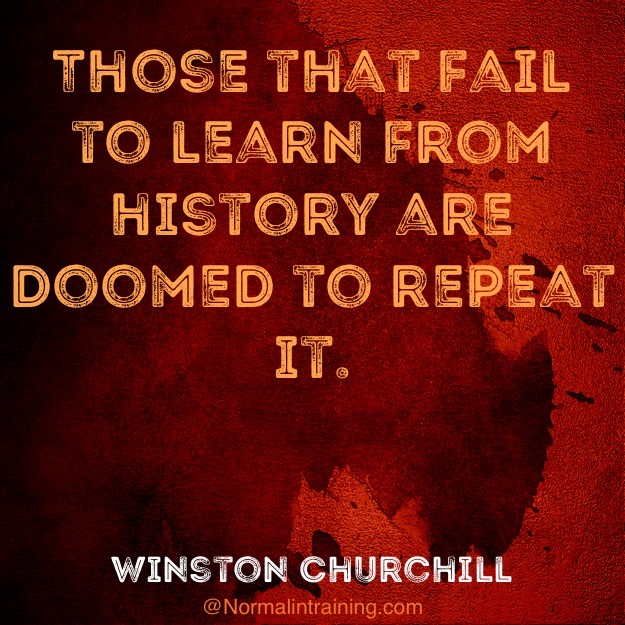
We are facing a difficult time in American history. A time that is eerily similar to previous periods of history where lots of bad things happened–in our country and around the world. People often say that we study history so that we can avoid repeating it. But I’m not sure that’s a given. Take the Bible, for example. In Genesis we learn early on about a sibling rivalry that turned murderous. And when God asked Cain where his brother was, he asked sarcastiically if he was his brother’s keeper. So murdering of family members, denial, lies, and gaslighting have been around for the entire existence of the human race.

Moreover, when Jesus was preaching about how to enter the kingdom of God, he did not primarily use history lessons from the Old Testament as teaching tools. He didn’t have a parable on the Ten Commandments that talked about how not killing others came from the first murder with Cain slaying his brother Abel. In fact, he primarily utilized parables about made-up people like the Prodigal Son, the Good Samaritan, and that poor guy who made a donation even though he had nothing, and therefore will more likely make it to the kingdom of God than some rich dude who donates a lot of money.

For those of you who don’t take the Bible literally or don’t see it as a historical text to be studied in this manner, I’ll use some examples from history. While it’s true that I’m no historian, I read a lot of historical fiction, and I’ve learned a lot more about history from books than I ever did in history classes. And in piecing together all the information I’ve learned from different books, it has become clear to me that war never ends. There is rarely a period of peace before we have to worry about another enemy who we eventually end up fighting.

For example, I just finished reading The Huntress, by Kate Quinn, which I highly recommend. This is not an important detail of the story, so just as a heads up, I’m not ruining anything for you. I learned from the book that after WWII, the US was not particularly concerned about bringing Nazis to justice. That was in the past, and we should just forget about it and move on. In addition, I remember from the movie Oppenheimer that even before we got involved in the war, we were much more worried about Communists. And as soon as WWII was over, we went back to snuffing out Communists. And this fear of Communism eventually led to another war, the Vietnam War, among other related wars around the world, without a whole lot of peace resulting from the war that was supposed to end all wars.

As a psychologist, I do feel confident in my observations about whether knowing about our personal history can help us from repeating our past, both from a personal perspective and from being a licensed therapist for 25 years. Spoiler alert: the short answer is yes, it’s possible, but it’s not easy, and in my opinion, not common.

A lot of psychologists have discredited Freud, the grandfather of talk therapy, but he actually made some fairly astute observations, in addition to his wacky ones. One of the astute observations was the idea of the repetition compulsion. This term refers to a pattern of behavior in which we continue to choose partners who are similar to someone from our past where the relationship didn’t go so well. Usually this person is a parent, since they are the first people we have a meaningful relationship with. Often this repetition is unconscious, and our goal, unbeknownst to us, is to have a similar relationship to the one from our past and to have it turn out better than it did the first time. We believe this will give us some sense of mastery, some assurance that it wasn’t our fault, a sense of agency, and hope that that not everyone who is broken (our parent, ourselves) is doomed to a miserable existence. Unfortunately, usually what happens in a repetition compulsion is that things turn out exactly as they did in the past, and we end up getting hurt over and over again in the exact same way.

One of the goals of therapy is to help the person see that they are making the same mistake over and over again in their choice of partner so that they can learn to choose something different and have a chance of a different outcome. But this is not easy to do. People like Cain, who hurt others and use denial, lies, and gaslighting to blame others for their mistakes, don’t usually go to therapy, and when they’re forced to go they don’t usually benefit from therapy. They don’t learn why they were so jealous in the first place, and what they can do besides murdering people when jealousy arises. So the violence usually gets repeated.

Even with the people who are sincere about wanting to change, to learn from their mistakes, change happens very slowly. Take me and my blog, for example. If you’ve been reading it all these years, then you know that I keep making the same mistakes over again, despite practicing, being in therapy, being a therapist, and writing about my experiences. Have things gotten better? Yes. I’m way better off than before I started therapy, my blog, my job, and my mindfulness practice. But it has taken a long time. And I’m still in therapy. And I still keep making the same mistakes.

Changing history is akin to making a big life change, like changing your eating and exercise habits because you’ve had a heart attack. It’s a lifelong practice that you have to work on regularly. The more effort you put in, the sooner you see results, but it will still take a while. And as soon as you stop putting in effort, you lose all your progress and have to start over again.

So can we learn from our mistakes and keep from repeating history? Yes, but it will require hard work. And we all have to be on board, because like in the military or as a member of a sports team, one person’s mistake makes the whole group suffer.

Going back to the Bible, the best way to start is by taking Jesus’s non-historical advice: rather than looking at the speck in your brother’s eye, pay attention to the log in your own eye. In other words, spend less time worrying about what’s wrong with what other people are doing and think about how you can free yourself from your own mistakes.

P.S. For a closer read on the sibling rivalry between Cain and Abel, check out John Steinbeck’s East of Eden.

I Understand Why they Call It Practice

It’s been a year since 1000 Voices Speak for Compassion was created. In honor of its one year anniversary, the topic of the month is to write about what participating in 1000 Voices has meant to us. I love “year in review” posts, and I love writing about compassion, so this topic is right up my alley.

In the past year, I have made a concerted effort to practice self-compassion, and while it continues to be challenging, it is the strategy that has been most effective in battling my demons. I’ve learned from studying compassion, listening to clients in therapy, and observing my own mind, that our instinctive response to coping with pain and suffering is to be unkind to ourselves. To minimize our suffering. To shame ourselves out of our pain. To chastise ourselves for being crazy, selfish, and petty. It’s ironic that, although we all want to be happy and feel good about ourselves, our default is to see ourselves as being flawed and unworthy.

This instinctive response to be self-critical is so strong that it often takes a while for me to come up with a self-compassionate response. Take today, for example. Another day where I’ve slept in and done nothing. Even though other people have probably done things like wake up early, gotten out of bed, tended to their spouses and children, and done some productive things.

I’ve gotten better at not berating myself, which reduces some of my suffering, but I still struggle with coming up with something loving to say to myself. But today I thought of one. Today, I thought that, for someone who struggles with depression, I’m actually a fairly productive person. And this made me feel strong instead of weak. In fact, I’m writing this blog post right now, since I’m feeling better about myself. Granted, I’m still doing it from my bed, but I can have compassion for myself for that, too.

Practicing self-compassion has changed the way I do therapy, because almost every client can identify that self-critical voice. Most of the time it says unkind things about us all day long, and we do nothing to stop it because it seems so natural and it feels true. So I teach clients how to practice mindfulness so that they can become aware of these thoughts without judgment or criticism. And then I teach them to have compassion for their feelings. This is pain; this is suffering. It does not make you crazy or weak; it makes you human. It is not your fault that you have come into the world this way, with this vulnerability; you did not choose it. And given that you are already in pain, let’s focus on whatever is in your control to make yourself feel better.

I understand why you practice self-compassion. There is no finish line. It’s not something that you master and then you can stop doing it. It’s like doing cardio for strengthening your heart, or lifting weights for your muscles. It is a lifetime activity.

The good thing about blogging is that it’s the psychological equivalent of looking in the mirror at the gym and seeing that your workouts are paying off. Hey! I am talking to myself differently! I am kinder to myself! It’s working! So thank you, 1000 Voices of Compassion, for providing me with this opportunity to strengthen my capacity to love.

For more posts on compassion, you can access the link-up here.

You can also find posts on Twitter @1000Speak.

Where the Heart and Mind Meet

Heart and mind

Last week I had someone contact me out of the blue because she needed to interview a mental health counselor. She heard about me through her aunt, who directed her to my blog. I like being interviewed, and I like being helpful, so I said yes. One of her questions was what my theoretical orientation/approach is. I haven’t answered this question in a while, and the longer I practice, the harder it is to answer.

These days I would say that I teach people how to accept and tolerate pain. Which is not a popular response for some clients. Usually their goal is something like, help me get rid of my pain. And believe me, if I had the power to do that, I would. It’s just that pain doesn’t often work that way.

We believe that we can make our pain go away because we think we have more control over our feelings than we actually have. This is a misconception of what it means to have free will. Not everything that happens in our minds is a matter of choice.

For example, I struggle with being obsessive. This seems like it should be under my control, since I should be able to stop my obsessive thoughts. In fact, for a while, one popular cognitive-behavioral therapy (CBT) technique was called thought-stopping. For some reason, it took decades for researchers to figure out that this doesn’t actually work.

I still try it, though. I tell myself to stop obsessing all day long. In fact, I do all of the CBT strategies that are supposed to help. I challenge my irrational thoughts. I avoid the word “should.” I use positive language. Practice gratitude. But still. The obsessing continues. To those people for whom being rational is sufficient to stop your pain, all I can say is, lucky you.

Most people don’t like medication because needing it seems to signify a lack of control, which signifies personal weakness. I have to admit, I had the same bias. If you read my blog, then you know it took me many years to start and stay on my meds. Even now, I try not to use them until the obsessing becomes unbearable. But then my psychiatrist phrased taking my meds as a way to have control over my anxiety. A novel idea. I like control. So now I take them sooner than I used to.

These days I tell clients to ask themselves, how much pain are you willing to tolerate in order to say that you don’t need meds? Rather than feeling like a failure because they need meds, they can think of taking them as a choice to alleviate their suffering.

The other thing I do is teach clients how to practice self-compassion. All of those rational strategies work better if you express compassion for your pain first. If you say things to yourself like, obsessing is painful. I’m sorry you have to be in pain. It’s not your fault that you can’t make it stop. Why don’t you try ______ and see if that helps? And I go through my arsenal of strategies until something helps. Or until the obsessing subsides.

Having compassion for my suffering frees up some of the energy that I spend on beating myself up for not being rational. Which, paradoxically, allows me to have more control. More free will. Perhaps compassion is the place where the heart and mind meet.

Don’t get me wrong–it’s still hard to practice self-compassion. It does not come naturally to me. My automatic response is still to tell myself to stop being obsessive. But there’s no question that it works. My blog is proof of that. Because it’s been a long time since someone has told me that I’m being too hard on myself after reading one of my posts.

Why Didn’t I Think of That?

self-hypnosis

I finally convinced our book club to read A Hypnotist’s Love Story, by Liane Moriarty, and of course they liked it. They were initially concerned that I picked the book because I’m like Ellen, the hypnotherapist. Which, admittedly, I am. I am definitely the kind of person who would want to be friends with my boyfriend’s stalker. But I also think like Ellen.

I swear, I think Liane and I must be twins separated at birth–except that she’s not Filipino. Her dialogue sounds like it could have come straight from my blog. Or does my blog sound like her dialogue because I read the book a few years ago? No, I’m pretty sure I liked the book because she thinks like me. It gave me hope that I could be a writer, too.

One of the things we talked about was whether the portrayal of hypnosis was accurate–which it was–and whether it could be used for weight loss. It can, but it works best for things that we are motivated to do–like to avoid pain, reduce anxiety. It is less effective for things like losing weight and quitting smoking because people are ambivalent about giving up food and nicotine.

I was telling them how I encourage clients to use suggestions as a way to tolerate negative feelings. I tell clients to predict for themselves that at some point, perhaps even in a few hours, they will feel differently.

I also use it to get out of bed in the morning. Because I am a night owl, waking up early is torture. I used to let my inner drill sergeant get me out of bed: Wake up! Get out of bed already! What is your problem? Are you trying to be late for work? GET UP GET UP GET UP!!!

Hmmm. Maybe that’s why I wake up feeling anxious.

These days I allow myself to hit snooze twice, but the second time I tell myself that I might not even need to wait for the alarm to go off. I might be ready to get up in 5 minutes.

I’ve been sick for over a week now, which is really starting to get to me. I’ve cancelled tennis 5 freaking times, and I still can’t sing because my voice is hoarse from coughing. Not that I’m a good singer or anything; I just like to do it.

I had to leave book club early to pick up some drugs, and one of my friends half-jokingly gave me the suggestion that I was going to feel better. I thought that was funny. But then I thought, why am I not using it to get better? Or to stop obsessing. Or for all kinds of things.

So I’m going to start using suggestions for everything. You are going to be focused with your clients today. You are going to play awesome in your tennis match. You are going to write a fantastic blog post. You are going to publish a book.

So far so good. I do feel better today. And I was ready to get out of bed after 4 minutes.

This is Who I Am

fdd750537c29e8390c58961f21d5193e

Once when I was in therapy I remember telling my therapist that I was like Fred Flintstone. I yelled. I wanted to be right all the time. I wasn’t as good of a friend and a spouse as Barney was. In retrospect, I now realize that the show was about Fred, so people clearly liked him, despite all of his flaws. But at the time, it was a painful realization.

This was a common theme in therapy. How ashamed I felt about being all the things that you weren’t supposed to be. Too loud. Too sensitive. Too controlling. Too needy. Too high maintenance. I couldn’t stand being me. And I couldn’t respect anyone who thought I was great. They clearly must not have very good judgment. So I treated them badly. Which made me feel terrible about myself.

That’s why I treated life like a test. I felt like I was the wrong answer. I had the wrong opinion on everything. I listened to the wrong music. I didn’t have good table manners. Didn’t know anything about current events.

That’s why I got a Ph.D. and got married and tried to have kids. Why I changed my oil every 3,000 miles. Why I force myself to eat vegetables. Which doesn’t have anything to do with being a good person, but somehow all of the big and small rules became equally important to follow.

In all of those years of seeing my therapist, the thing I remember the most was when she said she liked it that I felt things deeply. That I made life more vibrant. This was how she rephrased my shame about being too emotional. I had spent my whole life trying to be less. Until that moment, it never occurred to me that my excesses could be assets.

Yes, feeling things deeply means that sometimes I get depressed. I worry about everything. It’s hard for me to let go of my anger. But being emotional also allows me to be passionate about life, expressive in my writing, and compassionate for other people’s suffering. My excesses enable me to have a blog that helps other people feel less crazy about the things that make them who they are.

And my most recent epiphany is that it doesn’t matter if I can’t think of a way to turn one of my flaws into a strength. Like, I have no idea how counting all the time can be interpreted as something useful. But still. That’s what I do. This is who I am. And I want to accept everything that makes me who I am.

And you know what? It’s pretty liberating. It’s easier to write now, knowing that the only thing that matters is that my posts are a true reflection of how I feel and what I think, regardless of whether or not they’re popular.

Although I still want them to be popular. But that’s OK. Being someone who seeks approval is a part of who I am, too.

In This Moment

touchn2btouched.tumblr.com

I’ve always been reluctant to tell people what kind of music I like, because it’s pretty mainstream. In fact, I’ll make that #11 on my list–my preference for Top 40. Some of my friends have criticized me for what they consider my poor taste in music: it’s so unoriginal. So superficial.

And it’s true that the lyrics usually aren’t profound, but sometimes they still touch upon universal feelings. That’s why even the sappiest of love songs can be appealing when you have a broken heart.

Yesterday on my drive home the song “Daylight,” by Maroon 5, came on the radio. Every time I hear this song I think of one of the long distance relationships I was in during high school. My boyfriend went to college 5 hours away, so we didn’t see each other often. And when we did see each other, I was so anxious by Saturday about him leaving on Sunday that I couldn’t enjoy our time together. No amount of reasoning could stop me from obsessing.

That’s what happens when you have an anxiety disorder. The things that other people find difficult, like saying good-bye, are intolerable. Adam Levine can still hold her close for one night, even if he’ll have to go in the daylight. I, on the other hand, would obsess about how sad I was going to be when that moment came and would end up ruining the whole evening.

Despite the intensity of my negative feelings, I have often chosen relationships that have been characterized by a high level of drama. Which doesn’t make any sense, I know. You would think that I wanted to be miserable. But love is like a drug–especially in the early stages–what with all the obsession and longing and all. Even though the cons outweigh the pros, you get addicted, anyway, because it’s not a rational process.

My relationships were like an addiction in that I craved connection, but no amount of contact was ever enough. And I would experience withdrawal during even the smallest periods of separation, yet I still preferred long-distance relationships.

That’s why I’m proud of myself for not being in a relationship. I’m learning how to tolerate my fear of being alone. And I’m learning how to live without the addiction of drama. And my behavior doesn’t seem as crazy and contradictory–in relationships, at least.

Other things have helped with my anxiety, too. I resisted meds for a long time, even though people begged me to take them for their sake, if not for mine. But I have to admit, even though I don’t like taking them, they make my anxiety bearable.

I also have a therapist who I can call when I’m freaking out. I meditate, which has helped me tolerate my feelings. And I practice mindfulness as often as possible.

One of my favorite mindfulness mantras is any sentence that begins with “in this moment.” In this moment, I am anxious. It’s hard to breathe. I am in pain. But in the next moment, I will feel differently.

And I always do.

Mental Illness Does Not Discriminate

ca8b16590eaa148af81ad1d4dd3f78c3

I don’t like to use my blog for rants, but I am angry. And if I’m being compassionate with myself, then my anger is just as valid as any other feeling. So I’m going to give myself permission to write about my anger.

I was telling a friend recently about the presentation I gave at work on self-compassion, and he responded with hostility and disdain. I was not prepared for the attack. I understand that some people prefer the “suck it up” approach to pain and suffering, but why would it make him angry that I teach people how to be kind to themselves instead?

I also had a conversation with another friend who reminded me that many people don’t think the students I work with have real problems. I work at a counseling center of a college that is made up of predominantly wealthy students. Many of the students who come to counseling are the ones who don’t fit in because they are not white, not rich, not Greek, etc. Other students fit in just fine. Other than their mental illness, that is.

Either way, as far as I’m concerned, their suffering is equally valid.

But I seem to be in the minority. Because when I tell people where I work, they question how these students could possibly be suffering. What do they have to be unhappy about? Their lives are great. They don’t have real problems.

This is a sore spot for me because I was one of those people who didn’t have a good reason for my depression. My parents are both doctors. I was able to go to good schools, get a Ph.D., obtain a good job. I haven’t been traumatized. All of my basic needs were provided for. How could I possibly be depressed?

I don’t deserve compassion. Don’t deserve meds or therapy or any kind of relief because I’m just being weak. Lazy. Selfish.

People don’t claim that someone isn’t really suffering from the flu or that they don’t really have cancer because they have a good life. But for some reason, we believe that the privileged are immune to mental illness. I believed this, too. Which is why I didn’t ask for help.

But mental illness does not care what your background is. It does not discriminate. It is an equal opportunity employer, distributing pain and suffering to the entire human race.

For whatever reason, the hostility of these attacks has hit me full force, and I am angry. I’m trying to figure out how to deal with these comments when they come up in causal conversation without attacking back. But I can’t keep people from judging me or my clients or my profession. Not even my family and friends.

In therapy I tell clients to control what they can control. I cannot make someone see the value of having compassion for themselves and for others, but I can have it for myself. I can remind myself that my pain is real and that I deserve to treat myself with kindness. And I can be a voice for those people who need to be reminded that their pain counts, too.

And I can blog about it, which always helps.

Why I Blog About Mental Illness

Yesterday someone asked me to write a 1,000 word essay on my personal experience with mental illness. After I wrote it, I realized that I have never told my story to anyone. I have now added it to the menu on my blog, but I thought I’d include it in a post, too. Here it is:

I come from a family with a history of depression and anxiety. My dad and two of my brothers have bipolar disorder. My mom has an undiagnosed anxiety disorder. And I struggle with both mood and anxiety disorders. Because of this familiarity with mental illness, I played the helping role in my family for many years before I chose my profession. So becoming a clinical psychologist almost felt like a calling rather than a choice.

I first became depressed in high school. It’s hard to separate the angst of adolescence from clinical depression, but I had thoughts of suicide by the age of 15, so I’ll say that it started then. At that time, my diagnosis would have been dysthymic disorder—a more chronic, lower grade version of depression.

When I left for college at 18, I crossed over to major depression. However, I didn’t do anything about it for a year. At 19, I had my first therapy session with a psychiatrist who confirmed my diagnosis of depression. At the time, that was enough to make me feel better—to have someone tell me that what I was going through was real.

So I didn’t follow up with therapy until after I graduated from college, when I was 22. I can’t say I thought that therapist was particularly helpful. He never told me his opinion on anything, never gave me homework, never offered me another way to look at things.

The 3rd time I went to therapy was with my boyfriend right before we got engaged. I was 25 at the time. It was clear that she thought that our relationship problems were because of my depression and suggested that I go on meds, which really pissed me off. We didn’t see her for very long.

Still, she planted the seed of meds in my mind, and I started a trial of antidepressants about 6 years after she suggested it. And it did help. But after a year and half, I stopped taking them because I didn’t want to have to rely on meds to feel “normal.” Then I started them again a few years later when my husband and I started talking about separation.

I also went back to therapy. And she is the therapist who I have seen on and off for 13 years now. Her unconditional acceptance and belief in me, over time, has allowed me to accept and believe in myself. Still, I would see her for as little as I could get away with until I became functional, because I didn’t think I deserved to take up more of her time.

My 2nd major depressive episode happened almost 6 years ago when I was 40. I had stopped taking my meds again, and about 3 months later, I got depressed again. And it was even worse than the first time. It probably took me about 9 months to recover completely.

This time I was not able to just restart my meds and return to normal, so I saw a psychiatrist for the second time. Surprisingly, he was more concerned about things like light therapy, sleep hygiene, and supplements (Omega-3, NAC, Folic Acid) than he was about antidepressants. But I had to take those, too. He also added Ativan, because my anxiety had worsened, and lamotrigine for bipolar depression, because of my family history and my hypomanic episodes.

It was difficult to accept that for the rest of my life I would be on a regimen that requires an AM and PM pill box. But I had suffered so much through this last depressive episode that I got over it and was thankful to pharmaceutical companies for coming up with drugs that could make me feel like myself again.

Since that last depressive episode, I have gotten much better at taking care of myself. Mental health professionals have a tendency to put other people’s needs first, usually to their own detriment. I guess it’s sort of like how physicians make terrible patients. However, my determination to avoid a 3rd major depressive episode has motivated me to make my well-being a priority.

I have never shared this detailed of an account of my mental health history with anyone because I was ashamed of my depression. I felt like a failure. I was supposed to have everything under control, but sometimes I was struggling more than my clients were. But then a few years ago I decided to write a book about self-acceptance where I make use of both my personal and professional experience.

I decided to start with a mental health blog where I would be open and honest about all of the things that I ordinarily try to hide as a way to demonstrate how to practice self-acceptance. Because it’s that hard to do. Even when you know what you’re supposed to do.

Surprisingly, readers are more interested in my personal experience than my expertise. Although I think it helps them to know that I am a psychologist, because it’s further proof that everyone struggles. Being an expert doesn’t make you exempt from suffering. From avoiding help. From resisting treatment. It is all a process that slowly improves with time. And as I blog and get feedback from readers, I become increasingly more comfortable with being me.

So even though I started this blog to help other people, it has turned out to be the best gift I have ever given to myself.

Self Disclosure is the Hardest Work I know

Christmas gift

I have another guest post today! This one is from a former client who was different from the students I usually see–older and more worldly with lots of interesting life experiences. I am finally at the point where I feel like I have something to offer students in their 20’s, but not someone like her. She seemed so confident and poised. I was actually kind of intimidated by her in the first session. What could I possibly have that would be helpful to her?

It’s nice to be reassured that giving someone the opportunity to be authentic truly is a gift. And it is a gift to me, as well, to work with people who are willing to take the risk of being vulnerable.

***

I am like a Christmas present. Shiny, alluring; and, there for the taking. What’s inside is a mystery. All wrapped up, I look really good. All wrapped up I am…the full package.

If Christmas morning never came no one could open me and reject me. No one would know I can be snippy, selfish, anxious, needy, human. No one would learn sometimes I am distant, selfishly desirous of the solitude of the privacy of my own mind; sometimes I have anxious feelings about what is between us; sometimes shiny me has a complaint, sometimes there is navigating to do. If Christmas morning never came, no one would find out who I am. All wrapped up, I am the full package all the time. I would rather gird myself in duct tape than disclose my feelings to you.

Fortunately, therapy has given me the vast perspective it takes to find the reasons why doing the business of feelings is complex for me and why I work so hard to perpetuate the illusion of perfect satisfaction in my outward appearance. In lieu of being fully human I am a picture of calm. The pay-off from learning what I have learned through therapy is that this Christmas and in this New Year I will give myself the gift of feeling human through disclosing my feelings to others.

Why? Because packaging how I feel, and not outwardly acknowledging my feelings or your feelings, being preternaturally centered at all times, has started to take a toll on my relationships. Before now, my feelings were kept prisoner in a shiny box and I thought revealing them would doom my relationship with others. Now, I understand that I must practice self-disclosure and feel my feelings in order to thrive. And, in order to be fully engaged in my relationships.

Experiencing the full range of human emotions cannot be done alone. Until I disclose who I fully am to those who I love and who love me, I am an unfinished gift. Pretty on the outside, and such a mystery that it amounts to an unknown inside.

Christmas is coming. I will be under the tree at the end of the day, finally open. My wrapping no longer encumbering me, my many colors of tissue and my many mysteries will be out of the box. All of me open and on display under the tree I will be like any other Christmas presents—some of them pure treasure, some of them so-so, some of them needing alteration, some of them more perfect than anyone imagined, some of them forever gifts, some of them for consumption now. All unwrapped, I still look really good. I am the full package.

Elizabeth Barbour is a perennial student of Life, recent law grad, avowed Late Bloomer, proud Mother, and writer coming into fruition.Â