Tag Archives: warriorism

In the Zone

Want to be happier? Try adding some flow to your life.

Mihaly Czikszentmihalyi’s research indicates that engaging in activities that you find pleasurable and absorbing is one of the things that makes life worth living. When you are in flow, you are focused on the here and now. You experience a loss of self-consciousness and lose all sense of time. You feel like you can handle anything that comes your way.

Flow is what athletes feel when they are in the zone. Although I don’t consider myself athletic, I have experienced flow on the tennis court. It doesn’t always happen, but every now and then, the ball does exactly what I want it to. No channeling of inner warriors required: everything is effortless, unconscious.

Flow is not limited to sports. You can experience flow at work, during artistic activities, and in nature. Sometimes I’ve experienced flow with clients in therapy: I feel so connected to them in the moment that I know what they’re trying to say before they say it. Occasionally, I’ve experienced it when blogging: the words and ideas seem to be writing themselves, and they are perfect.

And there are those rare moments–usually when I’m at some lookout point–where I have a moment of clarity. I am Neo at the end of “The Matrix,” when he breaks the code and fights off the Agents with minimal exertion. The mysteries of the universe unfold. I feel joyful and calm at the same time.

Flow can also be interactive. Like Hazel and Augustus in “The Fault in Our Stars,” you stay up all night, sharing your life stories, and time stands still. Or like when you’re catching up with your best friend who you haven’t seen in ages, but you can pick up right where you left off, as if you talked just yesterday.

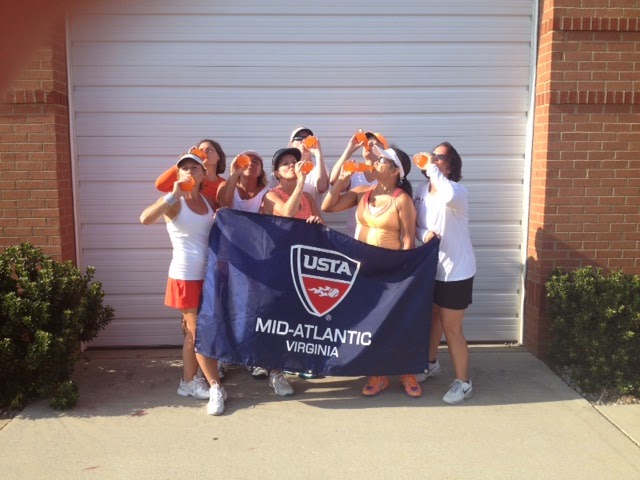
This weekend I was blessed to experience flow in all of these areas. I was at the Virginia district tournament with my tennis team, and I was in flow on the court. My team was in flow, and we made it to the finals for the first time ever. And all of the moments off the court were filled with joy, celebration, and camaraderie. Even writing about it is effortless. No self-consciousness. No demons. Just a pervasive sense that life is good.

Usually Mondays are hard for me, but today I am happy. In this moment, I am in the zone.
Orange Crush

Survival of the Fittest

I’m reading Little Princes, by Conor Grennan, and it’s making me reflect on how poor my survival skills are.

It’s about this guy who decides to volunteer in an orphanage in Nepal for 3 months to justify taking a year off to blow his savings and travel around the world. He ends up doing a lot more than that–reunites the kids with their parents, opens his own orphanage–which is both impressive and a little daunting.

One of the very first things that Conor describes is eating daal bhat with his host family. It is a dish made of rice and lentils and is very spicy. He suffers through a lot more than just eating a spicy dish, but that was enough for me to conclude that I am not fit to save orphans in Nepal. My GERD alone would lead to starvation, because this is what they eat for 90% of their meals.

Last year I was reading On Gold Mountain, by Lisa See, and there was one paragraph describing how families who were riding out west in covered wagons did not stop to pick up their kids when they fell out because they needed to make it out there before winter. That’s the only thing I really remember from the book, even though it had very little to do with the story.

I had no idea that riding out west in a covered wagon was so dangerous. I always imagined that their biggest problem was entertaining themselves without movies and iPods and video games. I didn’t realize they had to fight for survival. If I were alive back then, I think someone would have “accidentally” knocked me out of the wagon, what with my allergies and asthma and all. What good could I possibly be in anything that required sustained cardiovascular effort, like killing wild animals or chopping firewood?

I guess I don’t have to volunteer in Nepal or be able to survive in a covered wagon, but these are the kinds of random things that my inner critic will use against me. The whole time I’m reading this book, it lectures me on how I should be tougher, stronger, and more altruistic like Conor. And I call myself a warrior. Puh! I don’t think so.

I am always having to demonstrate to my inner critic why my life is worthwhile. I’m a psychologist. That’s something. And I captain a bunch of tennis teams. People hate captaining, so that’s doing something helpful. And I’m writing this blog, which is also helping other people. Isn’t that enough to justify my existence?

I’d like to think that there are many ways to save the world. We aren’t all fit to rescue orphans. Maybe some people focus on saving whales. Others minimize their carbon footprint. And some help the survival of our species by having children and raising a family.

And some people dedicate their lives to helping people practice self-acceptance. To helping people realize that they are worthwhile, regardless of what they can or can’t do.

So take that, inner critic!

Motivation

In the Wimbledon final today, the commentators were discussing how Federer loves winning more than he hates losing, which is why he can shake off losses and stay motivated. However, in Andre Agassi’s autobiography Open, Agassi repeatedly states that he hated tennis, but he hated losing more, and that mindset worked pretty well for him.

It got me thinking: is it better to be motivated by love or hate?

There have been times in my life when I’ve been more motivated by hate than love. Even though I did well in school, I didn’t love it. I just hated failing, and anything less than a B was failing. So I mostly got A’s, but I can’t say that it brought me much joy to get them.

I used to be obsessed with my weight when I was in my 20’s and 30’s, so I was much more disciplined back then about exercising and watching what I ate. I weigh more now, which doesn’t thrill me, but I can’t say that I was happier when I was thinner. Every now and then I will get into that obsessive mindset again, but then I decide that I’m just going to stop looking in the mirror so much. Because even if it’s an effective weight loss strategy, it’s just too painful to hate my body.

I know I said in a previous post how it’s more important for me to play with friends than it is to win, but I have to admit, losing is starting to get to me. I haven’t had a single win in either of my mixed doubles teams this year. Still, losing hasn’t diminished my love for the game or my motivation to get better. I can’t say whether I love winning or hate losing more. I think it’s more accurate to say that I love competing and I love the fight, and that is all the motivation that I need.

Plus, win or lose, at the end of the day, you still get to have dinner with friends afterwards. And for me, food is the greatest motivator of all.

Here is a picture of my only winning team this season. Which I am not captaining, of course.

f15fb-img_0262

Birthday Reflections

So I’m reading The Fault in Our Stars for book club, which is told from the perspective of a 16 year old girl with cancer, and guess what? I still talk like a teenager. Yup. Some of her comments could have come straight from my blog.

Even though I turn 45 today, I guess I can consider this a compliment, since this is a best seller with a movie that is a box office hit and has gotten great reviews. So if I sound immature, at least it’s in a way that people can relate to. And if you’ve read the book, then you know that Hazel Grace is no ordinary 16 year old. For example, she refutes the adage that without pain, we cannot know joy by pointing out that “the existence of broccoli does not in any way affect the taste of chocolate.” I love that!

Still, I find it ironic to discover that I still talk like a teenager as I hit what is irrefutably middle age. I thought I would be OK with it, because it’s not like I didn’t know I was middle-aged. And as long as I don’t hit a prime number, I’m usually fine. And 45 is divisible by 3 and 5, so I figured I was safe until I turned 47. But no. Mother Nature likes to rub it in your face that you are becoming an old lady, and I received a couple of early birthday gifts just to make sure I was aware of this.

Before someone sends me that quote about how old age is a privilege that not everyone gets to benefit from, let me preempt you by saying that I am grateful for my life. It’s just that signs of getting older bring up that feeling that I talked about in the Beginnings and Endings post. Sadness about the loss of gifts that I had not even been aware of until I began to lose them. Anxiety about the losses to come. Panic about how fleeting time is.

I am afraid I am not one of those brave souls who will embrace aging with grace and dignity. I’m pretty sure I’m going to go kicking and screaming, fighting it every step of the way. I guess this is one of the downsides of being a warrior.

I’ve been thinking about what I could say in this post for several days now. I was really struggling with how to make it positive, since my goal is to be honest, and I have honestly been in a place of sadness and anxiety about getting older.

But I pray about blog posts, too. I pray that God will give me the inspiration to come up with something to say that will be helpful to someone, even if that someone is just me. So far, God has always answered this prayer. Today was no exception.

This morning, as I warned my inner critic that it was not allowed to make me feel guilty about sleeping in on my birthday, I leisurely checked out my birthday messages on my phone and FB, and I was humbled by how many of them there were so early in the morning. Well, early in the morning for me, at least. And I got the message: the one gift that will grow with age is love.

The feelings of love that I have for others will only deepen, as will their love for me. And as I get older, the more people I include in the circle of who I care about. Blogging, which I also consider a gift from God, has dramatically increased the number of people who have been brought into my life. So I have a great deal of love to look forward to, for as long as I may live.

Plus, I will always have an inner infant, Sophie, and now a teenager, as well as a slew of other parts in my internal family. They are always vying for my attention, letting me know that they are there, whether I want to hear from them or not. Through the process of blogging–and aging–I am learning that these parts I’ve been at war with also love me, although they show it in ways that are sometimes annoying.

So I am thankful to God, and to all of you, for reminding me on my birthday how blessed I am with love.

Swashbucklers Anonymous

My name is Christy Barongan and I am a swashbuckler.

I mentioned in a previous post that I’m reading The Art of Empathy in an attempt to help me with my hyperempath problem. I finished the chapter on empathic love, and it is so true of me that it freaked me out. I almost had a panic attack and had to take a nap afterwards.

In this chapter she lists 4 impediments in a potential mate: 1) a lack of emotional skills, 2) an active addiction, 3) unhealed childhood trauma, and 4) the presence of a toxic ex-mate. These impediments are practically criteria for a relationship for me. I like challenges, but come on! This is ridiculous! Reading this list drove home the fact that most my relationships had little chance of succeeding from the start.

Ironically, reading this chapter also helped me to not beat myself up about my relationship choices. I am drawn to people with these problems for the same reason that I chose to be a psychologist. I want to help people. I believe everyone is capable of turning their life around, and I am confident that I can help them do it. I never back down from a challenge, and I never give up. These are all qualities that I’m proud of.

However, I am beginning to realize that every challenge has a cost. Even if I do something I enjoy, like play tennis, write a blog post, or talk to my brother, it drains me mentally and physically. Which is OK. I love doing these things, so it’s worth it. But in the past, having the ability to help someone was reason enough to do it. Whether I wanted to do it or not was irrelevant because my wants and needs didn’t count. And I never paid attention to the impact that giving so much of myself had on my well-being.

In a way, that’s one of the benefits of being prone to depression and anxiety and of having allergies, GERD, and asthma. Now I have to pay close attention to everything I do and how it will affect me. I have to be intentional about all of my choices. It’s a pain, but it forces me to take care of myself.

Also, when I choose to do something challenging, most of the time I’m not too attached to the outcome–except in relationships. I’d like to move up to 4.0 in tennis, but if I don’t, I’ll just keep trying. Same with writing a best seller. I know the odds aren’t in my favor, but I enjoy the process, and if it never happens I won’t be devastated. I don’t even take it personally when I can’t help a client get better.

If I had the same attitude in relationships–that I gave my best effort, and that’s all I can do–then perhaps I wouldn’t feel like such a failure in them.

It also helps that McLaren calls people like me swashbucklers rather than codependents or love addicts. She describes swashbucklers as people on a heroic journey filled with impossible tasks and mythical beasts. Sort of like relationship warriors. But like Odysseus at the end of his adventures, I think I’m ready to come home.

Maybe I can use my superhero skills to save myself.  After all, who is better qualified to help me than me? I don’t even have to do it alone. I could create a support group for hyperempaths. A 12 step program for swashbucklers, if you will. I think it could be a big hit.

So if you’re interested in participating, let me know.

The Perfect Solution

I am currently living in a patio home subdivision for retired people where the average age is around 80. But that’s OK. It’s small, but I live alone so I don’t need a lot of space. I don’t have to do any landscaping, snow removal, etc. All of the neighbors look out for each other so I am notified of any burglars or bears in the vicinity. There are 2 other people my age who live here, although I never see them. And it is a substantial improvement from the apartment I lived in before I found this place. And it’s a miracle that I was able to buy it at all, so I’m thankful for my humble abode.
 
I feel bad because my neighbors want me to be more social, but that’s not going to happen. First of all, I have a job. And because I have a 45 minute commute and play tennis in the evenings and on weekends, I don’t spend much time at home. And even if I were home more often, I wouldn’t spend my spare time socializing with senior citizens. Not that there’s anything wrong with them. They’re all perfectly nice. I just don’t have a lot in common with them.
 
Last year one of my neighbors had a party for her 88th birthday. I tried to will myself to go, but no amount of guilt and shame could motivate me to do it. Last week someone called me to let me know that my neighbor’s aunt died and when the funeral was. I hate funerals. I avoid them at all costs. So I certainly wasn’t about to go for some aunt of some neighbor who I barely know. Another neighbor keeps inviting me to go to church with her. I think she’s trying to convert me.
 
Although everyone looks out for each other because of the increased likelihood that someone really could fall and not be able to get up, they still probably wouldn’t think to check on me because I’m never home. And if I had some emergency, it would probably be late at night when everyone is asleep. And even if I could work up the courage to call one of them in the middle of the night–which is unlikely since I feel so guilty for being such a terrible neighbor–I doubt they would be able to lift me, given their own physical limitations.
 
Last night my friends were trying to help me come up with solutions for how to deal with emergencies. Maybe I should get one of those life alert buttons. Or maybe I should get a lanyard and wear my phone around my neck at all times. Or since I’m a warrior, maybe I could crawl to my phone or my iPad, even if it takes me hours to reach it. So if I ever post “Help! I’ve fallen and I can’t get up!” be sure to check on me.
 
I’ve been watching the commercials for an assisted living facility in my area, and it hit me that this is the perfect solution. If I lived in one, I wouldn’t have to worry about living alone because help would be right there on the premises! Plus meals are included, so I’d never have to cook. And after doing some research, I discovered that they also provide housekeeping, laundry services, and grocery shopping! I could literally spend all my free time writing, watching and playing tennis, knitting, making jewelry, and hanging out with friends. Heck, I could probably even pick up another hobby.
 
My friend told me that you have to be at least 55 to live in one of these facilities. By then I would also qualify for the 55 and over division in tennis and hopefully dominate on the court if I’m still healthy. So I guess that’s something to look forward to in case this whole relationship thing doesn’t work out.
 

Head Games

Competition can bring out the worst in people. It is not uncommon to see anger outbursts on the tennis court from people who are ordinarily even-tempered. They’ll yell, hit the net, or knock the ball out of the park. You don’t see too many people break their racket at our level, but I had a partner do it once because he was mad that I wasn’t coming to the net.

I actually think that I have a better attitude in tennis than I do in real life.  For example, since I obsess about money, I would never break a $200 racket. Plus, I try to not let my opponents know that I’m upset because that gives them a mental advantage. Plus, I love my racket in part because it’s purple, and if I had to get a new model it would not be purple.


Some people will use head games to gain an advantage. They will intentionally make bad line calls or accuse you of making bad line calls. They will argue about the score, time violations, lineup changes, coaching, and bathroom breaks. Or they’ll do seemingly positive things to disrupt your concentration like crack jokes, be chatty, or tell you how awesome you’re playing.


I admit, sometimes I’ll use positive head games to counteract negative ones. I try to capitalize on the fact that it’s hard to be mean to someone who is being fair and kind. Last year I played against this person who is known for causing drama and making bad line calls, so I was super nice to her from the start. It worked for the most part but she still made one bad call. My partner went ballistic but she insisted the ball was way out, which was a flat out lie. I said “it may have been out, but it wasn’t way out,” just to end the argument. There were no other disputes about line calls and no hard feelings by the end of the match.


In a relationship, however, if my partner uses head games I yell at him for trying to manipulate me.


Another common way to deal with frustration is to blame your partner for blowing the point. If my partner criticizes me I either ignore it, call them on it, or never play with them again. This is one place where I won’t try to make the relationship work at all costs.


I rarely criticize my partner on the court. In fact, I take pride in being able to bring out their best game. I praise them for the things they’re doing well. I help them stay focused and positive. I get them to dig deep when we’re on the verge of losing.


However, in real life I am pretty sure my exes would tell you that I have no problem doling out the criticism.


I am also less critical of myself in tennis than I am in life. Most of the time I’m able to let mistakes go and focus on the next point. I don’t get too upset about losses. In fact, my current record is 7-11. But I play so much tennis that another opportunity to win is just around the corner.


In relationships I focus on all the negative outcomes and wonder what I’m doing wrong. In tennis, I focus more on the process than the result. As long as I’m happy with how I played, I don’t mind losing. And it’s fun to win, but the thrill of winning doesn’t last as long as the joy of trying to get better, looking forward to the next match, and fighting for the win on the court.


Maybe I should treat my next relationship like a tennis season.

2014 Blog for Mental Health Project

“I pledge my commitment to the Blog for Mental Health 2014 Project. I will blog about mental health topics not only for myself, but for others. By displaying this badge, I show my pride, dedication, and acceptance for mental health. I use this to promote mental health education in the struggle to erase stigma.”  
A Canvas of the Minds

Sometimes we make the most important decisions in our lives without consciously knowing why we made them at the time.I knew that I wanted to become a psychologist since I was in high school. At the time I wasn’t fully aware of being depressed in the clinical sense. Being anxious was so much a part of my personality that I didn’t think I had an anxiety disorder. And I definitely wasn’t aware of any mental illness in my family. I had no idea at the time that depression, bipolar disorder, and anxiety would impact every aspect of my life–in both positive and negative ways.

It’s probably not surprising that I have been negatively affected by mental illness. But as I write this post, I realize that there have been positive things about it, too. I have learned the most important lessons in life through suffering and loss.

Even as a therapist, when I heard clients make comments about how they had a bad week, it didn’t fully register how horrible that week was for them. In part because clients don’t elaborate unless you ask them to. Unless they are certain that you really want to know. And because they are embarrassed about it. Ashamed, even. But after going through my worst depression 5 years ago, I have much more compassion when clients make these offhanded comments.

I admit, during that period there were times when suicide would cross my mind. But there were two things that kept me from seriously entertaining it. One is that my dad would be devastated, and I feared he would never recover if I went through with it.

The other reason is that if I took my own life, it would undermine everything I ever said to my clients about how pain passes. That one day when they look back they will realize how strong they were at the time. That they will learn lessons from their suffering that it takes some people a lifetime to learn. How can you believe anything your therapist said if she committed suicide? That would be the ultimate betrayal.

So I spent months willing myself to get better. I went back to therapy, started meds again, meditated and prayed, and forced myself to play tennis and spend time with friends. And I did get better. And everything I said about realizing my strength, becoming more compassionate, and acquiring wisdom were all true. I would have never chosen depression, but we usually don’t choose the experiences that teach us the most about life.

People often ask me how I can listen to client’s problems all day long. In all honesty, I can’t imagine what else I would do for a living. It feels more like psychology chose me. And when I hear a client’s story, I always have hope that together we can change the plot for the better. After all, I always root for the underdog. I am the eternal optimist. And I never back down from a challenge.

There was a time when I would never have told this story about my struggles with depression and anxiety to my students or clients. Or even friends and family. But now I want to share it with the world, because every act of courage benefits someone else. My blog is proof of that.

Patience Isn’t Always a Virtue

I looked it up. While it is included in some lists, in Catholicism the 7 virtues are faith, hope, charity (the theological virtues), prudence, justice, fortitude, and temperance (the cardinal virtues). Since I at least grew up Catholic, I’m going to use this list, because I’m not patient at all, and I don’t want to be unvirtuous.

My greatest strength is probably fortitude. I never give up in a match, even if I’m down 0-6, 0-5. I continue to play tennis, even though it makes me throw up. I will do everything I can to make a relationship work, even if it’s a lost cause.

Last week I had a client who started antidepressants and experienced a sudden onset of suicidal ideation, which sometimes happens in young adults. As she was describing what it felt like, I realized that I had experienced the same thing when I got back on meds, even though I was not a young adult. But I was on a higher dose than I was before. In retrospect, it turns out it was too high; I had a lot of side effects that I had attributed to the depression.

I didn’t think much of it at the time because I always have some suicidal ideation when I’m depressed, but it was definitely different. It was what psychologists call ego dystonic. As my client put it, my brain told me in the most illogical way that suicide was the next logical step to whatever I was thinking. If I didn’t have the energy to walk over to the fridge and get a milkshake, my brain would say Well why don’t you just jump off the balcony, then? It freaked me out. I would yell back. No! I don’t want to do that! I want to live!

So I fought the thoughts off until the meds kicked in. At the time I thought I was weak, but when I recognized myself in my client’s story, I realized how strong I am.

Patience, on the other hand, is a different story. Patience also requires strength, but in a quieter, more peaceful way. And as you know if you’ve been reading my blog, I am loud and obsessive. You can’t will yourself to be patient the way you can will yourself to save break points. In fact, although this blog is about practicing other quiet, peaceful things like self-acceptance, compassion, gratitude, and forgiveness, I have never included patience in that list until today. Probably because it seems impossible to achieve–even for a warrior like me.

As I mentioned in the post on obsessiveness, I can only focus when I meditate about 5% of the time. But it still works. I am definitely less anxious, better able to tolerate my emotions, and more compassionate. Maybe patience is the same way. Maybe if you at least have the intention of being patient, even if you suck at it, it will still work. That’s what they say in Buddhism–in a less judgmental way, of course.

Might as well give it a shot. Whether or not it’s a virtue, it’s still a good quality to have.

Friendship, Part 2

Warriors in Training

When I was in grad school, I didn’t have many visitors because it was a long drive and there was not a lot to do in the middle of Ohio.  So I saw my family and friends infrequently, and every time I said good-bye I felt this overwhelming sadness–and not just because I wouldn’t see them for a long time.  I was also sad because when I was with them, I was completely myself, and I rarely felt free to be myself.

Part of the problem was that the feeling of being different followed me well into my adult years.  I wasn’t like the other grad students.  I watched reruns of The Flintstones and Gillian’s Island rather than keeping up with what Koresh was doing in Waco.   I wasn’t spending 70-80 hours a week on grad school stuff.  I didn’t listen to the right music, didn’t hang out at the cool coffee places.

I moved around a lot during that time, too.  While I was with my first husband, we moved almost every year because he was never happy where we were–which turned out to be more about him than our location.  Still, I didn’t mind the excuse to not get too close to anyone.

When I finally moved back to Virginia and became a part of the tennis community here, I was a little freaked out.  There was no way I could avoid being a part of the gossip, what with my failed marriages and all.  Plus, I only dated tennis players, so everyone knew who they were.  I had no place to hide; giving up tennis was not an option.  I had to let people know what I was really like.

Of all the gifts that tennis has given me, my tennis family is the best one of all.  These are the only other people who I can be myself around without obsessing afterwards about what I said or did.  They have seen me throw up on the court.  They’ve been there when I’ve gotten kicked out of restaurants for being too loud.  They don’t judge me for always being hungry and constantly having to pee.  They don’t expect me to make anything for potluck dinners because they know I can’t cook.  (But I do bring the Karaoke and board games.)  They even indulge my grandiosity by calling me the Queen.

Often the feedback I get about my blog is about how honest I am.  In an I wouldn’t do it, but good for you! kind of way.  I’m tired of hiding.  I spent the first half of my life trying to be like everyone else.  I want to spend the second half being myself.