Category Archives: Sports

This is How I Roll

One of the differences between tennis and pickleball is that in tennis you get to be all matchy-matchy. Some women in pickleball wear cute outfits, but they don’t feel the need to match from head to toe and buy multiple pairs of shoes. In tennis, even the professional men on tour like Alcaraz and Sinner match, right down to their socks and shoes.

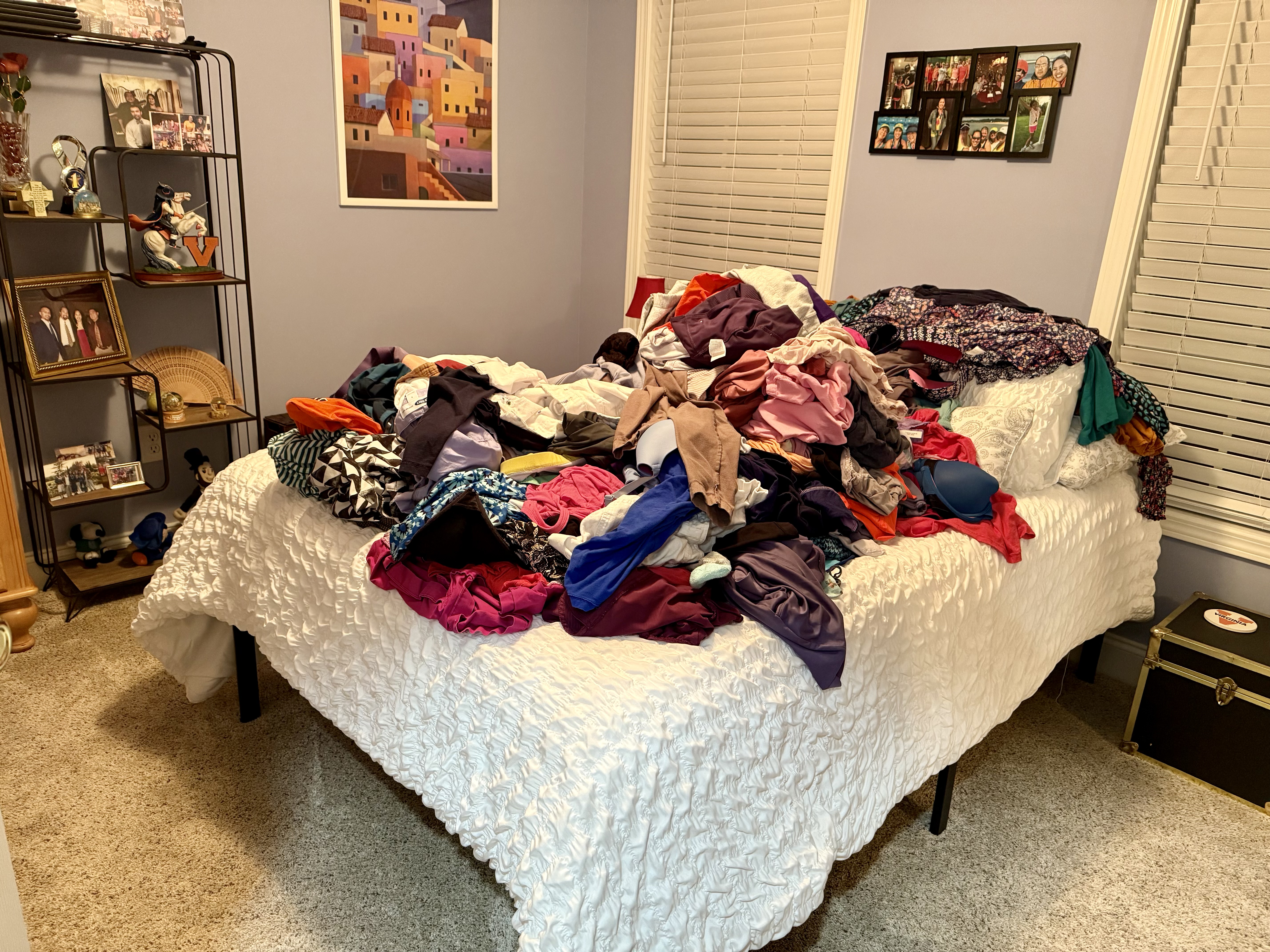
One of my neurospicy characteristics is my OCD, so I always made everything match down to my underwear, even before I started playing tennis competitively in my early 30’s. I am a little less stringent about matching now, since I work from home and all people can see is the very top of my blouse. And I hate folding clothes so they’re just piled in a huge jumble on my guest bed. And I don’t want to spend time sorting through the pile to make sure I can find a pair of underwear that’s going to match my bra and go with my outfit.

But now that I’ve started playing tennis again, my desire to match everything has come back with a vengeance. Last Monday, I decided to wear everything in 2 shades of purple for pickleball–dark purple (my favorite) and a lighter, lavender color. I debated on whether I wanted to go so far as to get my matching purple jacket and my matching purple gloves. Would people think this is too much? A bit over the top?

Ever since I have embraced my neurodivergence, I have changed. Before, I was training to be normal, like Neo being trained by Morpheus in The Matrix, since he was reborn into the real world. I didn’t trust myself. Do I really have power? Can I really be myself? Am I really all that? Neo asks himself this question over and over again, seeking reassurance from Trinity, the Oracle, and Morpheus. The Oracle tells Neo that he’s not ready. That he’s waiting for something. Morpheus says that he needs to believe. He can only show him the path, but Neo has to walk it.

In the end, there are 2 things that help Neo realize that he’s the One. First, he believes that he can save Morpheus and risks his life doing so. Second, Trinity tells him that the Oracle told her that she would fall in love with the One, and she loves Neo, so he can’t be dead. He needs to get back up and fight. So he does. And then, suddenly, he can read the code, and he destroys the Agents effortlessly.

If you haven’t watched the Matrix, I’m sorry I spoiled it for you. But in my defense, it came out in 1999. And if you haven’t watched it yet, what are you waiting for?! This is one of the greatest movies of all time! They just made two references to it in the musical The Book of Mormons, which my family and I watched yesterday. That’s how relevant it is!

But I digress.

Now that I understand what neurodivergence means, which is that some people’s brains are wired differently, I know what my superpower is. I can feel people’s neurodivergence. I have to think about their particular skills, recalling pervious sessions with them, including details they mentioned but we never focused on. The recognition of their neurodivergence, however, is instantaneous.

When I explain to people what their superpowers are, they begin to thrive almost immediately, knowing deep down that what I’ve seen is true. Just like Morpheus knew that Neo was the One.

By the time we have our next session, they have already come up with new ways to self-soothe when they become distressed. This is the biggest problem that neurospicy people have–the neurotypical world traumatizes them on a daily, sometimes hourly, basis. But once you know how to self-regulate, you no longer have to be depressed, anxious, or have a meltdown for extended periods of time. You can do whatever you need to do to self-regulate.

And then you can thrive. Because they know themselves better than I do, once they’ve been shown how to read the code, they fly. Just like Neo. And they, too, become the Ones.

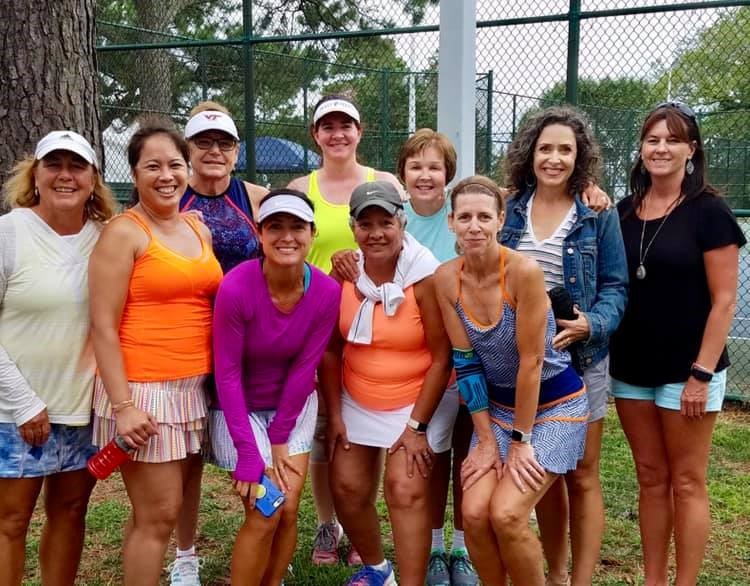
What does all this have to do with me dressing up in 2 shades of purple from head to toe, including my underwear, socks, and outerwear, you ask? Well, I no longer care what other people think of me. I’m going to do whatever makes me happy. And if you think this picture of me is too matchy-matchy, too bad. Because from now on, this is how I roll.

And this is what my bed of clothes looks like. And I still have one more load to do. Which I just put in the washing machine.
Good Coaching

A few weeks ago I wrote a post on what it means to be an athlete vs. being athletic. I had decided to ask other people to weigh in, and I’m glad I did because their feedback gave me a lot of food for thought. They also helped me to feel more like an athletic athlete, rather than an unathletic athlete, even though I’m 12 years older, had hip replacement surgery, and am having to learn how to play tennis all over again.

For me, the next obvious question is, what is it that good coaches do to make these less athletic people so useful? I’ve always been fascinated with the question of what makes a good coach, and in particular, whether a good coach needs to yell in order to be effective. So I asked people again for their feedback, and I thought I would share you what hard core sports fans, coaches, and loyal readers had to say.

Luckily, one coach answered the yelling question directly for me. She said she rarely yelled because she never responded well to yelling when she was a player. I don’t respond well to yelling, either, because of my family history. But maybe some people prefer to be yelled at? Please feel free to to weigh in if you do and help me to understand.

One characteristic that several people agreed upon is that a coach needs to be a good teacher and leader. This includes being inspirational, being knowledgeable about the subject matter, whether or not they were at the top of their sport as an athlete.

Richard Williams, the father of Serena and Venus, knew nothing about tennis or coaching and somehow blazed a trail for two of the greatest female tennis players in the most unconventional way possible. Check out the movie if you don’t know the story. Will Smith got an Oscar for portraying him. But then he punched Chris Rock at the Oscars and that became the focus, unfortunately.

But I digress.

A good coach’s lessons go beyond the techniques and strategies of the game and can be translated into lessons that prepare the athletes for life and are based on core values. In the last blog post I mentioned Tony Bennett’s 5 pillars: humility, passion, unity, servanthood, and thankfulness. This year, UVA’s football coach Tony Elliot is now undefeated in the ACC, the Cinderella story of the college football season so far. His core values are character, humility, work ethic, skill set, and passion for education. Fairly similar core values, don’t you think?

Others identified attunement to their players as an important characteristic. Good coaches are good listeners. They have empathy for their players. They know their players well enough to maximize their talents, keep them motivated, and have the foresight to help these individual players perform better as a team so that the whole is greater than the sum of its parts.

A couple of people suggested that coaches focus less on wins and more on developing players into citizens who will have the skills to navigate the ups and downs of life and thrive.

I find this interesting in that coaches and commentators are always saying how coaches are so perfectionistic–coaching to the very end, even if they’re up by 30 points. Paying attention to the things their players still didn’t execute well. But I guess this is an example of being less focused on the win. A sloppy win is not as valuable to a coach as execution, focus, discipline, and following directions.

I agree with all of these attributes about team coaches. As many of you know, I believe Tony Bennett is the best coach I’ve ever seen. Any commentator who mentions him talks about how he is as good of a human being as he is a coach. His character is never separated from his job.

Josh Heupel was also mentioned as a good coach. If you don’t know about the Tennessee Volunteers, I will tell you that they totally buy into the college team mentality and value their college sports over their professional teams. They are not about making college sports into a business and were upset when their star quarterback last year sold out to a lesser school for the money.

Pat Summit, the renowned female basketball coach who led the Lady Vols to eight national championships is still highly regarded here, long before people took an interest in women’s college basketball. Her record is second only to John Wooden, who has 10 national championship titles. So Tennessee fans value coaches who care deeply about their school, their teams, and their players.

I’ve had the unique opportunity to have 2 female coaches: one in voice and one in tennis. All of my previous voice teachers were male, and very few of my tennis pros were female. With my voice coach, she is so attuned to my body and the quality of my voice that she asks me to make these subtle changes in how I vocalize, like she’s diagnosing the problem. She has even gone so far as to research breathing disorders to figure out why I don’t exhale when I’m singing.

Much of our work has been similar to my work in mindfulness and working with clients who have experienced trauma, as I mentioned in a previous blog post. She is also able to use my strengths to help me get better at the technical areas that need improvement. For example, if I focus on opening my mouth or sticking out my tongue to get a better quality sound, when I apply the techniques to a song I sound worse than usual. I can’t access feelings about the song and how it feels in my body and focus on techniques at the same time. So yesterday she suggested that I pretend I’m singing a song and walk around while I sang the scales. And it totally worked!

My tennis coach is very good at giving me one thing to focus on that ends up solving 3 things that I’m doing wrong. I’ve always had a problem with hitting my forehand too early. While many instructors, and my ex-husband, have pointed it out, no one has told me how to stop doing it. Once I tried using the timing of the sound of the ball bouncing and when my ex hit the ball. And guess what? She told me the timing should be bounce-hit. Maybe I just think that’s brilliant because I thought of it myself, but she is the only one who gave me something specific to focus on other than just saying don’t swing too early.

My tennis coach acknowledged that sometimes people just look at what the stroke looks like and not the idiosyncrasies of what the person may be doing. Shortly after saying that, the boy who was receiving a lesson next to us was grunting, and she asked him why he was grunting. His instructor then asked him if he was, in fact, grunting, and the boy admitted that he was. The instructor then asked him why and the boy said he didn’t know. And then he resumed the lesson without addressing the grunting.

Which I thought it was hilarious.

So even in individual coaching, the same principles apply. Coaches are highly attuned, good listeners, pay attention to details, are flexible and willing to try different strategies. I’m not anywhere close to winning anything in tennis at the moment. And I don’t even know what that would mean to win in singing. But I know that I am learning a lot more than just how to sing and play tennis again.

The Unathletic Athlete, 12 Years Later

In my last post, I mentioned in passing that I considered myself an unathletic athlete. But the truth is, this hip recovery journey has helped me re-evaluate my unathletic status.

Just for kicks, I thought I’d ask my readers what they thought made someone athletic. The most common response was “you are definitely an athlete!” So thanks for that, for those of you who submitted that comment.

As far as being an athlete goes, some said that just engaging in physical activity or being on a sports team is sufficient. But you could still not be very good. Therefore, it is possible to be an unathletic athlete.

So what makes someone athletic?

Athletic skills were broken down into 2 categories: 1) physical qualities like being fast, fit, having hand-eye coordination, strength, agility, and balance; and 2) mental qualities like being fearless, competitive, and having excellent concentration.

Only 2 people made a distinction between being an athlete and being athletic, and their comments were the most thought-provoking.

One person said that an athlete is someone who contributes positively to their team, even if they compete individually. Being athletic, on the other hand, is someone who possesses qualities like the ones listed above. As a coach, she said that now she sees so many more ways that less athletic players can contribute to a team than she used to.

For me, this calls to mind Tony Bennett, UVA’s former head coach. He purposely picked less athletic players who were willing to earn their spot, work hard, and bought into his team philosophy. Even in his hey day no one thought he could ever win a national championship without great athletes. But he did.

Another person said that being athletic meant having the drive to challenge yourself to get better, a willingness to learn and to be coached, and a willingness to be a team player.

According to him, Jamie Tartt, who is seemingly the most athletic member of the fictional AFC Richmond soccer team on the show Ted Lasso, is not athletic because of his ego, his individualistic attitude, his lack of humility, and his unwillingness to be a team player. Although he learns how to be athletic. So it’s not just innate talent.

This definition also calls to mind Tony Bennett’s 5 pillars: 1) humility, 2) passion, 3) unity, 4) servanthood, and 5) thankfulness.

Consistent with those definitions, Carlos Alcaraz is known for his speed and shot arsenal, but also plays with tremendous joy. He even celebrates when his opponent hits a great shot. And that’s part of what makes him great.

Coco Gauff worked on her new serve with her new coach during the US Open—arguably the most important tournament for any American player. She could have played it safe and waited until the off season. Instead, she double-faulted her way through the tournament, sometimes through tears. And won a lot of matches, nonetheless.

I have to say, after this little experiment I feel way more athletic than I did before! And I was already feeling pretty athletic to begin with, because it turns out that having arthritis at such a young age is a result of being athletic.

My rate of recovery was also in the top 5% because I did the pre and post-op exercises they recommended. I always take pride in being a good student.

After 6 weeks post-surgery, I was already playing pickleball decently. And even though I air-balled 95% of the balls when I tried to hit on the ball machine 3 weeks ago, last weekend I was able to hit the majority of the balls with placement. And my serve was pretty good. So I must have some physical skills.

In terms of mental fortitude, I have always called upon my inner warrior in a losing battle, my inner Buddha when I’m feeling anxious, my inner Federer when I’m playing spastically, and my inner Nadal when I need relentless positivity.

As a team member, I try to get the best performance out of my partner. In fact, if they play well and I don’t, I still consider it a win. And if we go into a tiebreaker, I consider that a win. But some of my friends think that’s delusional. Although they secretly do it, too.

The research for this post was so interesting that you can expect another chance to participate soon!

Hip Recovery Update

For those loyal readers following my hip replacement surgery, I wanted to give you an update.

Despite not playing pickleball, not being able to go to barre classes with my family, and being far less social this summer, I was in fairly good spirits until a few weeks before surgery. I had to start asking for help from my family, and I hate asking for help. Or perhaps it would be more accurate to say that I don’t like asking for help because I’m sensitive to rejection. My inner critic is always telling me no one cares about me, so it’s easy for me to interpret people’s actions as not caring.

In addition, my surgery got moved up by a week. To most “normal” people, that would be good news. But I had been planning for 3 months to have the surgery on a particular day, and the change required me to cancel additional appointments, cancel my friend’s visit–which I had been looking forward to all summer–and stop my pain meds immediately. Not that they were helping. But still. It required a lot of change.

I was also dreading feeling more pain than I was already experiencing, since it had become excruciating. And I was determined to do my exercises every day until the surgery. I ended up skipping my exercises the night before surgery because I had to wake up super early and by that point it seemed irrelevant.

The good news is that I was super relaxed and joking with all the staff, nurses, and doctors while I waited for my surgery. I fell asleep before they even started the anesthesia because they gave me something for anxiety. And after I could feel my legs and they made me walk, I walked effortlessly. And because they gave me an epidural, I wasn’t in pain until about 12:30 am Saturday morning.

I have to admit, the next 2 days were pretty excruciating. Mainly because I was trying to be compliant and get up and walk every hour or 2 while I was awake, and it was torture getting on and off the couch. l only used the pain meds to sleep because I was so paranoid about addiction, so mainly I sucked it up. Luckily by Monday I was good.

This was also when I had my first PT session and he said I was in the top 5% of people in recovery. And you know how I like getting A’s. He said I didn’t need to use the walker anymore and that I would be able to drive later in the week, which is 3 weeks earlier than expected. And as he predicted, by Thursday night I moved back home and by Friday I was walking unassisted and drove 3 times.

My progress has continued to improve rapidly, but because my entire body had been compensating for my hip, I have become more aware of my back pain, which had been present before the surgery but I guess I didn’t register it. But since I dove into work the second week because of my irrational fear of not having money, I had a knot in my back that I had to try to massage and stretch out 5-6 times a day. I would have much preferred to take all the time I had set aside to be off and watch the U.S. Open but the drill sergeant was not having it.

On a positive note, my friend did get to visit me over Labor Day weekend, which worked out better because I was able to walk and drive. We even went to Anakeesta, which ended up being a bust. But I made a video about it that I thought was funny, even if no one else on the trip did.

I’ve learned a lot of lessons from this experience, some of which I’ve shared on my Instagram page if you want to check them out. But I’ll share theme here, too.

  1. People care. As always, when I’m vulnerable, my inner critic is the loudest, but it is always wrong. My family took great care of me. My friend drove for me and gave me tons of positive reinforcement. My friends checked on me. Even my clients asked about me. It’s true that it is an illusion that we are separated from love. We are always connected.
  2. Pain tolerance is a mixed blessing. Had I gone to the orthopedist sooner, like 3 years ago when I had planned, perhaps I could have delayed my surgery. But if it weren’t for my determination to be as strong as possible and do the exercises for 3 months before my surgery, perhaps I wouldn’t have recovered so quickly.
  3. Patience is a virtue. I argued in a former blog post that it is not, but that’s because I was, and still am, impatient. But having to wait for hip surgery, and having to wait another 4 weeks to play is helping me practice, and I think I’m the better for it.
  4. I have much to be grateful for. It’s true that in any given moment, we can look at what we don’t have, or we can look at what we have. We can look at both, even, and perhaps that’s the better option. Rather than “bright-siding” it, which is dismissive of our pain, we acknowledge everything and then decide what in this moment we want to focus on. Right now, the thing that keeps me going is the hope that I can play tennis again, after 6 long years of not being able to. And even if I can’t, I want to be active and see my friends again.

Status Quo

As I grow older, I have a better understanding of why we pray. I’ve written posts about praying for outcomes–like in sports. Keep us injury free, God. Help us be good sports. If it’s OK to ask, maybe a win? How it feels better to pray for someone when you feel so helpless. Send an angel their way, God. Put it on my tab. How it feels to be prayed for.

Lately, because of the pandemic, I have been thinking about how essential it is to have some kind of spiritual practice like prayer, or meditation, or hiking. Spiritual practices remind us to connect to ourselves, to others, and to something larger than ourselves, so that we can maintain perspective. Unless we put in the effort, we forget. We get caught up in insignificant things. Take things for granted.

The other day I was watching a rerun of the UVA-UNC game from 1996. If you aren’t a hard core UVA fan, perhaps you didn’t know that we came back in the 4th quarter after being down 17-3 to win 20-17. A miraculous win. A reward for those who stay until the very end of the game, hoping against all odds that it can happen.

It struck me how old everything was. The graphics looked silly. The hairstyles. The uniforms. And we were so good! I couldn’t believe the number of successful pro players we had on offense and defense! Wow! I really took being good for granted.

And then I thought about other things that I didn’t think it was possible to lose. I would have never dreamed that there wouldn’t be sports to watch on TV at all. That you couldn’t go to a game. Couldn’t even go to a sports bar and watch the game with likeminded fans. Or have a watch party of your own.

Maybe it seems silly to you, waxing poetic about a football game. But in a way, that’s the point. There are so many things in any given moment that we take for granted, until they are taken away from us. I pray and practice mindfulness so that I can catch myself in the act. To cultivate gratitude. But no matter how hard you try, it’s impossible to be grateful for everything that each moment has to offer. Which means that, no matter what we lose, there are still so many more good things that remain.

This is one of the ways that I try to keep things in perspective during the pandemic. It is a gift to be able to have a game to watch at all this weekend. UVA vs. Duke, in case you didn’t know. And to be good enough to be a 5 point favorite, even though we haven’t even taken the field yet this season, and Duke has played twice. I wouldn’t have been thankful for all of these things if not for the pandemic.

So Go Hoos!

The Uses of Prayer, Part 2

angel

A few years ago I wrote a blog post about praying for sports. Here is the revised version of the prayer from that post:

Dear God, please let my team and my opponents remain injury-free, be kind to themselves, their partners, and the opponents, and if at all possible, to win. 

I don’t think God is some kind of Santa Claus who grants your wishes, but I have heard that God wants to be in conversation with you, which is what prayer is. And God is like a parent, and I would tell my parents that I want to win, even though they can’t make that happen. They don’t always give me what I want, but it doesn’t hurt to ask.

Although I really do pray for wins occasionally–when it’s a big game–most of my prayers are not about sports. What I pray for the most, which I wrote in another post about angels, is that God will send an extra angel on my behalf to people who I know are suffering. For me, angels are the metaphor for what in Buddhism might be called loving-kindness or compassion, which you send to people during meditation practice. I like the idea of having actual angels who look out for us. And when we pray for someone, we can ask God to let that person borrow one of ours. Sometimes I’ll ask for an extra one if I’m really struggling.

I do think angels are real. I don’t think they always look like celestial beings dressed in white, with wings and a halo. Most of the time they look like people. Friends who just happen to text and ask me how I’m doing while I’m in the midst of a mental breakdown. Strangers who stop on the freeway and ask me if I’m OK while my car is stuck in the median. A boyfriend who genuinely takes pleasure in helping me with the 2 things I hate the most–cooking and grocery shopping. These people seem like angels to me.

I imagine I have been an angel to other people, too. I do genuinely believe that my purpose in this life is to alleviate other people’s suffering, to whatever extent that is possible. Maybe that’s what we’re all supposed to be doing while we’re here on earth. To be angels to one another, using whatever unique skills and abilities we have. To provide whatever comfort we can, even though we can’t fix everything, or keep bad things from happening.

When I did that self-compassion retreat a few years ago, we were practicing a meditation in which we sent compassion to people who are suffering. I asked the leader if he really believed it helps the other person. Whether sending compassion really makes a difference. He told me that he didn’t know if it makes a difference to the other person, but it made him feel better. That has really stayed with me. That’s really the main use of prayer for me. It just makes me feel better to do it.

What Winners Do, Part 2

What Winners Do.jpg

This weekend my tennis team made it to the semifinals in the state tournament. This is not an easy feat. It is only the 3rd time I’ve experienced it in my 15 years of playing in leagues. A few years ago I wrote about What Winners Do after districts that focused on positive self-talk and mindfulness. This run at Regionals reminded me of some other things that winners do.

  1. Winners don’t make excuses. My tennis partner started cramping at the beginning of one of our matches but didn’t tell me. And she said it didn’t affect her game. I believe her because she plays through a lot of injuries and ailments. Some players tell you that they haven’t played in weeks. Or they ran 3 miles before the match. Or they’ve been nursing an injured hamstring. Sometimes before play even begins. Just in case they lose. Just so you know… it’s not their fault. Players like Federer and Nadal don’t even reveal that they were struggling with an injury until well after their loss. Because winners aren’t afraid to lose.
  2. Winners put their team first. As with any sport, playing time is a big deal. You take it personally when you aren’t in the lineup at Regionals because you paid a lot of money to be there. We don’t have sponsors like professional players do. Plus, it makes you feel like your game isn’t good enough to be in the lineup. But this weekend, our captain did not put herself in the lineup for our semifinals match, even though she is a strong player, because it didn’t benefit the team overall. In my experience, not many captains put their team before their own personal interests. But that’s what winners do.
  3. Winners learn from difficult losses. In one of our matches in the semifinals the opponent made 3 bad calls. Unlike professional tennis, at our level you are expected to be honest and make your own line calls. However, at Regionals you can call an official to watch if you think your opponent is cheating. Even though my teammate was upset by the other player’s poor sportsmanship, she said she learned an important lesson about asking for an official next time. Because that’s what winners do.
  4. Winners come up with new strategies. Last night at the U.S. Open, Maria Sharapova got crushed by Serena Williams. She probably had no chance of winning, but one of the things Sharapova has been criticized for is not changing her game plan. She hits hard, and if she’s losing, she hits harder. She won’t stand further back if her opponent has a good serve. She doesn’t try to use drop shots or lobs. Federer also played last night and lost the first set to some guy that no one has ever heard of. You could see him trying different tactics after that, determined to find a way to win even though he wasn’t playing well. Because that’s what winners do.

Thankfully, we had a team captain who embodied all of these characteristics, which helped us advance in the tournament.


Words of Wisdom, Part 2

UVA basketball 2018

I don’t know if you know this about me, but I love Tony Bennett. Almost as much as I love Federer. In fact, Bennett might have a slight edge because he’s local, and Federer is rarely in the U.S. Not that locality increases my odds of being with either of them, but it is easier to be in the same building with Bennett, at least. The last 3 tennis tournaments I’ve gone to for Federer I did not get to see him. But when I go to a game, Bennett is always there.

By the way, if you don’t follow basketball, I’m not talking about the 80 something year old Tony Bennett who sings “I Left My Heart in San Francisco.” This is the men’s coach for the University of Virginia basketball team. Not only is he really, really good-looking, he is also a great coach, a great leader, and a great human being.

Last weekend UVA had a loss in the NCAA basketball tournament that has been described as the biggest upset in all of sports. Not exactly the way you want to make history, some might argue. Although my brothers and I take a more positive spin on it: if it’s the greatest upset ever, we must be that good.

And we are. We are the only team to start the season unranked and end the season as the unanimous #1 seed in the country. The ACC regular season and tournament champions. The only team to go undefeated on the road in the ACC. The only team to win after being down by 4 points with .9 seconds left on the clock. The overall #1 seed in the NCAA tournament. A huge favorite to make it to the Final Four. To win it all for the first time ever.

And then we lost to a 16 seed. The weakest 16 seed in the tournament. And we lost badly. Embarrassingly. The worst loss we’ve had all season. Praise for Tony Bennett as the favorite for National Coach of the Year has turned into criticism of how he isn’t capable of winning in the tournament. Doesn’t have what it takes. Maybe UVA should just fire him.

It was painful and heartbreaking to watch them lose. I couldn’t bear to watch the Retrievers celebrate their victory. I went to my room and lay down on my bed and thought about crying. Because, as you know from my last post, I’m on the verge of crying all the time.

But I didn’t. I thought about what I teach clients about mindfulness–how what goes up must come down. Happiness, sadness. Success, failure. Love, loss. They all come in waves. When you’re up, be sure to take it in. Be fully present to it. Savor it. Memorize it with all 5 of your senses, rather than focus on when the other shoe will drop. Because it will drop. That is how life goes. That’s the ebb and flow of it.

And when you’re down, take that in, too. Comfort yourself. Console yourself. Then put things into a larger perspective. And know that you will not always be down, because that, too, is the ebb and flow of life.

But the next morning I still didn’t want to get out of bed. I had been looking forward to watching basketball all day, and now I would just hear about UVA’s loss over and over again. But eventually I got hungry so I had to get up. And I was going to avoid social media so that I wouldn’t have to see what all the haters had to say, but then I decided to just get it over with.

Luckily, one of the first things I came across was Tony Bennett’s press conference after the game. I was so moved by it that I have included the majority of it below:

A week ago we were cutting down the nets at the ACC tournament. They had a historic season, they really did. And then we had a historic loss, being the first 1 seed to lose. And that’s life. The adulation, the praise, we got a lot of it this year. But then on the other side there will be blame. But in the end that can’t define these guys, or our team, or us. Because it was a remarkable season. But we got thoroughly outplayed, and that’s the reality of it. If you play this game and step into the arena, this stuff can happen. Good basketball knows no divisions, or limits, or qualities. All that matters is who plays the best. They earned their right to play in this tournament and we earned our right. They earned their right to move on. It’s who played the best for those 40 minutes and they absolutely did.

It must be so great to have a coach who can say this to you after what may be the worst loss you will ever experience as a player. Someone who tells you to enjoy the highs, accept the lows, and know that none of it defines you. Don’t get too caught up in the hype, and don’t believe the haters. Be the same person in victory and defeat.

If you watch UVA, then you know that’s exactly what they do. What Tony Bennett teaches them to do. As an alum, I am loyal to UVA, win, lose, or draw. And right now I couldn’t be prouder to be a Wahoo, even after the biggest upset in all of sports, because of Tony Bennett.

Tony Bennett

What Winners Do

Winning

I have a running joke with one of my tennis partners where we make up all these statements about what winners do. It started when we played our first match of the season and we were on the verge of elimination. I told her that winners hold their serve and break serve when it counts. Which we did. And we won. But then we just started making up stuff that wasn’t particularly profound because it was funny and it helped us relax on the court. Winners win! Winners wear tennis shoes instead of sandals when they play!

I actually think a lot about what winners do. Often people think that they need to improve their skills to win–develop a topspin forehand, for example. The problem with this strategy is that it takes a long time to improve a skill, and working on a weakness will still not make it one of your strengths. I’ve been working on a topspin forehand for 15 years now, but it’s still not my go-to shot when the game is on the line.

It’s actually much better to focus on your mental game, and it doesn’t take years to get better at it. I don’t consider myself to be naturally gifted as an athlete, but I am a psychologist, so I make sure I capitalize on whatever mental strategy that allows me to have the advantage in a match. I am aware of when people are using head games and don’t let them get to me. I compliment my opponents to make them feel guilty about using head games. I frame my goals in terms of what I want to do instead of what I don’t want to do (e.g., reach up and follow through rather than don’t double fault). I give my partner positive feedback, pump them up by reminding them what winners do.

I’ve been noticing lately that a lot of what winners do involves practicing mindfulness. Federer and Nadal, arguably the two greatest tennis players in the men’s game, illustrate this perfectly. Federer is known for how long he can keep his eye on the ball. How easily he shrugs off losses, puts things in perspective. He savors his victories because he is in his twilight years. Nadal often says that he knows that any win could be his last, so he doesn’t take playing for granted. He attributes his success to what he can control–his effort, his practice. All players talk about how they try to focus on this match rather than looking too far ahead. They give themselves time to enjoy their victory. They express gratitude for the people who put on the tournament, their team, their fans when they make their speech in the finals.

Sure, some of this stuff is probably scripted–things they know they should say, whether they mean it or not. But I believe that winners do mean it. They are focused. They take things one game at a time. They don’t fixate on mistakes. They are grateful. They savor the moment.

I know practicing mindfulness has made me a better player, if for no other reason than it helps me to watch the ball–which is often my only strategy when I’m playing. Practicing mindfulness doesn’t guarantee a win, but it makes every aspect of the game, on and off the court, more enjoyable. Which counts as a win in my book.

Happiness is…

Sectionals

It’s been a year since my brother got out of the hospital and I invited him to live with me. The past week has been a series of anniversaries of traumatic events, and in that series, today was the worst day.

A year later, I am having a stellar beginning to my academic year. Further proof of the benefits of practicing mindfulness–the reminder that all things pass, and ultimately you will be OK. I have also learned how to look for happiness when it seems as though there’s nothing to be happy about, and how to savor it when I experience it.

This year began with my tennis team advancing to sectionals. If you don’t know anything about league tennis, this is a big deal. It’s sort of like advancing to the Elite Eight in the NCAA Basketball Tournament. And if you don’t watch basketball, then just think of it as a once in a lifetime experience.

One of the lessons on happiness that I often write about is that you never know how you will feel about something until you get there. I had always imagined that advancing to sectionals would be a joyful thing. And it was joyful, but it was many other things, too. That seems to be the general rule–we never feel just one thing. Instead, we feel multiple, often contradictory things. I was happy we won but it didn’t make me a happier person in general. I still worried about the same things, had the same insecurities. Winning didn’t make me less neurotic, and it didn’t change my life for the better. It was a reminder that, because all things pass, happiness is also fleeting.

During the weekend of the tournament I had the opportunity to get to know two players who I had never spoken to before beyond saying hello. Although they barely knew me, when I needed a place to stay, they invited me to stay in their room on the spot–which helped tremendously with my obsessing about money. Many of my friends helped in whatever way they could–negotiated a lower rate for my room, shared their food with me. It was a reminder that making meaningful connections with other people is the thing that brings me the greatest happiness. It’s why I have the job that I do. Why I captain so many teams. Why I want everyone go out to dinner after our matches.

In a few weeks, we will be off to sectionals, and I am excited about the chance to advance to nationals. I will enjoy the challenge. I will channel my inner warrior. I will go all out to win. But win, lose, or draw, I know that the time off court with friends old and new will give me plenty to be happy about. And after the thrill of victory or the agony of defeat fades, the friendships will still remain.