Tag Archives: Mental Health

It’s Not Me. It’s You, Part 2

Eleven years ago I wrote my first blog post about anger. That was a tough one to write about because I felt so ashamed of my anger. That I had it at all. That I couldn’t control it. That it didn’t make any sense. And I was angry that when I tried to get support, whatever people said wasn’t helpful.

I didn’t say specifically in the post what my friends said, but since the same thing is happening right now, I’m guessing it was something like, stop being angry. You’re making me uncomfortable. Go over there somewhere so I don’t have to feel it.

I’m not one to attack someone. But if you attack me by telling me something like I don’t know what I’m talking about because I’m just a psychologist and you’re a physician, you should start running now.

Because this is what my dad told me when I became a psychologist. Stuff like, because you’re just a sorry ass psychologist instead of an M.D., you can’t even afford a Mercedes Benz. Because that’s what’s important in life.

He has Narcissistic Personality Disorder (NPD), Bipolar Disorder, trauma, and Traumatic Brain Injury (TBI). Ironically, the TBI is because he was trying to save his Mercedes Benz when it was rolling down a hill backwards and he jumped in to hit the brakes.

These conditions are all examples of Autism. Or Neurodiversity. Or as I like to call it, good ol’ neurospiciness.

Neurospicy people become very easily dysregulated and have a very difficult time knowing what to do to self-soothe. Because they have no idea what they are feeling or what’s triggering them.

Recently I’ve been told 3 times by 3 different physicians that I don’t know what I’m talking about because I am a psychologist and not an M.D. At least that’s how I heard it. But it’s certainly possible that it was something like that and I got triggered and then became dysregulated. Because it was traumatic, hearing that over and over again.

Anyhoo, it inspired me to look up stats on ChatGPT related to clinical psychologists and physicians. Did you know that the percentage of people who say they want to be M.D.s and succeed in doing so is only 6%? So physicians are also neurospicy, but on the opposite end of the spectrum, toward the brilliant end.

Being brilliant is technically “abnormal” too, based on statistical infrequency. But since we value brilliance, we don’t call it a disorder. Disorders are just for things that people do that we don’t like.

It can all get kind of political, really. So I prefer not to pathologize anyone. I tell my clients that we are all just human beings, being imperfect, feeling all the feelings on the spectrum of humanity, doing the best we can trying to figure out how to do this very hard thing called life.

I couldn’t find an equivalent stat for licensed clinical psychologists, but the closest one was that only 7% of the people who apply to research-based clinical psychology Ph.D. programs are accepted. However, you still have to defend your dissertation and pass the licensure exam. So 5%, maybe? Also neurospicy individuals.

People with NPD like my dad are too ashamed to admit to any vulnerable feelings, especially hurt and shame, so they project them onto other people. It’s not me! It’s you! And then they get angry and want to beat it out of you.

When one of my brothers was learning his multiplication tables, my dad was inexplicably enraged that our younger brother, who later turned out to be a genius (also neurospicy), could learn them faster than he could. So my dad told my multiplication-deficient brother that if he didn’t learn them by the time he got home, he would be in trouble. Because there’s nothing like the fear of punishment to enhance someone’s capacity to learn.

Not surprisingly, he couldn’t learn them in the next few hours. So my dad yelled at him, which I could only hear from the other room, but it was enough to make me cry and remember to this day. Then he took him into the bedroom and beat him, which was far worse than whatever I could hear.

When we were young adults, my dad was reflecting on this incident, perhaps out of guilt, and his excuse was that he was afraid that our brother might have a mental disability. Because when our mom was pregnant, she and 2 other female residents in medicine got the measles or something, and the 2 other mothers had children with cognitive disabilities.

Decades later, my dad tells me in a rare conversation of vulnerability and honesty that he was teased for being stupid and “retarded” because he couldn’t read. Which was because he had dyslexia, but that term probably didn’t exist back then. His dad beat him and screamed at him so loudly that all of the neighbors could here it because in the Philippines they don’t have windows.

My therapist thinks that he thought if it were his genes that made my brother have difficulty learning, that would make it his fault. I never really understood why couples argue about whose side of the family this “problem” comes from. It’s not like you get to choose your genes. Or your family, for that matter.

When you don’t want to identify with the aggressor, you think, I’m just never going to get angry. I’m going to be this semi-human stoic superhero! So instead, their anger goes underground. Their drill sergeant and inner critic tell them to “toughen up,” “pull yourself up by your bootstraps,” and carry on, as mentioned in the blog post written by a previous client.

Women also have to suppress their anger because it’s frowned upon in women. Just look at what happened to Elphaba. So instead you try to be a people pleaser and blame yourself for everything. Which is ideal for narcissists.

I think it would be much better if we empowered each other by telling people what they’re good at rather than making people feel bad for not being what you want them to be. But it takes more effort to empower than it does to judge.

But trying not to get angry doesn’t work. You may say you don’t feel it, but it’s coming out, anyway, in ways that you don’t even know about. That’s the kind of denial in passivity. Your anger is hidden from you, but you feel very hurt and undeserving.

I had 3 men angry at me yesterday. The first one actually thanked me when I explained to him that I would rather him tell me that he’s hurt so that I could apologize right away. I told him that anger and hurt go together. That often people prefer to identify with one but not the other, so the other one goes underground. So in reality, we’re hurt and angry at the same time. So he and I are good.

But I was so paranoid after he told me that I hurt him that I sent a flurry of texts, checking to see if I offended anyone, apologizing to everyone just in case.

My partner blamed me for repeating what he said because that’s not what he meant to say and I should have known what he meant before he took 20 minutes to explain it and why are we still talking about this! I’m just going to leave.

So I was like, well, OK, but…can I give you your Christmas gifts since we may never see each other again?

But he called to check on me tonight. So that’s something. He has ADHD so he’s neurospicy.

With my brother, I initiated the conversation because of the aforementioned paranoia. I apologized for being passive-aggressive and saying mean things that he doesn’t deserve to hear. I’m just going to own up to my anger and be honest so that I stop making snide comments.

It turns out he was waaaaayyyy angrier at me and has been holding a grudge against me for something that happened over 4 years ago. Because I didn’t know he wanted me to help him put my kitchen table together. Because he didn’t ask me to. I should have known without him having to say it. I was just weaponizing my incompetence to waste his time, which I clearly thought was less valuable than mine. So APOLOGY NOT ACCEPTED!

Whoa!

Please, people, if you’re feeling hurt or angry, just tell the person. You’re not benefiting anyone by trying not to feel. If he had just said, come help me so that I can show you how to read instructions for furniture that comes from China that are on one page with no words, and the parts come in bags that don’t correspond to the numbers, and the “instructions” are arrows, I would have said, good idea!

By the way, I found this out right before I had to lead a meditation. I was honest about it and said hey, I’m dysregulated and I may cry, but I’m glad we’re meditating together.

Then I got my massage, but it was essentially a therapy session, because I had to pull myself together somehow since I was about to see my partner, my brother, and his wife. I wanted to give her a good tip for just listening and giving me a hug because it was essentially a therapy session with a light massage for self-soothing and connection. Which was exactly what I needed in that moment.

But then, when she tried to run my card, for the fifth time in the past month, some hacker associated with Al-Qaeda had tried to use both my cards that day. If you have an Apple credit card, they will automatically reject even the smallest suspicious activity and change your number on the spot. So I used that card.

But for the other one, I had to call my credit card company again and have them re-issue a credit card again. But you can’t call them back from the number from which they called you. You have to pull out your credit card, look at the back, and call the number for U.S. cardholders. And they ask you really stupid questions about stuff that shows up on their side but not yours and ask you if you can see it, even though they just told you that you can’t. As well as things like, did you make a purchase a week an a half ago for $6 using Apple Pay? And then they say, OK we’ll send this out to you in a few days, so I hope you have another card or money in your account!

I did this credit card thing prior to getting ready for our dinner party. Because I was crying and hysterical, my partner asked me if I was sure I wanted to do this. My drill sergeant was like, yes, you do! You have to make this work! So at first I said yes. And then I thought, no. I don’t have to do this if I don’t want to. I can do whatever I want. So I called them to say I wasn’t up to it and to apologize.

Then I talked to my sister-in-law, since my brother was obviously furious with me, and I told her I had to cancel dinner. I was so upset I couldn’t do it for them. I had grand plans of using fancy china. I had put my Christmas decorations up. I was going to move my space heater to wherever they were sitting because the last time they were at my house they were cold. Because I’m always sweating since everything is triggering my fight/flight response. My partner had already been cooking for over an hour. And because they asked him to prepare a meal rather than hosting us, for weeks he had been planning out the meal, trying to make it just right, and trying to pick something they would like.

I hadn’t even gotten through the list of all the horrible things that had happened to me that day so far. But she thought this was a good time to tell me that I’m out of control, too loud, and too argumentative. And that I should seek psychiatric help. And go back on the meds that made me get surgery for GERD, throw up on the court, give up tennis, sing horribly, and wreck my vocal cords.

She’s a pediatrician. My brother, too. I asked her some differential diagnosis questions about mania, and she admitted that she didn’t know the criteria. But she still knows better than I do about what I need.

Apparently, they had been talking to my best friend behind my back and they all decided that this is what’s best for me. Because over Thanksgiving, when I got into an argument with my brother because he told me I didn’t know what I was talking about because I was a psychologist. And I hadn’t talked to my best friend in over 2 weeks. So none of them had any idea about the horrible things that had happened before this horrible day, because they don’t bother to check on me, even though they were obviously concerned. Unless this counted as their check-in.

I was blindsided and confused. Had they been holding on to their feelings about the argument since Thanksgiving? Is that why she had to tell me at that very moment, no matter how poorly timed it was? Was my apology to my brother interpreted as anger and argumentativeness? Was that the last straw? Had their plan been to come over and ambush me during dinner?

That added the most horrible thing to my list of horrible things that day.

By then, I was so dysregulated that my partner was confused by what they could have said to make me so upset. Seeing me in that state caused him to became dysregulated. Because it reminded him of what it was like when his family argued and he just wanted to make it all stop. So we argued for several painful hours, unable to connect and enjoy each other’s company, no matter how hard we tried. And even though we hadn’t seen each other for weeks and he is leaving for home to celebrate the holidays with his family tomorrow.

And I never even got to eat dinner.

Still, I advocated for myself on the phone. I addressed every issue that she brought up one by one. I told her that I checked in with every person to ask them if they were bothered by my behavior, and they said no, it didn’t bother them. They think I’m great. I told her I’ll talk to my therapist, and if she thinks I should talk to my psychiatrist, I will. I have an appointment with her this week.

But she said that wasn’t good enough. Because I guess they’re the ones who were bothered by my behavior. She trusts the psychiatrist who we share, who is an M.D., and has known me for about 4 years and sees me every 6 months, more than she trusts my therapist, who is a clinical psychologist that I have seen routinely for the past 26 years.

Neither of them are in therapy because they don’t have any problems. She even went out of her way to tell me they have a good marriage. Which was also confusing, since I had know idea what that had to do with me needing to see a psychiatrist.

Those are 2 of the 3 physicians I referenced earlier.

The other interaction with a physician happened during a gathering that was specifically organized so that all my friends in Roanoke could see me. I did something similar with him that I did with my brother over Thanksgiving. I gave him evidence that he’s neurodivergent on the brilliant end after an impromptu question to ChatGPT about how many people who start off pre-med graduate pre-med. Because even though I didn’t know the answer, I know from 19 years of working in a counseling center that the answer is, not many. ChatGPT said 16%. And I said it in the exact same way–loudly, in an argumentative manner, and angrily. Because he said dismissively, you psychologists think everyone is neurodivergent.

I also told him that our current administration and the majority of Americans are clearly not neurodivergent, based on the current laws and lawsuits.

His reaction was to tell me that everyone loved me and he wanted to give me a big kiss. Which was also confusing and disorienting, but not dysregulating. I also texted his wife the next day, who had hosted the party for me, to ask her if I was out of line. Because even being really happy to see your friends can be dysregulating. She said not at all. I love your energy. You’re so smart and I learn so much from listening to you. And I love having someone to scream at the TV with me during a UVA game.

To “support me,” my best friend and partner told me not to be mad that they’re mad that I’m mad because they really care about me. To me, that sounded a lot more like supporting them.

So after a whole day of crying yesterday because nobody wanted to listen to me or believe me, and everyone projected their anger onto me–except my friend who thanked me for the insight–I decided to take a self-care day today, talk to my therapist, and take a break by distancing myself from my stress, like my family suggested. And they are the only stress I am dealing with at the moment.

Oh wait. The other stressor is that I can’t sleep. Which is activating my fight or flight response. So I am running on adrenaline. So I’m actually looking forward to talking to my psychiatrist now.

Serendipitously, at this very moment, I’m listening to a continuing education presentation on when psychologists should make referrals, which is very basic and boring (except for the slide on new meds). She just said that when someone isn’t sleeping, they’re in crisis.

And I’m writing a blog post about it. Because that’s what I did in that last anger post and I said it helped. And I guess this one is helping, too, by giving me something else to focus on. Because taking deep dives into something is also a form of self-soothing for someone who is obsessive-compulsive (also neurospicy).

Don’t Give Up Hope. Change is Always Possible!

Photo by Yelena from Pexels on Pexels.com

My life has changed since I read the book Divergent Mind. And since I’ve been reading Unmasking Autism, which the same Autistic client in a Ph.D. program recommended, my brain is on fire. I can feel the neurons making connections. I need less sleep. I can juggle multiple projects at the same time. I am using more of my skills, and they keep getting better. Every session has become exponentially more effective. I am in love with my life, honored and excited to fulfill God’s plan for me. Which is to free people from the prison of having to mask in a neurotypical world.

And, eventually, to learn how to fly. Like Elphaba and Neo–my two favorite neurodivergent characters.

And I am still regulated, (i.e., practicing self-care, self-soothing).

I thanked my client in session yesterday. I told her that all this change has been made possible because of her. Because she was the one teaching me about what Autism looks like in adult women, I felt I had to do my due diligence and take a deep dive into neurodivergence myself. Since I’m the one who is supposed to be helping her. But every good therapist knows that clients sometimes teach you as much, if not more, than you teach them.

I told her she changed my life for the better and clarified my purpose. So spreading this message of neurodiversity must be part of her purpose, too, since she is very effective at it.

She was pretty happy to hear this.

My client Dee, who is co-writing the book Normal in Training, has also been changed for the better by the realization that she is neurodivergent. She is also writing a blog about how this realization has helped her thrive. She’s 76 years old. As we were talking about the book a few days ago, we both mentioned that we felt smarter, if that’s possible. And it is. I’ll explain why at the end of this post.

While I was reading Unmasking Autism, the author, Devon Brice, was talking about how some of the most serious psychiatric disorders like Bipolar Disorder and Borderline Personality Disorder (BPD) are often misdiagnosed because those people are neurodivergent, and the symptoms overlap. Even though he is not a clinical psychologist, he is an Autistic social psychologist and therefore knows how to take a deep dive into any topic. And everything he said about the differences between these disorders and Autism is true.

I was one of those people who was misdianosed. Because the first psychiatrist I ever saw, who I have frequently wrote about because he was so lacking in empathy, diagnosed me with bipolar II even though I was in a depressive episode when he met me and he had never actually seen me in a hypomanic episode. (And never did see me in one.) Just because my dad and one of my brothers are Bipolar I. (Now it’s actually 2 brothers, but I didn’t realize that when I was 40.)

Luckily, with the help of my therapist encouraging me to advocate for myself with my current psychiatrist, who kept putting me on antipsychotics that were turning me into a zombie, in our next appointment my psychiatrist asked me if I thought I was bipolar. Although I told her repeatedly that I didn’t think I was in the past, I simply said no. And she finally agreed and stopped the antipsychotics and put me on a different antidepressant. And I started getting better right away. After a year and a half of intense suffering.

And I still haven’t had a hypomanic episode. Even though she’s seen me in my current state. Which, admittedly, looks pretty similar to hypomania if you don’t know all of the ways people can be neurodivergent.

And since she was brave enough to reconsider my diagnosis, as soon as I read the part in Unmasking Autism about Bipolar Disorder and BPD being misdiagnosed, I left her a message in the portal saying I think she should read these 2 books so that she can make a differential diagnosis between these conditions and Autism.

To be honest, I didn’t expect much because psychiatrists are at the top of the mental health hierarchy. So why would she take advice from a lowly clinical psychologist? Even if I do know my stuff. And her stuff, too, actually.

But she did listen to me. She ordered the books right away. I know because she left me a message saying she’d look into it. And then later left me another message asking me if she had the authors correct.

So now I think even more highly of her for being humble enough to know she doesn’t know but is willing to learn.

In addition to being able to know what your strengths and weaknesses are once you realize you’re neurodivergent, there is another reason why change is possible at any age, regardless of how many times you have failed, or how many diagnoses you have. It’s called neuroplasticity.

Neuroplasticity means that the brain is capable of being rewired. So even if you are neurodivergent, which means you were born with your brain wired differently, or your brain has changed due to head trauma or aging, it is still possible to rewire your brain so that you can function in a neurotypical world.

It takes a lot of work, time, and commitment, but most of the steps are accessible to you. They are:

  1. Self-care
    • adequate sleep
    • healthy diet
    • movement
    • connection
    • pleasurable activities
    • a spiritual practice that focuses on connection with yourself, others, and something larger than yourself— like nature, the universe, or God (not necessarily religion, in which messages can be twisted by humans for evil purposes)
  2. Self-soothing
    • something that engages all 5 senses
      • sight: e.g., something pretty
      • smell: e.g., aromatherapy
      • sound: e.g., a playlist
      • touch: e.g., a hug
      • taste: e.g., a treat
    • mantras: e.g., I can do hard things. I want to practice gratitude (vs. I should be grateful).
    • gadgets: e.g., fidget spinners, stuffed animals, weighted blankets, heating pads, squishmallows
  3. Mindfulness
  4. Self-compassion
  5. Therapy (but make sure you feel a connection with them while choosing one)
  6. Medication (especially if you’re constantly in fight/flight/freeze/fake (mask), have low energy, sleep all the time, stop eating, feel apathetic, and/or have meltdowns or uncontrollable anger)
  7. Creativity (because we forget how to play, like children)
  8. Meaning and purpose (so we know that we have the power to make things happen)
  9. Surrounding yourself with people who exemplify the kind of person you want to be (perhaps starting with your therapist)

This is possible at any time, at any age, and at every reset. You just have to commit to it. Do these things, and you will first feel mentally stable. And then you will thrive. I promise.

This is How I Roll

One of the differences between tennis and pickleball is that in tennis you get to be all matchy-matchy. Some women in pickleball wear cute outfits, but they don’t feel the need to match from head to toe and buy multiple pairs of shoes. In tennis, even the professional men on tour like Alcaraz and Sinner match, right down to their socks and shoes.

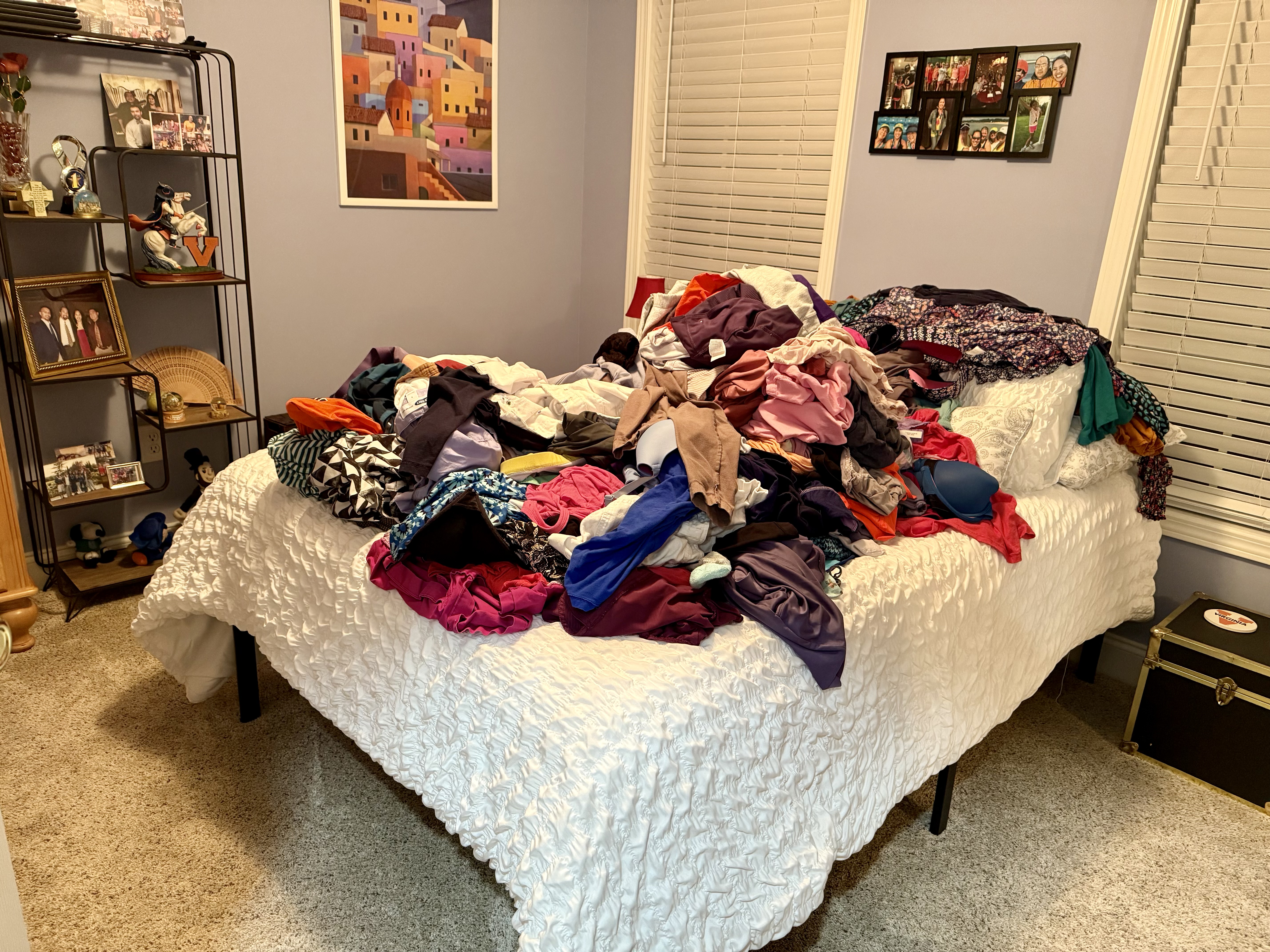
One of my neurospicy characteristics is my OCD, so I always made everything match down to my underwear, even before I started playing tennis competitively in my early 30’s. I am a little less stringent about matching now, since I work from home and all people can see is the very top of my blouse. And I hate folding clothes so they’re just piled in a huge jumble on my guest bed. And I don’t want to spend time sorting through the pile to make sure I can find a pair of underwear that’s going to match my bra and go with my outfit.

But now that I’ve started playing tennis again, my desire to match everything has come back with a vengeance. Last Monday, I decided to wear everything in 2 shades of purple for pickleball–dark purple (my favorite) and a lighter, lavender color. I debated on whether I wanted to go so far as to get my matching purple jacket and my matching purple gloves. Would people think this is too much? A bit over the top?

Ever since I have embraced my neurodivergence, I have changed. Before, I was training to be normal, like Neo being trained by Morpheus in The Matrix, since he was reborn into the real world. I didn’t trust myself. Do I really have power? Can I really be myself? Am I really all that? Neo asks himself this question over and over again, seeking reassurance from Trinity, the Oracle, and Morpheus. The Oracle tells Neo that he’s not ready. That he’s waiting for something. Morpheus says that he needs to believe. He can only show him the path, but Neo has to walk it.

In the end, there are 2 things that help Neo realize that he’s the One. First, he believes that he can save Morpheus and risks his life doing so. Second, Trinity tells him that the Oracle told her that she would fall in love with the One, and she loves Neo, so he can’t be dead. He needs to get back up and fight. So he does. And then, suddenly, he can read the code, and he destroys the Agents effortlessly.

If you haven’t watched the Matrix, I’m sorry I spoiled it for you. But in my defense, it came out in 1999. And if you haven’t watched it yet, what are you waiting for?! This is one of the greatest movies of all time! They just made two references to it in the musical The Book of Mormons, which my family and I watched yesterday. That’s how relevant it is!

But I digress.

Now that I understand what neurodivergence means, which is that some people’s brains are wired differently, I know what my superpower is. I can feel people’s neurodivergence. I have to think about their particular skills, recalling pervious sessions with them, including details they mentioned but we never focused on. The recognition of their neurodivergence, however, is instantaneous.

When I explain to people what their superpowers are, they begin to thrive almost immediately, knowing deep down that what I’ve seen is true. Just like Morpheus knew that Neo was the One.

By the time we have our next session, they have already come up with new ways to self-soothe when they become distressed. This is the biggest problem that neurospicy people have–the neurotypical world traumatizes them on a daily, sometimes hourly, basis. But once you know how to self-regulate, you no longer have to be depressed, anxious, or have a meltdown for extended periods of time. You can do whatever you need to do to self-regulate.

And then you can thrive. Because they know themselves better than I do, once they’ve been shown how to read the code, they fly. Just like Neo. And they, too, become the Ones.

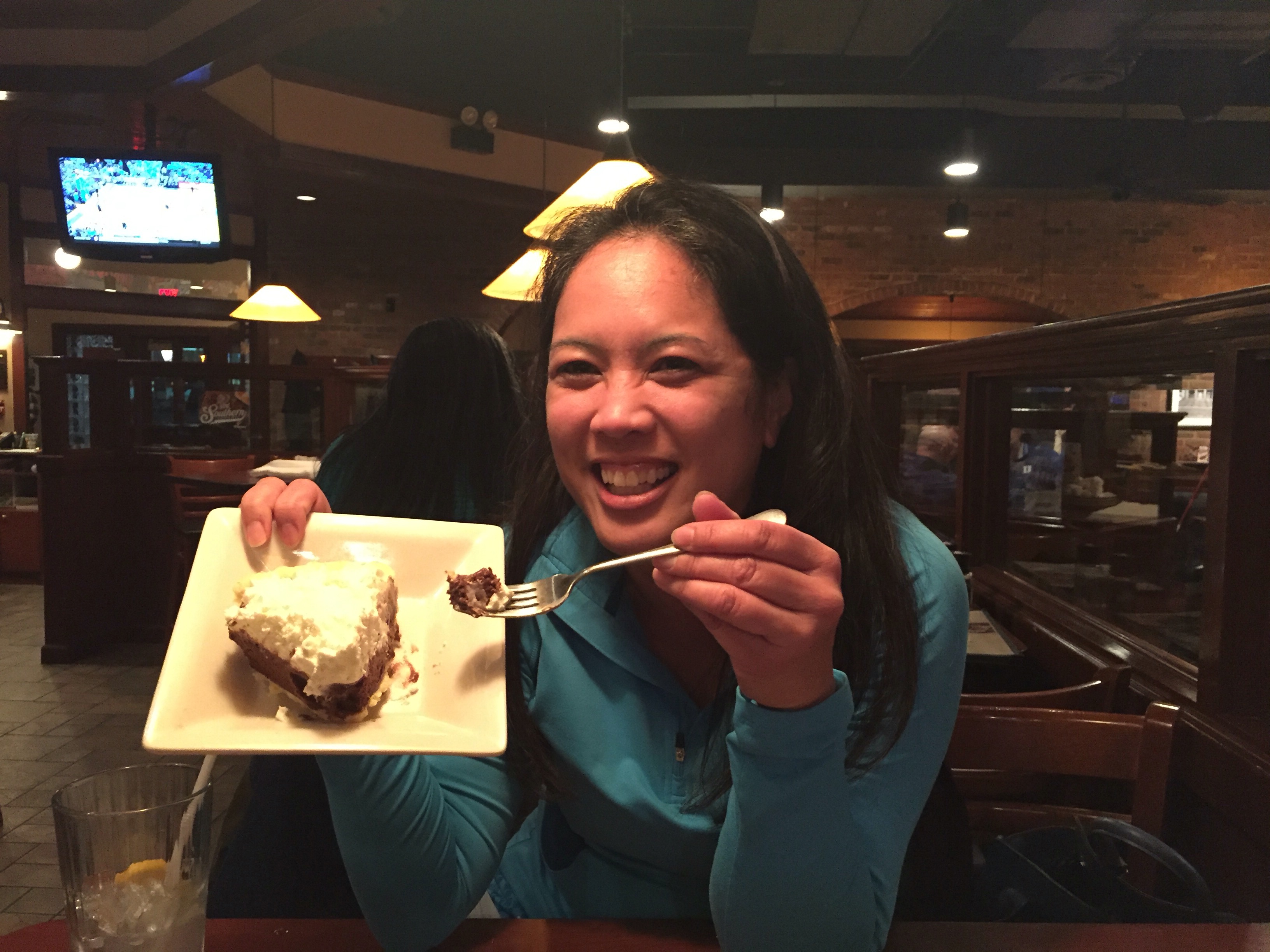
What does all this have to do with me dressing up in 2 shades of purple from head to toe, including my underwear, socks, and outerwear, you ask? Well, I no longer care what other people think of me. I’m going to do whatever makes me happy. And if you think this picture of me is too matchy-matchy, too bad. Because from now on, this is how I roll.

And this is what my bed of clothes looks like. And I still have one more load to do. Which I just put in the washing machine.

Hip Recovery Update

For those loyal readers following my hip replacement surgery, I wanted to give you an update.

Despite not playing pickleball, not being able to go to barre classes with my family, and being far less social this summer, I was in fairly good spirits until a few weeks before surgery. I had to start asking for help from my family, and I hate asking for help. Or perhaps it would be more accurate to say that I don’t like asking for help because I’m sensitive to rejection. My inner critic is always telling me no one cares about me, so it’s easy for me to interpret people’s actions as not caring.

In addition, my surgery got moved up by a week. To most “normal” people, that would be good news. But I had been planning for 3 months to have the surgery on a particular day, and the change required me to cancel additional appointments, cancel my friend’s visit–which I had been looking forward to all summer–and stop my pain meds immediately. Not that they were helping. But still. It required a lot of change.

I was also dreading feeling more pain than I was already experiencing, since it had become excruciating. And I was determined to do my exercises every day until the surgery. I ended up skipping my exercises the night before surgery because I had to wake up super early and by that point it seemed irrelevant.

The good news is that I was super relaxed and joking with all the staff, nurses, and doctors while I waited for my surgery. I fell asleep before they even started the anesthesia because they gave me something for anxiety. And after I could feel my legs and they made me walk, I walked effortlessly. And because they gave me an epidural, I wasn’t in pain until about 12:30 am Saturday morning.

I have to admit, the next 2 days were pretty excruciating. Mainly because I was trying to be compliant and get up and walk every hour or 2 while I was awake, and it was torture getting on and off the couch. l only used the pain meds to sleep because I was so paranoid about addiction, so mainly I sucked it up. Luckily by Monday I was good.

This was also when I had my first PT session and he said I was in the top 5% of people in recovery. And you know how I like getting A’s. He said I didn’t need to use the walker anymore and that I would be able to drive later in the week, which is 3 weeks earlier than expected. And as he predicted, by Thursday night I moved back home and by Friday I was walking unassisted and drove 3 times.

My progress has continued to improve rapidly, but because my entire body had been compensating for my hip, I have become more aware of my back pain, which had been present before the surgery but I guess I didn’t register it. But since I dove into work the second week because of my irrational fear of not having money, I had a knot in my back that I had to try to massage and stretch out 5-6 times a day. I would have much preferred to take all the time I had set aside to be off and watch the U.S. Open but the drill sergeant was not having it.

On a positive note, my friend did get to visit me over Labor Day weekend, which worked out better because I was able to walk and drive. We even went to Anakeesta, which ended up being a bust. But I made a video about it that I thought was funny, even if no one else on the trip did.

I’ve learned a lot of lessons from this experience, some of which I’ve shared on my Instagram page if you want to check them out. But I’ll share theme here, too.

  1. People care. As always, when I’m vulnerable, my inner critic is the loudest, but it is always wrong. My family took great care of me. My friend drove for me and gave me tons of positive reinforcement. My friends checked on me. Even my clients asked about me. It’s true that it is an illusion that we are separated from love. We are always connected.
  2. Pain tolerance is a mixed blessing. Had I gone to the orthopedist sooner, like 3 years ago when I had planned, perhaps I could have delayed my surgery. But if it weren’t for my determination to be as strong as possible and do the exercises for 3 months before my surgery, perhaps I wouldn’t have recovered so quickly.
  3. Patience is a virtue. I argued in a former blog post that it is not, but that’s because I was, and still am, impatient. But having to wait for hip surgery, and having to wait another 4 weeks to play is helping me practice, and I think I’m the better for it.
  4. I have much to be grateful for. It’s true that in any given moment, we can look at what we don’t have, or we can look at what we have. We can look at both, even, and perhaps that’s the better option. Rather than “bright-siding” it, which is dismissive of our pain, we acknowledge everything and then decide what in this moment we want to focus on. Right now, the thing that keeps me going is the hope that I can play tennis again, after 6 long years of not being able to. And even if I can’t, I want to be active and see my friends again.

I’m Taking Voice Lessons Again!

Photo by Pixabay on Pexels.com

So you know how much I love Karaoke. I am still singing, but my range is shot because of the damage done by my GERD (acid reflux) and some medications I was taking for 15 years (more on that in next post). Although the fundoplication surgery combined with compliance with my inhaler when exercising has really helped with my asthma and throwing up, my range hasn’t improved much.

I have debated on taking voice lessons over the past year because I see how much my friend Michelle and my niece Sadie have improved–and especially since I have an acting contract and can deduct the cost of the lessons–but I still thought it was a waste. It’s not like I sing for a living. My family and friends don’t care if I can’t hit the high notes when we sing Karaoke.

Luckily my family, friend, and niece wouldn’t let me give up. When I asked my brother if it made sense to get lessons if you had a broken instrument, he said that you can still improve the sound that you get from it. Michelle said that I just need to access my head voice for my high notes and that can be learned. And Sadie, the relentless optimist, said I won’t know unless I try. Plus she thinks I can be friends with Deanna, her voice instructor, and she’s always worried about me having friends because my closest friends are all in Roanoke.

So one day, I decided to research whether you can heal your vocal cords from GERD, and it turns out that you can with voice therapy. I figured voice therapy might not be that different from singing lessons, so I contacted Deanna and asked her if the two were similar. Not only did she say they were similar, but she also struggles with GERD and asthma and has learned to alter her techniques to accommodate these issues. So I was sold after that!

I’ve had 4 or 5 lessons now and already my range has improved, although the strength of my voice is still weak. The most amazing thing I’ve learned iis that the reason why I haven’t been able to sing high notes is that my tongue, vocal cords, throat, and larynx have been traumatized from all the throwing up. So essentially, I’m doing trauma therapy. I do exactly what I do with clients but with the focus on my tongue, jaw, neck, and throat. I am training these muscles to relax. Tell the muscles that they’re safe. We’re just releasing sound and air now.

The other thing that voice lessons have taught me is that I’m too hard on myself. I push until my body can’t take it anymore. A bunch of my loyal readers have told me that I’m too hard on myself but it’s hard to let myself off the hook. It’s hard to accept that I can go easy on myself, despite all the self-compassion practice. Although it’s much better than it was when I started this blog.

In lessons, I’m always trying to force the notes out rather than allow them to come out. Very similar to language used in mindfulness–allow, soften, create space, play. This also applies to why I need hip surgery. Because when my hip started hurting 10 years ago, it never occurred to me that I could have arthritis so I never went to the doctor. By the time I found out in January, I was already at the point that I needed hip replacement surgery.

Oh well. Old habits die hard so I’m trying to have compassion for myself. Pushing myself helped me to accomplish a lot of things, and it was the only tool I had in my tool box at that time. But practicing mindfulness and self-compassion have given me so many more tools, and taking voice lessons is helping me practice these tools in a different way.

And because I’ve also added the lovingkindness practice, I’ve finally discovered how to be happy in the present, in this moment. Even when I’m in pain, with little contact with anyone, and without being able to play pickleball.

The choice is ours to free ourselves from the obstacles we create in our minds. Luckily I have God, my family, my friend, Deanna, and myself to thank for this newfound freedom. And if there’s anything that you think is holding you back, it’s not too late for you to be free, either.

By the way, Deanna gives Zoom lessons and also teaches acting, so if you’re interested in working with her, let me know.

Birthday Reflections, Part 2

You know how people ask you how you feel to be a year older and you usually say the same? Well this year I felt great! And I haven’t felt great in a long time. Which is why I haven’t written a blog post about myself for a few years. So I figured it was time for an update.

It’s been almost 4 years since I’ve moved, and it has taken a long time for me to feel like myself again. Like, in the past few months I had gone through a long depressive episode that was the worst I had ever experienced. And I was already feeling pretty bad, since I moved because I was under so much stress I thought I was going to die before I got to retirement age. So to think that things were going to get better and instead have them get worse for 2-3 years really made me question my relentless optimism.

But I still pushed myself to make a life here–without friends who I considered family, without tennis, which was my life, without financial security, and without a partner. I did lots of things out of my comfort zone. I went to Meetups. I forced myself to go to fitness classes. I started playing pickleball even though I sucked at it. I went on dating apps even though I hated it.

The only things that were successful were pickleball and dating apps. I have made some good friends now, and I met someone who I’m still seeing. He’s a lot younger than me, which was hard to reconcile at first, but now it actually helps me feel younger. In my first birthday blog post I said that I didn’t feel that mature, and I still kinda don’t. Maybe it’s because I am so in touch with my inner child. I don’t know if the relationship is going to last, but I’m becoming more comfortable with not knowing and just accepting what is.

I’m also trying a lot of new things this year, which is also helping me feel more joyful. I’m into Lego flower sets, in addition to my other hobbies. I signed an acting contract with a local talent agency in December and last month I signed a contract as a UGC creator, despite not having any acting experience or not knowing what a UGC creator was. So it’s been an interesting journey. I’m not expecting to make a lot of money, but it gives me other ways to express myself and be creative. And just to see what happens without any expectations.

For my birthday, one good friend came down to visit me, another good friend sent me a meal, the guy I’m seeing came down to surprise me, and I celebrated dinner with my family and with one of my pickleball groups. So I ate well for several days. And all of the Happy Birthday wishes really moved me. I feel so grateful that people took out time to wish me happy birthday. Sometimes several times. Although that might have been an accident. I do that, too. Now I understand what senior moments are. Or what I like to call brain farts.

The other evidence that I’m getting older is that I’m scheduled for hip replacement surgery on August 21. I’ve obviously had arthritis for decades, and I knew my hip was hurting, but I didn’t realize how advanced it was until I fell while playing pickleball back in January. We were going to Disney World in February and I was going to have to walk 20,000 steps a day, so I decided to go to an orthopedic doctor. For some reason, it never occurred to me that the pain could be arthritis. Even more shocking was that it was so advanced that he didn’t think the injection would help and that I would need hip surgery soon. I didn’t believe him but he was right. The first injection lasted just short of 3 months, and the 2nd injection didn’t work at all.

Despite these telltale signs of aging, I’m still in pretty good spirits about it. The prognosis looks good. I should be able to return to pickleball pretty quickly. And I have people to look after me while I’m healing. Financial insecurity and not having anyone to rely on have been 2 of the biggest anxieties of late. It turns out I don’t have to worry about either. For now.

But that is another place where I’m trying to practice mindfulness and be in the moment. My favorite quote is that mindfulness is the process of constantly letting go. Maybe one of the reasons I started practicing is because I knew it was going to be hard to let go of all of the things you lose in life. And to accept all of the things that I had already lost. Plus I wanted to be aware of all of the things I still have to be thankful for. And since I’ve started practicing lovingkindness as well, I’m better able to feel other people’s love rather than question it, worry about losing it, or be anxious about not being loved at all.

I also mentioned in my first birthday blog post that having people read my blog was a gift that I had not anticipated. People would tell me how much it meant to them, when I was just sharing the things that made me feel so flawed. I had no idea how great that would feel. Now I only write occasionally, but people still read my blog, even though I do nothing to promote it anymore. And I’m thankful for that, too.

So brain farts and hip replacement surgery vs. all of the love and new experiences I have in my life. I’ll take that ratio. And speaking of numbers, 56 is divisible by 2 and 7, and is therefore not a prime number. If you read my first birthday post, you know how I feel about prime numbers.

Can We Really Learn From the Past?

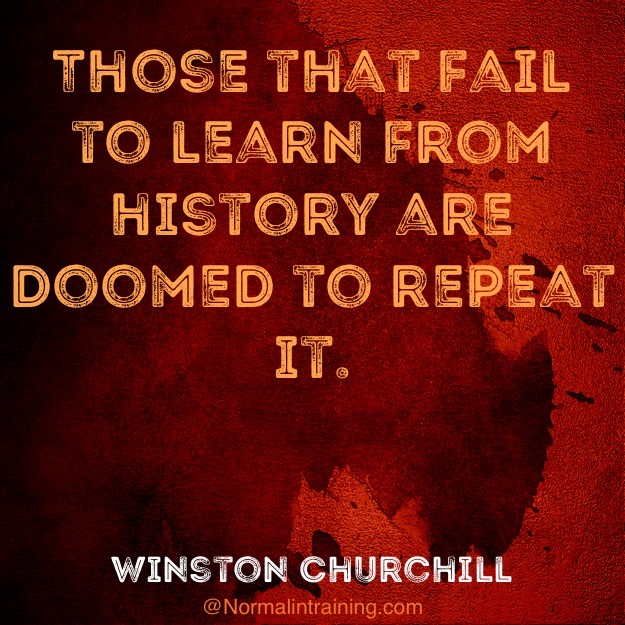
We are facing a difficult time in American history. A time that is eerily similar to previous periods of history where lots of bad things happened–in our country and around the world. People often say that we study history so that we can avoid repeating it. But I’m not sure that’s a given. Take the Bible, for example. In Genesis we learn early on about a sibling rivalry that turned murderous. And when God asked Cain where his brother was, he asked sarcastiically if he was his brother’s keeper. So murdering of family members, denial, lies, and gaslighting have been around for the entire existence of the human race.

Moreover, when Jesus was preaching about how to enter the kingdom of God, he did not primarily use history lessons from the Old Testament as teaching tools. He didn’t have a parable on the Ten Commandments that talked about how not killing others came from the first murder with Cain slaying his brother Abel. In fact, he primarily utilized parables about made-up people like the Prodigal Son, the Good Samaritan, and that poor guy who made a donation even though he had nothing, and therefore will more likely make it to the kingdom of God than some rich dude who donates a lot of money.

For those of you who don’t take the Bible literally or don’t see it as a historical text to be studied in this manner, I’ll use some examples from history. While it’s true that I’m no historian, I read a lot of historical fiction, and I’ve learned a lot more about history from books than I ever did in history classes. And in piecing together all the information I’ve learned from different books, it has become clear to me that war never ends. There is rarely a period of peace before we have to worry about another enemy who we eventually end up fighting.

For example, I just finished reading The Huntress, by Kate Quinn, which I highly recommend. This is not an important detail of the story, so just as a heads up, I’m not ruining anything for you. I learned from the book that after WWII, the US was not particularly concerned about bringing Nazis to justice. That was in the past, and we should just forget about it and move on. In addition, I remember from the movie Oppenheimer that even before we got involved in the war, we were much more worried about Communists. And as soon as WWII was over, we went back to snuffing out Communists. And this fear of Communism eventually led to another war, the Vietnam War, among other related wars around the world, without a whole lot of peace resulting from the war that was supposed to end all wars.

As a psychologist, I do feel confident in my observations about whether knowing about our personal history can help us from repeating our past, both from a personal perspective and from being a licensed therapist for 25 years. Spoiler alert: the short answer is yes, it’s possible, but it’s not easy, and in my opinion, not common.

A lot of psychologists have discredited Freud, the grandfather of talk therapy, but he actually made some fairly astute observations, in addition to his wacky ones. One of the astute observations was the idea of the repetition compulsion. This term refers to a pattern of behavior in which we continue to choose partners who are similar to someone from our past where the relationship didn’t go so well. Usually this person is a parent, since they are the first people we have a meaningful relationship with. Often this repetition is unconscious, and our goal, unbeknownst to us, is to have a similar relationship to the one from our past and to have it turn out better than it did the first time. We believe this will give us some sense of mastery, some assurance that it wasn’t our fault, a sense of agency, and hope that that not everyone who is broken (our parent, ourselves) is doomed to a miserable existence. Unfortunately, usually what happens in a repetition compulsion is that things turn out exactly as they did in the past, and we end up getting hurt over and over again in the exact same way.

One of the goals of therapy is to help the person see that they are making the same mistake over and over again in their choice of partner so that they can learn to choose something different and have a chance of a different outcome. But this is not easy to do. People like Cain, who hurt others and use denial, lies, and gaslighting to blame others for their mistakes, don’t usually go to therapy, and when they’re forced to go they don’t usually benefit from therapy. They don’t learn why they were so jealous in the first place, and what they can do besides murdering people when jealousy arises. So the violence usually gets repeated.

Even with the people who are sincere about wanting to change, to learn from their mistakes, change happens very slowly. Take me and my blog, for example. If you’ve been reading it all these years, then you know that I keep making the same mistakes over again, despite practicing, being in therapy, being a therapist, and writing about my experiences. Have things gotten better? Yes. I’m way better off than before I started therapy, my blog, my job, and my mindfulness practice. But it has taken a long time. And I’m still in therapy. And I still keep making the same mistakes.

Changing history is akin to making a big life change, like changing your eating and exercise habits because you’ve had a heart attack. It’s a lifelong practice that you have to work on regularly. The more effort you put in, the sooner you see results, but it will still take a while. And as soon as you stop putting in effort, you lose all your progress and have to start over again.

So can we learn from our mistakes and keep from repeating history? Yes, but it will require hard work. And we all have to be on board, because like in the military or as a member of a sports team, one person’s mistake makes the whole group suffer.

Going back to the Bible, the best way to start is by taking Jesus’s non-historical advice: rather than looking at the speck in your brother’s eye, pay attention to the log in your own eye. In other words, spend less time worrying about what’s wrong with what other people are doing and think about how you can free yourself from your own mistakes.

P.S. For a closer read on the sibling rivalry between Cain and Abel, check out John Steinbeck’s East of Eden.

Freedom

I have an announcement to make. I’ve decided to move to Knoxville. This decision may seem sudden, but it has actually been a long time in the making. I’ve been trying to figure out how to have more freedom in my job for a while. I don’t want to wake up early, be on call, or commute. We had an extra long break this term because of COVID, so I had more time to recover, but it took me about a month until the aftershocks of being in a constant state of fight or flight finally subsided.

My new job is remote, and full time with benefits is only 25 hours a week. This puts me 9 years ahead of schedule. Maybe I can become minimalist and have more time for sleep, tennis, travel, and Bob.

My physical health hasn’t been good. I’ve been struggling to control my GERD for a while, and in the process of qualifying for surgery I’ve had to do all these tests–pulmonary function, sleep apnea, interstitial lung disease, autoimmune disease, liver and gallbladder imaging. It turns out I need to get both gallbladder and GERD surgery, but I’m glad. Perhaps that will let me be free to play tennis without throwing up. And having a less stressful job will give me more time to play, which is almost impossible to do during the semester.

My gallbladder surgery is on February 12. If you think of me then, maybe you can say a prayer for me.

I’m excited about being near my family. My niece Sadie, the twin to my inner child Sophie, is 14 now. She keeps reminding me of how much she’s growing, despite my wishes. Can you believe I’ll have my learner’s permit next year? That I’ll get to vote in the next election? You told me to stay 5 but I didn’t listen.

My brother and sister-in-law are excited about me being there. They’re planning weekly dinners and vacations together. I’m already in the rotation for picking up Sadie from school. I’m doing Wednesdays.

But I am also sad. I’ve lived in this area for over 20 years. My tennis friends are like my family. I just bought a place that I love in a neighborhood that I love. I’ll miss my clients and my colleagues. I feel like I’m in a constant state of preparing for loss.

But knowing that I will be leaving also motivates me to really take everything in and be fully present–to my friends, my house, my neighborhood, my surroundings–whereas before I was in a passive, foggy state of isolation. When friends tell me that they are sad but happy for me, the COVID fog lifts and I remember that I am not forgotten.

I get why they say freedom isn’t free. There are costs. Fear, uncertainty, loss. You have to be willing to give up everything for it. I’ve spent decades figuring out how to reduce my stress enough to prevent a mental breakdown. It’s time to put myself first. 

This is My Life

tennis

You often hear tennis players accuse other players of not having a life. Like the people who go ballistic over a line call. Or the ones who cheat or resort to head games to win. Or the people who so spend much time on the court that they seem to be neglecting their spouses and children.

While I admit that tennis is my life, none of those things are true about me. I have a really positive attitude about tennis. And while I want to win, I do not resort to cheating, head games, or blaming anyone for my losses. And I don’t have any spouses or children to neglect.

Plus, what if tennis is my life? What’s so bad about that? Sure, it’s just a game, but lots of people have jobs that center around tennis. Like tennis players. And coaches. And commentators. And all the people who work for the Tennis Channel. And sports psychologists. In fact, I could totally be a sports psychologist.

In many ways, I am a more balanced person as a tennis player than I am in my real life. For example, in my real life, I will often take on so many responsibilities that I will have mental breakdowns. But in tennis, I have learned to turn down opportunities to play so that I don’t get injured.

And in tennis, I’ve stopped playing with people who suck all the joy out of tennis. Because if I can only play so many times a week to prevent injury, then I need to be selective about who I play with. Whereas in my real life, I am drawn to people who suck all the joy out of life.

When I went to that compassion retreat back in May, one of the teachers said that she thought I loved tennis because it was a great way to practice mindfulness. Meaning I am focused, in the moment, and accepting of whatever happens. And this is true. Tennis is the only activity that can quiet my obsessive brain and help me feel better, now matter how crappy of a day I’m having.  Plus, when I play, I’m practicing mindfulness for 2 hours, multiple times a week. That might be more practice than some Buddhist monks get in a week.

OK, maybe not. But still. That’s a lot of mindfulness practice.

Plus, if it weren’t for tennis, I would have no social life. In fact, I would have very little human contact outside of work. Because this weekend I don’t have any tennis until Sunday at 6, and I already know that it will be effortful to leave my house and go across the street to the grocery store.

When I play tennis, we often eat out afterwards, so I don’t starve like I do when I’m home alone. And, as I mentioned in a previous post, thanks to tennis, I find out about really good deals like Free Pie Wednesday at O’Charley’s. And who doesn’t like free pie?

So the next time someone tells me to get a life, I’ll tell them that I like the one I have just fine.

Sensitivity

I am reading The Secret Life of Bees for book club, and I love it! I know it’s old, but in our last meeting we discussed which books made us wish we could spend more time with the characters, and one of the members mentioned this one. I can see why. I love all of the characters, too. Well, maybe not June so much. She’s a little too guarded for me. Although I wish I could be more like August, the matriarch of the sisters, I am actually more like May–the fragile one who feels other people’s pain too deeply. Not as deeply as she did, thank goodness. But more so than I would like sometimes.

On the one hand, I recognize that it is a gift to have such a keen sense of empathy. I know I have helped a lot of people because of it. But I am also easily thrown off balance when the people I care about are in pain–especially since I am also prone to depression and anxiety. I have always assumed this meant that I was weak. Fragile. Too sensitive.

I spent time with my brother this weekend–the only one of the four siblings who does not have a mood disorder. In talking to him, it was clear that he does not experience his feelings as intensely as I do. He does not get his feelings hurt very often. He is better able to maintain distance from family drama, and his advice really is to tell them to suck it up.

I envy him for this, but I cannot be him. I can only be me. I feel things intensely. My feelings get hurt easily. And when someone is in pain, I feel what they feel and try to help them, even if it hurts me.

But rather than berate myself for it, I am learning to accept that this is who I am. We all have different vulnerabilities. Some people may be prone to heart disease. Other people have diabetes. I am a hyperempath with depression and anxiety. Therefore, I have to be sure to take care of myself in certain ways: make alone time a priority, set boundaries, and be more selective about who I spend time with.

I used to joke that I’m not trying to save the world–just the people that I meet. But perhaps I will have to narrow down my scope in my life-saving efforts, too.