Tag Archives: motivation

The Unathletic Athlete, 12 Years Later

In my last post, I mentioned in passing that I considered myself an unathletic athlete. But the truth is, this hip recovery journey has helped me re-evaluate my unathletic status.

Just for kicks, I thought I’d ask my readers what they thought made someone athletic. The most common response was “you are definitely an athlete!” So thanks for that, for those of you who submitted that comment.

As far as being an athlete goes, some said that just engaging in physical activity or being on a sports team is sufficient. But you could still not be very good. Therefore, it is possible to be an unathletic athlete.

So what makes someone athletic?

Athletic skills were broken down into 2 categories: 1) physical qualities like being fast, fit, having hand-eye coordination, strength, agility, and balance; and 2) mental qualities like being fearless, competitive, and having excellent concentration.

Only 2 people made a distinction between being an athlete and being athletic, and their comments were the most thought-provoking.

One person said that an athlete is someone who contributes positively to their team, even if they compete individually. Being athletic, on the other hand, is someone who possesses qualities like the ones listed above. As a coach, she said that now she sees so many more ways that less athletic players can contribute to a team than she used to.

For me, this calls to mind Tony Bennett, UVA’s former head coach. He purposely picked less athletic players who were willing to earn their spot, work hard, and bought into his team philosophy. Even in his hey day no one thought he could ever win a national championship without great athletes. But he did.

Another person said that being athletic meant having the drive to challenge yourself to get better, a willingness to learn and to be coached, and a willingness to be a team player.

According to him, Jamie Tartt, who is seemingly the most athletic member of the fictional AFC Richmond soccer team on the show Ted Lasso, is not athletic because of his ego, his individualistic attitude, his lack of humility, and his unwillingness to be a team player. Although he learns how to be athletic. So it’s not just innate talent.

This definition also calls to mind Tony Bennett’s 5 pillars: 1) humility, 2) passion, 3) unity, 4) servanthood, and 5) thankfulness.

Consistent with those definitions, Carlos Alcaraz is known for his speed and shot arsenal, but also plays with tremendous joy. He even celebrates when his opponent hits a great shot. And that’s part of what makes him great.

Coco Gauff worked on her new serve with her new coach during the US Open—arguably the most important tournament for any American player. She could have played it safe and waited until the off season. Instead, she double-faulted her way through the tournament, sometimes through tears. And won a lot of matches, nonetheless.

I have to say, after this little experiment I feel way more athletic than I did before! And I was already feeling pretty athletic to begin with, because it turns out that having arthritis at such a young age is a result of being athletic.

My rate of recovery was also in the top 5% because I did the pre and post-op exercises they recommended. I always take pride in being a good student.

After 6 weeks post-surgery, I was already playing pickleball decently. And even though I air-balled 95% of the balls when I tried to hit on the ball machine 3 weeks ago, last weekend I was able to hit the majority of the balls with placement. And my serve was pretty good. So I must have some physical skills.

In terms of mental fortitude, I have always called upon my inner warrior in a losing battle, my inner Buddha when I’m feeling anxious, my inner Federer when I’m playing spastically, and my inner Nadal when I need relentless positivity.

As a team member, I try to get the best performance out of my partner. In fact, if they play well and I don’t, I still consider it a win. And if we go into a tiebreaker, I consider that a win. But some of my friends think that’s delusional. Although they secretly do it, too.

The research for this post was so interesting that you can expect another chance to participate soon!
Will Power

Like many of my middle-aged friends, I am trying to lose weight. I am not as obsessed about it as I was when I was younger and thinner because I am more accepting of my body now. But that also means I am less motivated. It’s even hard to will myself to do 10 minutes of stretching every day. 

In order to improve my motivation, I decided to look at some info on a workshop that I used to give on self-leadership. Good stuff. I ought to try it some time.

Here are some reasons why will power fails us:

1. We are more motivated to take action when things are going poorly than when things are going well. That’s why negative events stand out more than positive events: negative events require us to make some change. If things are going well, we can just maintain status quo. That’s also why anxious people like myself are often highly motivated–because almost everything feels like a crisis.

2. As we make progress towards our goal, we lose motivation because it takes more effort. This is related to the Pareto principle, or the 80-20 rule: 80% of our results comes from the first 20% of our effort. After that, it takes 80% of our effort to achieve the last 20% of the results.

For example, it is often easy for people to lose weight initially with minimal changes to their diet and exercise routine. But it takes a lot more effort to lose the last 10 pounds. So much so that people on diets are often perpetually stuck in the “I just need to lose 10 more pounds” stage.

3. The amount of will power we have is limited. Reseach by Roy Baumeister indicates that trying to exert self-control in one area of our lives leaves us less energy to exert self-control in other areas. So if you’re trying to change your eating habits, you will have less energy available to start exercising and vice versa. That’s why it’s better to focus on changing one thing at a time.

Despite these obstacles, it is possible to reach our goals. People do it all the time. So why not me? And why not you?

Here are some of the things that characterize people with willpower:

1. They try to understand why they’re not motivated. I was not motivated to lose weight for awhile because I just wouldn’t look at pictures of myself so that I could exist in a state of denial. That helped me avoid psychic pain, but now I think I need to be in a little discomfort. I don’t want to beat myself up over it, but I need to be honest with myself about how much weight I’ve gained.

2. They use their values to guide their behavior. Tennis is the greatest motivator for me. I want to play tennis for as long as I live, and doing so will require cross-training. So maybe I will try to remember this when I am feeling unmotivated.

3. They give themselves permission to fulfill their wants without feeling guilty. Because I work with students with eating disorders, I try to be careful about the message that I give about body image and I worry about how they will perceive my weight loss. But the reality is, my reasons for wanting to lose weight as a middle-aged woman are not the same as the reasons that students with eating disorders have. I can allow myself to honor my own needs. 

I know it’s still going to be hard, but perhaps writing this post will help me be more motivated. It certainly can’t hurt.

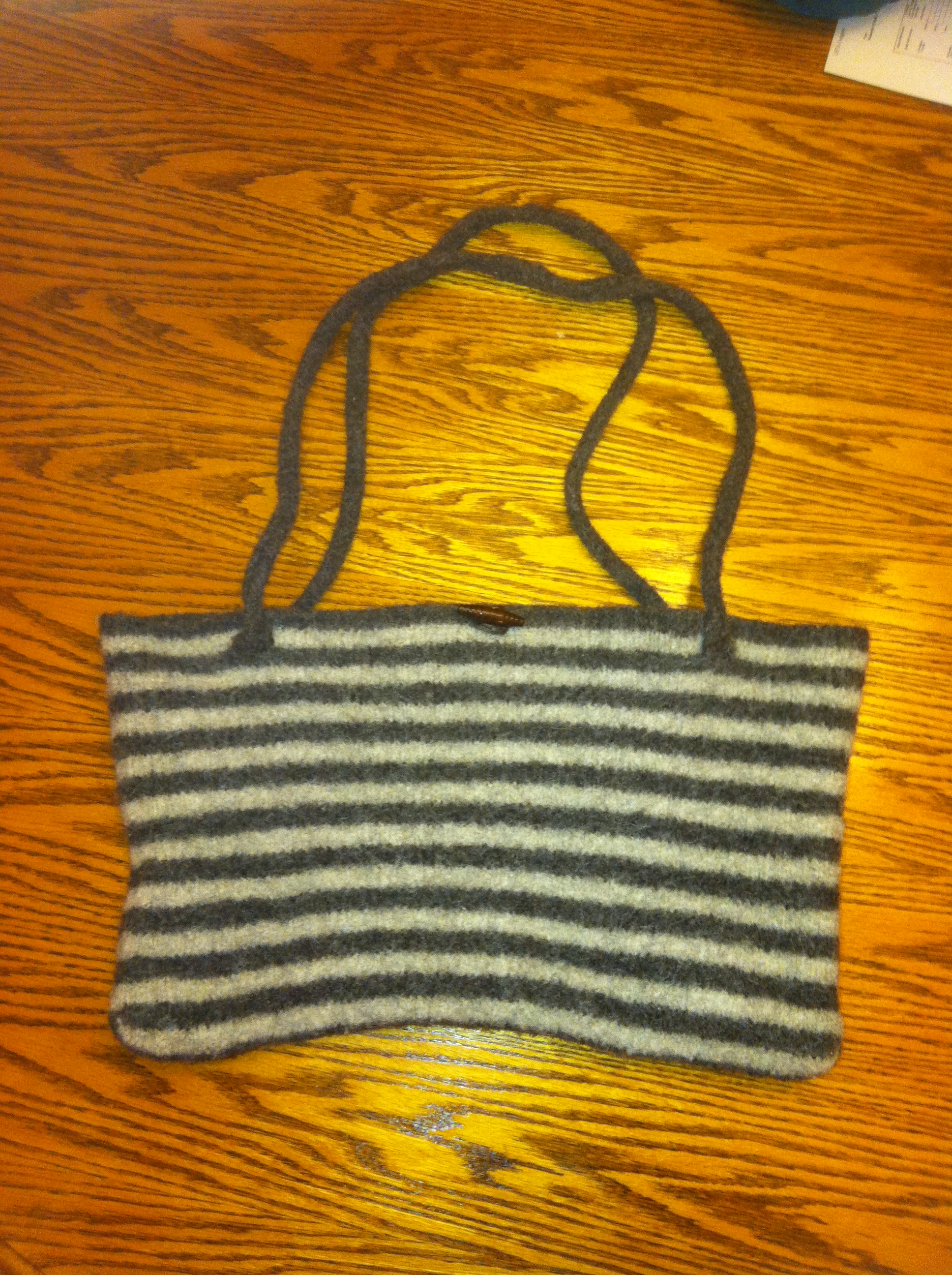
This tote has nothing to do with weight loss but it required a lot of will power because it was boring. It turned out nicely, though, so maybe I’ll knit another one.

IMG_0865

Wins and Losses

So I’ve decided that I love winning more than I hate losing.

After 11 losses spanning 2 seasons on my 7.0 mixed teams, I finally won last night. A hard-fought win that came down to the wire–my favorite kind. And my team won, too. Winning isn’t everything, but it sure helped my mood. And these days, I’ll take anything I can get to feel happy about.

I actually had 2 teams playing at the same time last night, because I play every league since I get depressed when I don’t have anything to do, as you know. We lost all 5 courts on that team, but that did not dampen my mood. Because like I said in the post on motivation, at the end of the day, I still had dinner with my friends afterwards. And there were a lot of them last night, spanning 3 different teams, including the opposing team.

I’ve had friends reach out to me because of my last two posts, reminding me that I can always call them when I’m feeling down. But in all honesty, the last thing I want to do when I’m feeling depressed is to contaminate someone else with my negative mood.

I once dated someone who accused me of wanting to be depressed–I guess because he couldn’t talk me into feeling better. I think depressed people are accused of liking their depression because it’s hard to be in the presence of someone who you can’t cheer up. That’s why people who are just trying to be helpful say unhelpful things, which makes you feel even more depressed. So I just avoid it.

But thankfully, God gave me tennis. No matter how bad I’m feeling, I can almost always motivate myself to play tennis. And the desire to win is so great that I forget everything and focus on hitting that ball. And after a few hours of doing this, regardless of whether I’ve won or lost, I feel like a different person. Plus we usually eat out afterwards, and I love food, too.

Tennis, friends, food, and blogging. That is a winning recipe for treating depression in my book.