Tag Archives: Tennis

Swashbucklers Anonymous

My name is Christy Barongan and I am a swashbuckler.

I mentioned in a previous post that I’m reading The Art of Empathy in an attempt to help me with my hyperempath problem. I finished the chapter on empathic love, and it is so true of me that it freaked me out. I almost had a panic attack and had to take a nap afterwards.

In this chapter she lists 4 impediments in a potential mate: 1) a lack of emotional skills, 2) an active addiction, 3) unhealed childhood trauma, and 4) the presence of a toxic ex-mate. These impediments are practically criteria for a relationship for me. I like challenges, but come on! This is ridiculous! Reading this list drove home the fact that most my relationships had little chance of succeeding from the start.

Ironically, reading this chapter also helped me to not beat myself up about my relationship choices. I am drawn to people with these problems for the same reason that I chose to be a psychologist. I want to help people. I believe everyone is capable of turning their life around, and I am confident that I can help them do it. I never back down from a challenge, and I never give up. These are all qualities that I’m proud of.

However, I am beginning to realize that every challenge has a cost. Even if I do something I enjoy, like play tennis, write a blog post, or talk to my brother, it drains me mentally and physically. Which is OK. I love doing these things, so it’s worth it. But in the past, having the ability to help someone was reason enough to do it. Whether I wanted to do it or not was irrelevant because my wants and needs didn’t count. And I never paid attention to the impact that giving so much of myself had on my well-being.

In a way, that’s one of the benefits of being prone to depression and anxiety and of having allergies, GERD, and asthma. Now I have to pay close attention to everything I do and how it will affect me. I have to be intentional about all of my choices. It’s a pain, but it forces me to take care of myself.

Also, when I choose to do something challenging, most of the time I’m not too attached to the outcome–except in relationships. I’d like to move up to 4.0 in tennis, but if I don’t, I’ll just keep trying. Same with writing a best seller. I know the odds aren’t in my favor, but I enjoy the process, and if it never happens I won’t be devastated. I don’t even take it personally when I can’t help a client get better.

If I had the same attitude in relationships–that I gave my best effort, and that’s all I can do–then perhaps I wouldn’t feel like such a failure in them.

It also helps that McLaren calls people like me swashbucklers rather than codependents or love addicts. She describes swashbucklers as people on a heroic journey filled with impossible tasks and mythical beasts. Sort of like relationship warriors. But like Odysseus at the end of his adventures, I think I’m ready to come home.

Maybe I can use my superhero skills to save myself.  After all, who is better qualified to help me than me? I don’t even have to do it alone. I could create a support group for hyperempaths. A 12 step program for swashbucklers, if you will. I think it could be a big hit.

So if you’re interested in participating, let me know.

Conspiracy Theories

Last year one of my players accused me of being part of a conspiracy that was designed to keep him from becoming a captain. For those of you who have never played league tennis, being a captain can be a crappy, stressful, ungrateful job that people have to bribe you to do with gifts, money, and parties. Most people would rather have root canal than captain a tennis team. No one would try to prevent someone from becoming a captain.

The conspiracy theories that people come up with in tennis are even more annoying than the head games people play to try to win. Earlier in the week I had to reschedule multiple matches because it rained for 3 days. Rain is a captain’s greatest enemy. Two out of the three matches were fairly easy to work out. But I spent 2 days arguing with the other captain about rescheduling the 3rd match, because every suggestion I made was perceived as some devious attempt to sabotage this captain’s opportunity to advance to districts on one of his other teams.

Let me tell you a little about districts. You do not get a million dollars for advancing. In fact, you have to pay a fee to play at districts. And since we do not have sponsors like professional tennis players do, you have to pay for hotels and travel expenses. And do you know what your prize is for winning your local division? A hand towel that you can only use one side of, because the other side says something like “Mixed Doubles Champion” in some scratchy iron-on that hurts your face.

I still try to win, of course, but I don’t care enough about winning to devise elaborate plans to sabotage the other team. As I mentioned in my post on loyalty, most of the time I don’t even have winning teams because it’s more important to me to play with my friends. Sometimes I care more about eating out afterwards than I do about the match itself. Sometimes I’m downright surprised when we win–which I admit is probably not a good thing.

Another conspiracy that people get all worked up about is coaching, which is illegal in tennis. Her boyfriend/husband is waving his hands. I think he’s coaching! So what if he’s coaching? He’s probably giving her some advice that she can’t do, anyway, because that’s what partners do. They tell you to do things like come to the net when you hate playing at the net. That’s why they fight on the court when they’re together. That’s probably why he’s in the stands and she’s playing with someone else. And even if he is coaching, she still has to execute.

People have accused me of being too trusting, and I admit it did not serve me well in some of my relationships. And perhaps it doesn’t serve me well in tennis, either. Perhaps I could have won more matches if I had followed my opponents into the bathroom to make sure they weren’t coaching. Or if I stacked my lineup and kept it top secret until right before the match and had extra players warm up and put them all on different courts to confuse the other captain. Perhaps I would be more competitive if I didn’t assume that most people are primarily out there to have fun like me.

But I choose not to live my life that way, even if it costs me a few wins. I’d like to think that if I live my life with integrity, it will pay off. And even if it doesn’t, at least I won’t be paranoid and miserable while I’m alive.

The Perfect Solution

I am currently living in a patio home subdivision for retired people where the average age is around 80. But that’s OK. It’s small, but I live alone so I don’t need a lot of space. I don’t have to do any landscaping, snow removal, etc. All of the neighbors look out for each other so I am notified of any burglars or bears in the vicinity. There are 2 other people my age who live here, although I never see them. And it is a substantial improvement from the apartment I lived in before I found this place. And it’s a miracle that I was able to buy it at all, so I’m thankful for my humble abode.
 
I feel bad because my neighbors want me to be more social, but that’s not going to happen. First of all, I have a job. And because I have a 45 minute commute and play tennis in the evenings and on weekends, I don’t spend much time at home. And even if I were home more often, I wouldn’t spend my spare time socializing with senior citizens. Not that there’s anything wrong with them. They’re all perfectly nice. I just don’t have a lot in common with them.
 
Last year one of my neighbors had a party for her 88th birthday. I tried to will myself to go, but no amount of guilt and shame could motivate me to do it. Last week someone called me to let me know that my neighbor’s aunt died and when the funeral was. I hate funerals. I avoid them at all costs. So I certainly wasn’t about to go for some aunt of some neighbor who I barely know. Another neighbor keeps inviting me to go to church with her. I think she’s trying to convert me.
 
Although everyone looks out for each other because of the increased likelihood that someone really could fall and not be able to get up, they still probably wouldn’t think to check on me because I’m never home. And if I had some emergency, it would probably be late at night when everyone is asleep. And even if I could work up the courage to call one of them in the middle of the night–which is unlikely since I feel so guilty for being such a terrible neighbor–I doubt they would be able to lift me, given their own physical limitations.
 
Last night my friends were trying to help me come up with solutions for how to deal with emergencies. Maybe I should get one of those life alert buttons. Or maybe I should get a lanyard and wear my phone around my neck at all times. Or since I’m a warrior, maybe I could crawl to my phone or my iPad, even if it takes me hours to reach it. So if I ever post “Help! I’ve fallen and I can’t get up!” be sure to check on me.
 
I’ve been watching the commercials for an assisted living facility in my area, and it hit me that this is the perfect solution. If I lived in one, I wouldn’t have to worry about living alone because help would be right there on the premises! Plus meals are included, so I’d never have to cook. And after doing some research, I discovered that they also provide housekeeping, laundry services, and grocery shopping! I could literally spend all my free time writing, watching and playing tennis, knitting, making jewelry, and hanging out with friends. Heck, I could probably even pick up another hobby.
 
My friend told me that you have to be at least 55 to live in one of these facilities. By then I would also qualify for the 55 and over division in tennis and hopefully dominate on the court if I’m still healthy. So I guess that’s something to look forward to in case this whole relationship thing doesn’t work out.
 

Head Games

Competition can bring out the worst in people. It is not uncommon to see anger outbursts on the tennis court from people who are ordinarily even-tempered. They’ll yell, hit the net, or knock the ball out of the park. You don’t see too many people break their racket at our level, but I had a partner do it once because he was mad that I wasn’t coming to the net.

I actually think that I have a better attitude in tennis than I do in real life.  For example, since I obsess about money, I would never break a $200 racket. Plus, I try to not let my opponents know that I’m upset because that gives them a mental advantage. Plus, I love my racket in part because it’s purple, and if I had to get a new model it would not be purple.


Some people will use head games to gain an advantage. They will intentionally make bad line calls or accuse you of making bad line calls. They will argue about the score, time violations, lineup changes, coaching, and bathroom breaks. Or they’ll do seemingly positive things to disrupt your concentration like crack jokes, be chatty, or tell you how awesome you’re playing.


I admit, sometimes I’ll use positive head games to counteract negative ones. I try to capitalize on the fact that it’s hard to be mean to someone who is being fair and kind. Last year I played against this person who is known for causing drama and making bad line calls, so I was super nice to her from the start. It worked for the most part but she still made one bad call. My partner went ballistic but she insisted the ball was way out, which was a flat out lie. I said “it may have been out, but it wasn’t way out,” just to end the argument. There were no other disputes about line calls and no hard feelings by the end of the match.


In a relationship, however, if my partner uses head games I yell at him for trying to manipulate me.


Another common way to deal with frustration is to blame your partner for blowing the point. If my partner criticizes me I either ignore it, call them on it, or never play with them again. This is one place where I won’t try to make the relationship work at all costs.


I rarely criticize my partner on the court. In fact, I take pride in being able to bring out their best game. I praise them for the things they’re doing well. I help them stay focused and positive. I get them to dig deep when we’re on the verge of losing.


However, in real life I am pretty sure my exes would tell you that I have no problem doling out the criticism.


I am also less critical of myself in tennis than I am in life. Most of the time I’m able to let mistakes go and focus on the next point. I don’t get too upset about losses. In fact, my current record is 7-11. But I play so much tennis that another opportunity to win is just around the corner.


In relationships I focus on all the negative outcomes and wonder what I’m doing wrong. In tennis, I focus more on the process than the result. As long as I’m happy with how I played, I don’t mind losing. And it’s fun to win, but the thrill of winning doesn’t last as long as the joy of trying to get better, looking forward to the next match, and fighting for the win on the court.


Maybe I should treat my next relationship like a tennis season.

100th Post!

One of my favorite books of all time is What Alice Forgot, by Liane Moriarty. It was our most popular book in our Remedial Book Club; we actually had a meaningful discussion about it for the entire meeting. Ordinarily we talk about the book for 30 minutes–mostly about who would play the characters if the book were turned into a movie–and then we eat, drink, and gossip about people in the tennis community for 2 hours.

The book is about a woman who falls off her bike in spinning class and loses her memory of the past 10 years. In her current life, she is about to turn 40, has 3 children, and is going through a bitter divorce. After the accident, she thinks she is 29, madly in love with her husband, and is about to have her first child. The book also follows the stories of Alice’s mom, sister, and grandmother, all of whom are in the process of letting go of grief. In addition to being hiLARious, the book also makes you reflect on who you have become and what you thought your life would be like.

I am now in the process of filing for divorce, at my husband’s request. I am glad that I waited until he was ready, because now he understands why our marriage can’t work. I have a better appreciation for the significance of rituals. Even though it’s just a formality, since we’ve been apart for almost 4 years, the legal aspect of it has reawakened my grief about losing him. Of all the people I’ve been with, he is by far the one who was the most stable, reliable, and trustworthy. It saddens me that this wasn’t enough to make things work.

I will be 45 in a few months, and I would have never predicted that this is what my life would look like. Although it is still sad and scary to be alone at times, I am thankful for this opportunity to get to know myself better. I am still experiencing compassion fatigue from my last relationship, and I really want my next one to be different.

I’m currently reading The Art of Empathy, by Karla McLaren. It’s the first book I am aware of that teaches hyperempaths like me how to keep from burning out. I’m hoping that this will help me be more intentional about my next relationship. I’m hoping that it’s possible to break the pattern of relationships that you’ve grown up with and that you’ve followed all your life and to start anew.

Since I have reached my goal of 100 posts, I thought I would also take stock of my blogging life, which is much more positive. This blog is the first time that I’ve shared my writing with others, and I am so proud of what I have written so far. Even prouder than I was when I finished my dissertation.

I’ve been trying to write on and off for about 10 years now but only took it seriously a few years ago. Until then, I never realized how demon-filled the writing process was. Every time I sat down to write, Perfectionism, the Inner Critic, and the Drill Sergeant were all there to meet me, reminding me of how much I suck. So to commit to blogging 3 times a week–and to share the most vulnerable parts of myself in every post–is a huge accomplishment.

However, now that I’ve learned more about publishing, I am forced to accept that the odds of writing a best seller are not great, and even if it does happen, it won’t be any time soon. I’m not going to give up, of course, because I never give up, but I’m trying to focus more on the process of writing rather than the end result.

I’m trying to approach blogging the way I approach tennis. I’ve made $60 in prize money, which was several years ago when I won the 35 and over singles division of a tournament. (I was also the #1 rated 35 and over singles player in Virginia that year!) But I spend hundreds of dollars a month on tennis, so as a money-making enterprise, it’s a failing business.

But that’s OK. I’m not doing it to make money. I play tennis because it’s fun, because it challenges me, and because I have made wonderful friends. Although my romantic relationships have been a disappointment, my friendships have far exceeded my expectations.

Blogging is also fun and challenging, and I enjoy getting to know my readers and other bloggers. And it’s way cheaper than playing tennis. So I’m going to set another goal, which is to write another 100 posts by my blog’s first birthday, which is September 24.

Hope to see you then!

The Emotional Life of Your Brain

I just finished reading The Emotional Life of Your Brain, and although I started losing interest towards the end, it presents an interesting view of personality that is worth sharing.

Based on brain research, Davidson identifies 6 dimensions of personality:

1)  Resilience (fast or slow to recover from adversity)

2)  Outlook (negative or positive)

3)  Social Intuition (puzzled or intuitive; A.K.A. emotional intelligence)

4)  Self-Awareness (opaque or aware)

5)  Sensitivity to Context (tuned out or tuned in)

6)  Attention (unfocused or focused)

If you are interested in where you fall on each of these dimensions, click on the link above and you will find a short survey. Here were my results, which probably won’t surprise anyone who reads my blog:

1)  Resilience: fast to recover

2)  Outlook: positive

3)  Social Intuition: very intuitive

4)  Self-Awareness: very self-aware

5)  Sensitivity to Context: very tuned in

6)  Attention: focused

As with most personality dimensions, the goal is to move your set point closer to the middle. In practice, however, one end of the spectrum is usually more desirable than the other. Here are the advantages and disadvantages of each extreme:

1)  Resilience: Being too fast to recover may make you less compassionate and seem unfeeling and insensitive to others. Being slow to recover makes it difficult for you to function and you may focus more on your pain than on other people. But usually people try to learn how to be more resilient.

2)  Outlook: A negative outlook puts you at risk for depression and annoys other people. An overly positive outlook makes it difficult for you to learn from your mistakes and postpone immediate gratification. But usually the goal is to develop a more positive outlook.

3)  Intuition: Being too intuitive may make it difficult to function because you’re constantly picking up other people’s negativity. (Hmmm. That sounds familiar). People who are at the puzzled end may have problems in all aspects of their lives in which they have to interact with other people–which is essentially all aspects of life.

4)  Self-Awareness: Being opaque makes you prone to missing signs of illness and make you unable to take care of yourself. Being too self-aware can make you a hypochondriac. But in general, it’s better to be self-aware.

5)  Sensitivity to Context: Being tuned out might make you feel and act in ways that aren’t appropriate to the situation (e.g., anxiety disorders). Being too tuned in can make you prone to losing touch with your true self because you are constantly changing your behavior to fit the social situation. But usually people try to be more tuned in.

6)  Attention: Being too focused annoys people because you don’t pay attention to them when you’re doing something. And you tend to “not see the forest for the trees.” Being unfocused puts you at risk for ADHD. But usually people want to learn how to be more focused.

Guess what the best way is to move toward the resilient, positive, intuitive, self-aware, tuned in, attentive end? Meditation! My favorite meditation guru is Jack Kornfield, and on his webpage he goes through the 5 basic meditations:

1)  Meditation on Compassion

2)  Walking Meditation

3)  Forgiveness Meditation (which I really need to practice)

4)  Sitting Meditation

5)  Lovingkindness Meditation

Jon Kabat-Zinn also teaches meditation for Mindfulness-Based Stress Reduction (MBSR), but you have to pay for his stuff. You could also seek out a therapist who specializes in MBSR.

So there you have it–your cheat sheet for “The Emotional Life of Your Brain.” It took several months for me to get through the book, so feel free to make a donation to the Federer Fund if you found this helpful. Tickets to Grand Slam or ATP Masters 1000 events are also acceptable.

This doodle sort of looks like a brain. And it has 6 different colors–one for each personality dimension.

Patience Isn’t Always a Virtue

I looked it up. While it is included in some lists, in Catholicism the 7 virtues are faith, hope, charity (the theological virtues), prudence, justice, fortitude, and temperance (the cardinal virtues). Since I at least grew up Catholic, I’m going to use this list, because I’m not patient at all, and I don’t want to be unvirtuous.

My greatest strength is probably fortitude. I never give up in a match, even if I’m down 0-6, 0-5. I continue to play tennis, even though it makes me throw up. I will do everything I can to make a relationship work, even if it’s a lost cause.

Last week I had a client who started antidepressants and experienced a sudden onset of suicidal ideation, which sometimes happens in young adults. As she was describing what it felt like, I realized that I had experienced the same thing when I got back on meds, even though I was not a young adult. But I was on a higher dose than I was before. In retrospect, it turns out it was too high; I had a lot of side effects that I had attributed to the depression.

I didn’t think much of it at the time because I always have some suicidal ideation when I’m depressed, but it was definitely different. It was what psychologists call ego dystonic. As my client put it, my brain told me in the most illogical way that suicide was the next logical step to whatever I was thinking. If I didn’t have the energy to walk over to the fridge and get a milkshake, my brain would say Well why don’t you just jump off the balcony, then? It freaked me out. I would yell back. No! I don’t want to do that! I want to live!

So I fought the thoughts off until the meds kicked in. At the time I thought I was weak, but when I recognized myself in my client’s story, I realized how strong I am.

Patience, on the other hand, is a different story. Patience also requires strength, but in a quieter, more peaceful way. And as you know if you’ve been reading my blog, I am loud and obsessive. You can’t will yourself to be patient the way you can will yourself to save break points. In fact, although this blog is about practicing other quiet, peaceful things like self-acceptance, compassion, gratitude, and forgiveness, I have never included patience in that list until today. Probably because it seems impossible to achieve–even for a warrior like me.

As I mentioned in the post on obsessiveness, I can only focus when I meditate about 5% of the time. But it still works. I am definitely less anxious, better able to tolerate my emotions, and more compassionate. Maybe patience is the same way. Maybe if you at least have the intention of being patient, even if you suck at it, it will still work. That’s what they say in Buddhism–in a less judgmental way, of course.

Might as well give it a shot. Whether or not it’s a virtue, it’s still a good quality to have.

Memory

I love the movie “Eternal Sunshine of the Spotless Mind.” I love the idea that even if you take the memories away, the love between two people remains. And I like the message that we must experience pain in order to experience joy. But lately I’ve been wishing I could erase the painful memories from the past 10 years.

Let me first say that I am thankful for my memory, lest I be struck down with dementia for being ungrateful. It helps in my job because clients expect you to remember everything they’ve told you from the first session on. And when you see 30+ clients a week, that’s a lot of stuff to remember.

The most painful memories help me to have more compassion for other people’s suffering. When I was depressed, I could not conceive of any possible value that could come from my pain. But now that my brother is depressed, I am better able to help him because I know what he’s going through. You’re not afraid to sit with other people’s pain once you know firsthand how lonely it is.

My memory also helps me capture the intensity of my feelings when I write about my experiences, which hopefully makes my blog better. I am guessing that most writers have good memories and intense feelings. But sometimes it can be a tough combination. That’s probably why writers are so neurotic.

Lately there have been some memories that I wish I could forget. Or at least remember without feeling like it’s happening all over again. It’s almost like having PTSD, reliving these hurtful experiences every time they pop up.

Yesterday I remembered how my first husband told me while we were separating that I have a heart of gold. He said it was the happiest day of his life on our wedding day and the saddest day of his life when we signed the divorce papers. How can you feel that way about someone and still choose to leave them? What good does it do to have a heart of gold if it doesn’t help you make a relationship work? In a way I am thankful that he was loving through the entire process, but sometimes I wish I didn’t remember how I felt at all.

The letting go process in my second marriage has been just as painful. It hurts just as much now as it did 4 years ago. It still makes me cry. Every step we take away from each other renews my sadness. When will this grief subside? That whole one year estimation is a bunch of crap. I wish I could just forget the past 4 years–all the pain and all the stupid things I did to try to ease the pain that just made things worse.

The only memories I would miss from the past 4 years are the first trip when my mixed doubles team went to districts, getting Federer’s autograph at the Cincy tournament, and UVA’s basketball season this year. Which makes me seem like some superficial sports fanatic, but it’s true. In my defense, part of what made these experiences memorable is that I shared them with my friends and family. I’m sure there were other positive memories worth holding on to during that period of time, but I can’t think of any at the moment. Right now, all I remember is the pain.

The only good thing about this second divorce is that it helps me understand how you can love someone and still let them go, even when it breaks your heart. I’m not angry at my first husband any more for leaving. I understand why he did it. It doesn’t alleviate the pain of either loss to realize this, but I have a better appreciation for how complex love and marriage are. That’s something.

Today I’m not able to do the things I try to focus on in my blog–practice self-forgiveness, self-acceptance, and self-compassion. But maybe tomorrow I’ll feel differently.

Embarrassing Moments

If you were ever to meet my tennis friends, I guarantee they would tell you about several embarrassing anecdotes involving me being loud and occasionally dangerous. But since you probably won’t meet them, I’ll out myself and tell you what they are.

The first thing they would tell you is that we have to keep going to new restaurants because I get us kicked out for being too loud. It all started when we were going to a Christmas concert and had dinner at a Chinese restaurant beforehand. We were getting ready to leave and I made a comment about why you shouldn’t have sex on the first date a little too loudly, and the owners were not pleased. Luckily, we were already on our way out, so I wasn’t officially kicked out, per se.

Later that evening, we went to Starbucks after the concert, and I swear I thought they closed at 11, but they said they close at 9 and asked us to leave. I’ve often been in restaurants where the staff give you dirty looks while they sweep and put the chairs on the tables, but I’ve never been told that we have to leave. Of course, my friends said that it was because I was being too loud again. Two establishments in one day. This sealed my reputation as someone who you don’t want to take to your favorite restaurant.

The next anecdote involved this Mexican restaurant we often go to after tennis. You know how sometimes the waiters and waitresses will sing Happy Birthday to you and give you a free dessert when it’s your birthday? Well at this place they like to startle you by popping a paper bag and smear whipped cream on your face instead. My friends were on a kick of saying it was someone’s birthday so they could watch this happen.

I had a couple of friends tip me off that I was their next victim, so when I heard the pop, I knew what was coming.  When the waiters came toward me, I stood up so they couldn’t corner me. They tried to grab my arms so I couldn’t move, but I freed one hand and flipped the plate in the air. It flew across the room, about 10 feet away, and the plate shattered, whipped cream flying everywhere. Dead silence. The waiters were so shocked they just turned around and walked away.

Again, technically I did not get thrown out, but my friends used this incident against me, just the same.

The last anecdote involved a New Year’s party shortly after the Mexican restaurant fiasco. My friends were relating this incident to all of the people who did not have the pleasure of witnessing this spectacle first hand. I was trying to defend myself, explaining how the waiters were holding me down, and I demonstrated how I flipped the plate out of the waiter’s hand. Well wouldn’t you know I was wearing this heavy watch, and that sucker flew off my wrist and hit one of my friends square in the forehead. Hard. From about 12 feet away. It happened so fast he didn’t know what hit him until the watch fell in his lap.

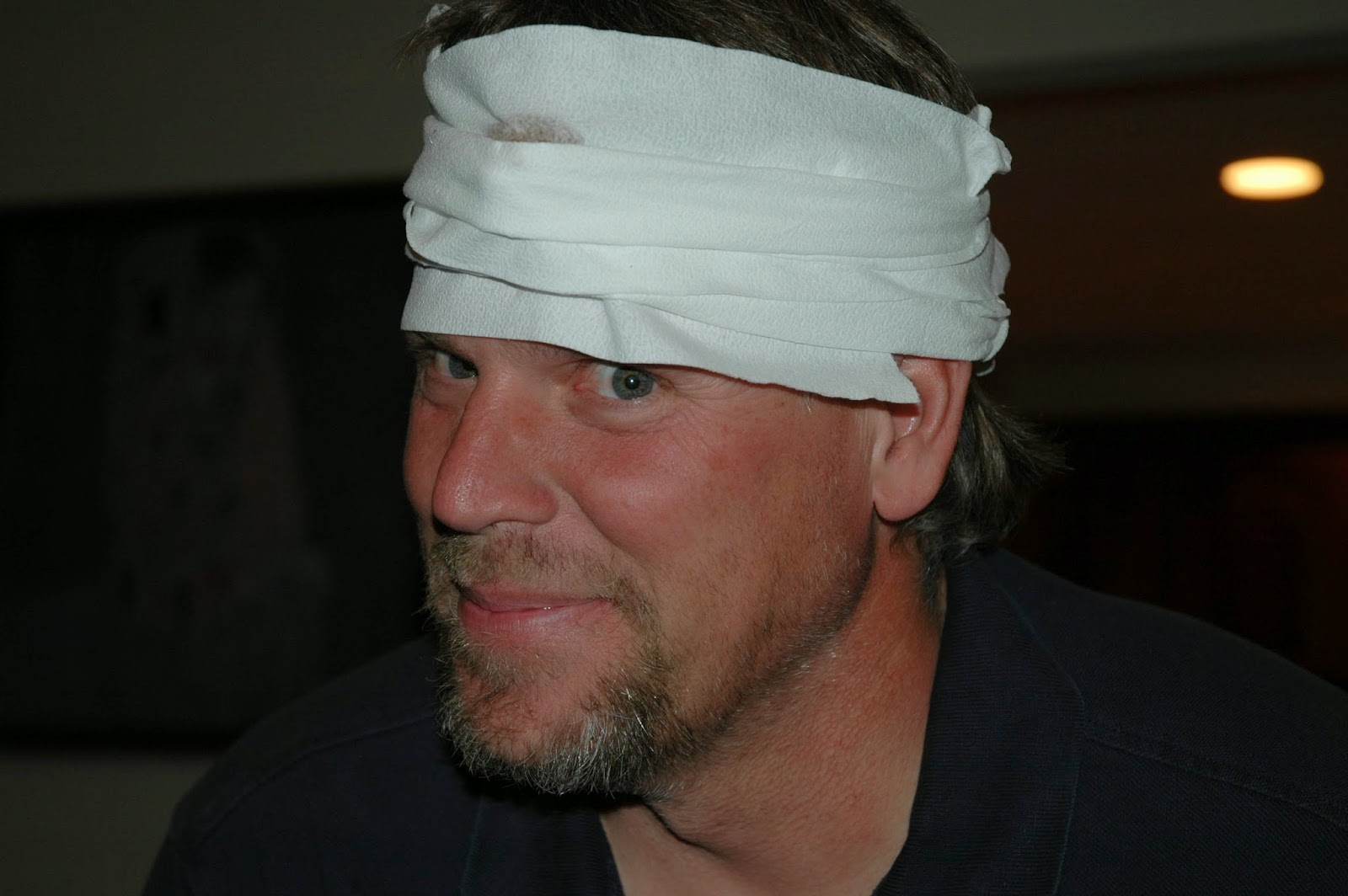
My friends had a field day with that one. They joked that the he had 8:30 permanently tattooed on his forehead. He bandaged his head with a fake bump made out of a meatball to show how badly he was injured. Another friend filed a fake lawsuit against me on behalf of the injured party. And even though this happened over 6 years ago, they were talking about it last night while we were at the Mexican restaurant.

There was a time when I would have been mortified by anecdotes like these. I felt like everything about me was wrong, so I scrutinized every interaction after the fact to make sure I hadn’t offended anyone. But now I have friends who know that I’m loud and that if you try to hold me down I might assault you with a deadly watch. But they love me, anyway.

Still, if you ever meet me, you might want to choose your restaurant wisely.

Obsessiveness

I don’t know if you’ve noticed, but I’m kind of obsessive. I can’t blame people for being annoyed with me. Sometimes I annoy myself.

I’m an excessive planner.  For example, because of my GERD and exercise-induced asthma, I’m constantly obsessing about what and when to eat. Last night I made rice at 1 a.m. while I worked on this post because it will save time and decrease the likelihood that I will throw up on the court tonight.

Sometimes obsessing is a memory device. Like I’ll repeat a sentence that I want to say over and over until I see the person. Writing it down helps, but I can’t always do that–like when I’m driving. Lots of obsessing while I’m driving.

You know how I said that blogging is my new boyfriend? Well, I’m kind of a stalker girlfriend.  I will check my blog stats repeatedly–hundreds of times on the first day I publish a post. Thank goodness it can’t break up with me.

Sometimes I obsess like it’s a hobby. I might obsess about my next blog topic.  Or what my strategy will be in my tennis match. Or when I can schedule my next haircut and if I want to try something different, like get bangs.

Obsessing is the most painful when it is fueled by the inner critic or drill sergeant or perfectionism. Then it’s this relentless voice pointing out all my flaws (Your arms look fat in that picture!). Or when I’m not being productive (Get out of bed and do something!). Or how stupid I am for making a mistake (You shouldn’t have dated that loser!).

There are things that help. I take antidepressants, which also help with anxiety. And when the obsessing gets out of control, I take Ativan. I used to obsess for days rather than take the Ativan, but my psychiatrist reframed taking it as a way to have control over my anxiety. And I’m all about having control.

I also practice mindfulness meditation.  You’re not supposed to judge how well you meditate, so I will just say that I obsess about random things for 95% of the time while I’m doing it. But it seems to work, nevertheless.

I tell myself the same things I tell my clients. I remind myself that I don’t know what will happen and I can’t prepare for every possible scenario. To take one worry at a time. That no matter what happens, I will be able to cope with it. And that I have an excellent memory and won’t forget.

Most importantly, I try to accept that this is a part of who I am. Some people may not have to deal with obsessive thoughts, but everyone has to deal with something. This is my thing.

Since blogging has helped me accept other aspects of my personality, I thought I would try blogging about my obsessions. Sometimes it helps just to say them out loud. And it’s an added bonus when readers say they can relate.

I still obsessed all the way home about what to eat before and after tennis tonight and how to end this post, though. Oh well. I guess practice makes perfect.