Tag Archives: blogging

I’m Ready to Write My Book!

Photo by Mike on Pexels.com

Last week on September 24 my blog turned 12. I have learned a lot about myself, relationships, human nature, love, and life through blogging. But that wasn’t the reason why I started my blog. If you’ve been reading it since I started it, then you already know that I started a blog because I wanted to write a book. But no one had ever read any of my writing, so I didn’t even know if I was any good at it.

Well, now I feel pretty confident that I can write in a way that sounds like me. I’m less focused on being good than I am on being authentic. And my posts are definitely authentic. Thank goodness you have to take a deep dive through hundreds of posts to know what all my flaws are. And for those of you who have done so, thank you for letting me know how helpful it was to hear about my flaws rather than judging me for them. I had no idea that I would be helping so many other people in the process of learning how to be vulnerable, as BrenĂ© Brown suggested in Daring Greatly.

Since my hip surgery, I have unconsciously been doing things that have been moving me closer to writing my book. First, instead of resting during that first week after surgery, I was asked to write an article for an online magazine on any topic of my choosing. So of course I chose mindfulness. And since my family was taking care of me at the time, I read the article to them to get feedback from people who knew nothing about mindfulness. My sister-in-law was especially helpful in terms of the questions she asked me about practicing mindfulness.

In the second week of recovery, because working full time 2 weeks after surgery was not enough productivity for my drill sergeant and inner critic, I also started making short videos of the epiphanies I was having about my recovery. All of the epiphanies are rooted in mindfulness and self-compassion, not surprisingly. I thought making videos might also be helpful in securing an actual assignment as a UGC creator.

The third thing that happened is by the 5th week of recovery I hit a wall. I had been working more than I did before hip surgery and was pushing myself on the weekends socially and physically. I realized that it was my blog anniversary last week and I was still struggling to practice self-care and set boundaries–2 of the major topics I blogged about. This epiphany made me step up my game and finally give myself permission to move to 4 days a week in January 2026. That way, I won’t have enough hours in the week to say yes to everyone.

Part of what enabled me to do this is that, despite taking a lot of days off and having a lot of medical bills, I was still able to pay all my bills without using any savings. I think I might have even added a little to savings. So I finally got God’s message: I don’t have to worry about money.

The final sign that I’m ready to write my book came while I was reading “The Let Them Theory.” So many of my clients have mentioned the book and said they found it helpful. And I can see why it’s helpful. It simplifies one of the basic tenets of mindfulness practice, which is called equanimity. The mantra for equanimity is “may we all accept things as they are.” This means 2 things: 1) accept the ups and downs of life, our moods, our successes and failures; and 2) accept that although we may want people to change, we can’t take responsibility for their behavior.

So “let them” eat junk food and watch TV all day. And “let me” learn to regulate my own emotions about losing them to a heart attack. I have recommended the book to many clients since reading it, and I recommend that you read it, too, if you find it hard to let go of controlling other people.

Although I liked the book for my clients, for me personally, I recognized that the Let Them theory is not really a theory. It’s more of a mantra. She admits in the book that she came up with the phrase and found it helpful. Then, after the fact, she found experts who could tell her why it’s helpful and mentioned them briefly in the book. As a psychologist, I prefer books that are rooted in theory and/or research, like The Anxious Generation, which I also highly recommend if you’re wondering why going on social media makes you feel like crap but you doom scroll for hours a day, anyway.

Plus, the goals she suggested in the book are often materialistic and superficial in nature. Which is fine, in that people can set whatever goals they want. I admit, when I first had the idea of writing a book, I wanted fame and fortune. I think that’s why I wasn’t ready to write it. Because those weren’t the appropriate goals for me. I’ve never prioritized making money. I often regret that I didn’t prioritize it, and because I didn’t, that’s why I’m always worried about money. But the truth is, I know what my purpose is. It’s to help people.

For me, mental health isn’t about being sick. People need therapy because life is hard and full of trauma and tragedy. We need help in identifying our values, having some kind of spiritual practice, prioritizing play and creativity, and learning how to love and be loved.

What I am meant to do in this lifetime is help more people find their purpose without having to see each of them individually in therapy. So once I start my 4 day work week, I will start writing my book, which will be called something like How to Practice Mindfulness in Everyday Life.

If you’re interested in watching the videos I’m making, I’m including the latest one below because it’s probably the one that best shows my personality–unatheltically athletic, determined, goofy, and relentlessly optimistic.

Oh, and feel free to follow my Instagram page as well, so that you’ll know when to buy the book!

It’s Complicated

IMG_0563

Have you ever noticed how you can experience two things at the same time that seem contradictory? If you have, you probably berated yourself for being irrational. At least that’s what I always do.

Take my last post on being indispensable, for example. I confessed to all kinds of things that I do in relationships that don’t make any sense. I know I can’t be all things to all people, but I try to do it, anyway. I feel this anxiety in the pit of my stomach about a guy, and I do everything I can to be in a relationship with him. I am devastated when the relationship ends, even though I’m not sure I liked him that much to begin with.

I know it’s not just me. I had 2 clients last week who were beating themselves up for similar things. But as a therapist, I’m much wiser than I am in real life. As a therapist, I tell them that we can experience things that seem mutually exclusive at the same time. People can love you and still make choices that they know will hurt you. You can be afraid, but you can still take a risk. You can be grateful for all of your blessings and still have a right to be sad.

People are complex. We are a mix of loving and hateful feelings. We are both selfish and unselfish. Good and bad. In fact, if you know someone who only seems to be on one side of the good/bad continuum, you probably don’t know them very well.

I just went to lunch with a friend who told me that she was catching up on my blog and realized how little she knew about me. I told her it’s because I’m good at hiding how I feel, which I’ve always taken pride in. But I don’t think it’s such a good thing any more, which is why I blog about honesty.

But my friend pointed out that it can be a good thing and that she was glad that I seem happy and together; it helped her to accept the other things about me. Which seemed insulting at first, but I think I get it.

If my weaknesses were the only things people knew about me, I probably wouldn’t get as many comments about being courageous and honest. I would probably be judged more harshly, fair or not.

But I am not just those things. I am also relatively well-adjusted. I am also someone who strives to be a better person. I am also someone who shares my vulnerabilities so that other people can feel normal.

I am a walking contradiction. I am the entire spectrum. Strengths and weaknesses. Crazy and normal. Perfect and flawed, all at once. And so are you.

I have to admit, even as I write this, I still don’t love all of the contradictions that make me who I am. But at least it gives me lots of material to blog about.

1000 Voices for Compassion

1000speak

Last night, instead of going to bed, I decided to read through my old posts to make sure I was thoroughly sleep-deprived today. I noticed that most of my posts of late were about my attempts to practice self-compassion. And I noticed that it’s working.

I know this because I haven’t had anyone tell me that I’m being too hard on myself. I made it through last semester without crashing and burning. I didn’t get depressed. I enjoyed the holidays. I enjoyed being around my family. I didn’t spend my break obsessing about my inability to go to bed early. I spent a week at home alone while I was sick and focused on taking care of myself rather than trying to be productive.

And I noticed that compassion is contagious. My last post, in which I gave myself permission to be angry after a friend attacked me for teaching compassion, elicited the most comments ever. Readers validated my anger. They shared their own difficulties in talking to others about their suffering. They thanked me for writing this post and for the work that I do. It helped to alleviate some of the pain. It was proof that compassion really is the best remedy for unkindness.

Practicing compassion has changed my interactions with others, too. On Monday, MLK Day, I went to the bank at the local grocery store and was surprised to see that it was open on a federal holiday. I asked the teller if this was a new thing, and he said that only in-store banks were open. I felt bad for him that he had to work on a holiday–even though it’s not a holiday where I work, either. I don’t know what possessed me to do it, but for some reason I said, ” Wow. That sucks, huh?”

He burst out laughing. Even though I wasn’t trying to be funny. (Even though ordinarily I think I’m hilarious.) And it changed our interaction. Before it was a typical business transaction. Afterwards it was something that made us both feel better. I thought about it for the rest of the day, and it made me feel good to know that I made him laugh. It still makes me happy to think about it.

What if people made a point of being compassionate, even when they are angry at themselves or someone else? What if, instead of spreading negativity, we validated how hard it is to be human, with all our faults and feelings and pain and suffering? Wouldn’t that be a great experiment? Just to see if it makes a difference?

On February 20, you can find out. Bloggers are invited to publish a post about compassion on that day to flood the blogosphere with kindness. If you’re interested in learning more about this event, check out this post. You can “like” 1000 Voices of Compassion on Facebook here. If you’re interested in posting something on compassion that day, use the hashtag #1000speak to promote this event.

Hope to see you there!

I Don’t Want to Talk About It. (But I Really Do.)

I have always considered myself a fairly open person, but maybe I’m really not. Blogging has made me realize how little I have shared of my suffering with others. Even friends and family. Even when they ask me how I’m doing.

During the summer when I was depressed and my dad was depressed and I was contemplating ending my marriage, I was rushing to a tennis league match, barely able to suppress my tears. One of my players noticed and asked me how I was doing. I just said, “Oh, you know….” To which she replied, “No. I don’t know.” But I still didn’t say anything.

A few months before this I confessed to my parents that I was depressed because I was missing so much work and felt ashamed, weak, and irresponsible. My parents never missed work, and they had far more responsibilities than I did. During my dad’s depressive episodes he still went to work every day, even though it took him forever to do his job. I wanted them to help me with my depression, but I guess I also wanted them to tell me that it was OK that I was struggling. That I wasn’t a terrible person.

But I didn’t tell my brothers. Luckily my mom did it for me, and they each reached out to me and asked me how I was doing. I said I was fine, even though I wasn’t. Even though I had to will myself to go to work and to stay at work every day. It’s only because they read my blog and because I’ve been helping one of my brothers who has been struggling with depression that they now know what that time was like for me.

A few weeks ago I had a client make a public declaration to his friends that he wanted them to approach him if he looked like he was not doing well. And if they asked how he was doing and he said he was fine, he wanted them to push a little harder and make him talk. It terrified him to do this, because he has always valued stoicism, and he’d had a ton of traumatic experiences that he might have to talk about now.

I’m not even sure what possessed him to do something so brave. Even now, I’m not sure I would make such a declaration to my friends and family. I’m trying to make myself ask for help when I need it, and I am more honest now when people ask me how I’m doing. But I haven’t gone so far as to tell them to ask and to hold me accountable if I say I’m fine.

I imagine our work together contributed to his decision to ask for help, but it’s still surprising when clients take steps that are more courageous than anything I have done because of therapy. Sometimes I even use them as inspiration to do something courageous. Sometimes I wish I could tell them how much they inspire me to take risks in my own life.

Maybe I can tell them to read my blog. But I’m still not that brave…yet.

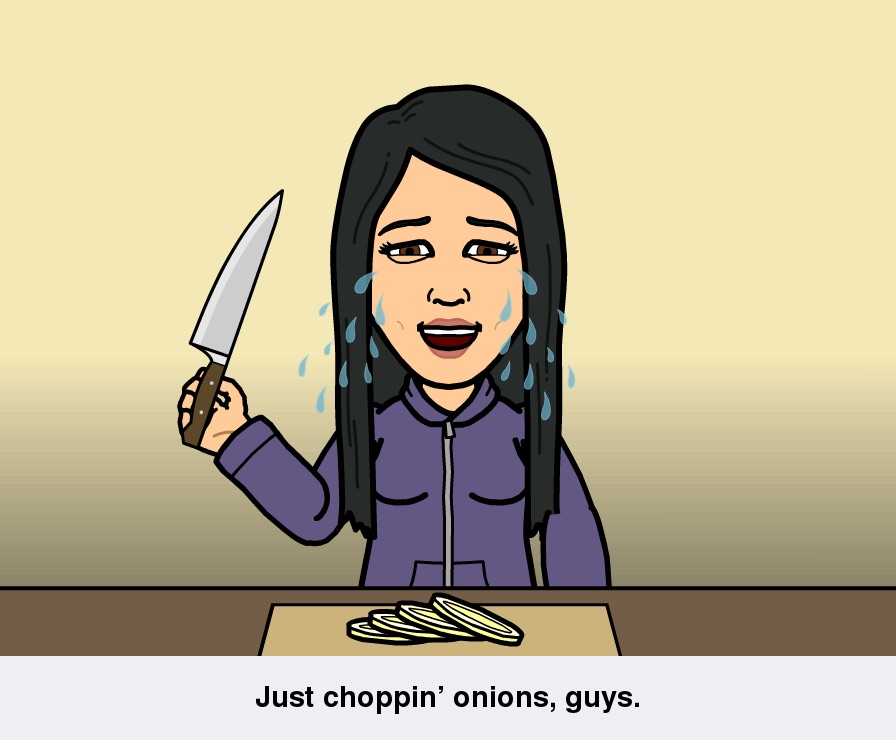
onions

Ending Stigma One Person at a Time

Pathologically Helpful

Last night I listened to a panel of students share their stories about their mental illness before their peers. Stories about the darkest moments that they have never shared with anyone else. Yet there they were, saying them out loud, often through tears, to a room full of people they didn’t know.

Every year Active Minds, the student group that I advise, hosts two panels: one on mental illness in general, and one on eating disorders. Even though it often ends up being harder than they expect it to be, they tell their stories because they hope that it will help to end stigma by humanizing mental illness.

The closest I’ve come to sharing my deepest, darkest secrets out loud is when I told students in one of my Abormal Psychology classes about my first depressive episode. I had wanted to do it for some time, and it probably took me 3-4 years of teaching to work up the courage to do so. At the end of the semester, one of the students in that class thanked me for talking about my depression. But at the time I was still so ashamed of it that the reminder that I had said it out loud and someone heard it was so mortifying that I never shared my story again.

I started this blog because I read that this is the kind of thing you needed to do if you wanted to get a book published. My vision of the book was initially much more “how to,” with some examples from my personal life thrown in to make it interesting. But when I was researching blogs, I realized that there were already a lot of  “how to” blogs. So I decided that my unique contribution to the blogosphere would be telling my story. I could be a mental health professional who shares those deep, dark secrets that she has never shared with anyone else.

I have written often about how therapists are taught to use self-disclosure with caution to make sure that the focus stays on the client, but also because you want to appear as though you have your act together. But based on the feedback I’ve gotten from readers, perhaps therapists have been wrong about self-disclosure. It seems that sharing our humanity is one of the most healing things that anyone can do to help another person.

I have pushed myself to share my experience in far more detail than I ever imagined that I would. But I know I can push myself further. I, too, could stand before people and share my story out loud, in front of anyone who wants to listen. So now that’s what I hope to do. If writing a book will help me accomplish that goal, then I still want to write one, but that is no longer my end goal. My end goal is to do what those students did last night–to humanize mental illness with my story rather than my expertise.

The Dilemma of Being Human

I am currently reading The Unlikely Pilgrimage of Harold Fry, which is awesome! It’s about this guy who decides to walk several hundred miles to visit an old friend who is dying of cancer because he believes that it will keep her alive. His walk is a form of penance for all of the people he has failed, including himself. To make up for his passivity, he decides to take a leap of faith that he can walk 600 miles in yachting shoes without a cell phone, a map, or a plan, and be redeemed.

I like this book because it explores how loss and grief can change us and our relationships with the people we love. It has always bothered me that someone who had once been so important to us can become someone who we can’t stand the sight of. Even though it’s less romantic, I would prefer to think of love as a weed that sticks around no matter how hard you try to get rid of it rather than some high maintenance flower like a rose that is easy to kill.

I also like the book because I’ve had this fantasy of walking the Camino de Santiago because some Catholics believe it will halve their stay in purgatory. I don’t know if I believe in purgatory, but if it does exist, I would definitely like to shorten my stay there. I can see why a pilgrimage would be therapeutic. It’s like self-therapy with a rigorous physical activity component.

Along the way, Harold meets people who share their own sorrows, which he feels both comforted and burdened by. The other night I read a line in the book that gave me pause: “Harold cold no longer pass a stranger without acknowledging the truth that everyone was the same, and also unique; and this was the dilemma of being human.”

This statement is at the heart of what my blog is about. I have always felt different from others in a way that makes me feel alone in the world. For being Filipino and for not being Filipino enough. For thinking too much and for being too shallow. For not being married, for being divorced, for not having children. For having depression and anxiety. Even without these specific differences to point to, I have felt fundamentally flawed in a way that I can’t quite put into words.

But as I blog about my flaws, I realize that other people feel just like I do–alone in their craziness. The details make us unique, but the pain of feeling separate from others is universal.

So in a way I feel like I am Harold Fry, on my journey to self-acceptance, but with a much less rigorous physical activity component. And as I tell my story, I give others the opportunity to reflect on their own story so that we can share the joy and pain of being human together.

The Dilemma of Being Human

Photo: Maria Roman

Declaration of Independence

I am working with a client who was sexually assaulted and is thinking about taking her case to our judicial board. We talked about the levels of awareness that she went through before she could be ready to take this step. How at first she didn’t want to acknowledge what happened. Then she opened up to a few people who felt safe. Now she wants to make sure he understands that what he did was not OK. To force him to think about it the next time. She hopes to eventually share her story at Take Back the Night so that other people can benefit from it.

She knows that there will be people who won’t believe her. Who will blame her for what happened. She prepares herself by reminding herself that as long as she knows what happened, that’s all that counts. But that’s a hard thing to do–to face the judgment within us and around us. It takes a lot of courage to face that kind of scrutiny.

I like to think of this process as a kind of declaration of independence–from our demons, from judgment, from fear. It happens every time someone goes to AA and admits they’re an alcoholic. Every time someone finds the courage to say I have an eating disorder. I struggle with depression. I live in fear. In making this declaration, they take away the power that their condition has to make them feel weak. Defective. Crazy.

To a lesser extent, I think of my blog as a kind of declaration of independence. I’ve tried to hide these things about myself all my life. I don’t want to be held hostage by them anymore. I want to be able to embrace everything that makes me who I am–especially the things that I am ashamed of.

The president of the student organization I advise, Active Minds, told me that he reads my blog, which kind of freaked me out at first. But he thought it was the most powerful way to fight stigma and to let other students know that they are not alone in their struggles with mental illness, which is the primary goal of Active Minds. So he is finding ways to give students the opportunity to make their own public declarations. It is a wonderful feeling to know that this has come out of my willingness to share my vulnerabilities.

I’ve always liked the expression that freedom isn’t free. You have to fight for it. Although blogging has been a surprisingly supportive and positive experience, I am well aware that there will be times when someone will judge me for what I say. I try to prepare myself for it by doing what my client is doing–to remind myself that ultimately, the only person who counts is me. Then I take a deep breath and hit Publish.

Declaration of Independence

In the Zone

Want to be happier? Try adding some flow to your life.

Mihaly Czikszentmihalyi’s research indicates that engaging in activities that you find pleasurable and absorbing is one of the things that makes life worth living. When you are in flow, you are focused on the here and now. You experience a loss of self-consciousness and lose all sense of time. You feel like you can handle anything that comes your way.

Flow is what athletes feel when they are in the zone. Although I don’t consider myself athletic, I have experienced flow on the tennis court. It doesn’t always happen, but every now and then, the ball does exactly what I want it to. No channeling of inner warriors required: everything is effortless, unconscious.

Flow is not limited to sports. You can experience flow at work, during artistic activities, and in nature. Sometimes I’ve experienced flow with clients in therapy: I feel so connected to them in the moment that I know what they’re trying to say before they say it. Occasionally, I’ve experienced it when blogging: the words and ideas seem to be writing themselves, and they are perfect.

And there are those rare moments–usually when I’m at some lookout point–where I have a moment of clarity. I am Neo at the end of “The Matrix,” when he breaks the code and fights off the Agents with minimal exertion. The mysteries of the universe unfold. I feel joyful and calm at the same time.

Flow can also be interactive. Like Hazel and Augustus in “The Fault in Our Stars,” you stay up all night, sharing your life stories, and time stands still. Or like when you’re catching up with your best friend who you haven’t seen in ages, but you can pick up right where you left off, as if you talked just yesterday.

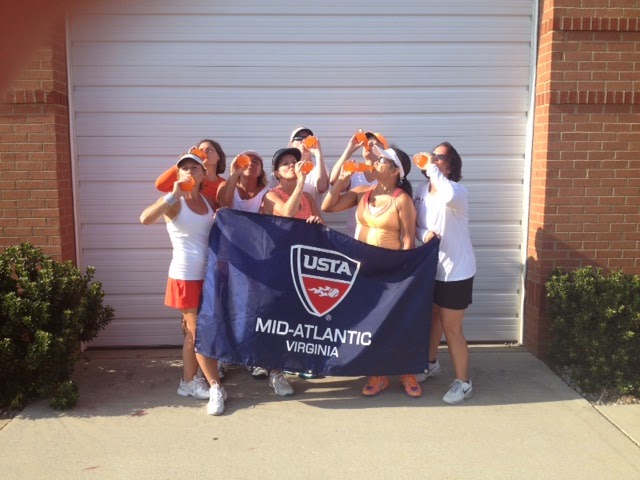
This weekend I was blessed to experience flow in all of these areas. I was at the Virginia district tournament with my tennis team, and I was in flow on the court. My team was in flow, and we made it to the finals for the first time ever. And all of the moments off the court were filled with joy, celebration, and camaraderie. Even writing about it is effortless. No self-consciousness. No demons. Just a pervasive sense that life is good.

Usually Mondays are hard for me, but today I am happy. In this moment, I am in the zone.

Orange Crush

The Paradox of Productivity

Have you ever noticed how you’re actually more productive when you have less time?

I had grand plans for all of the stuff I was going to accomplish over the summer. I was going to crank out blog posts 3-4 times a week. Learn how to write a book proposal and a query letter. Find an agent.

I did skim through a book on writing non-fiction. I actually wrote fewer blog posts than I do when I’m at work because I didn’t have very many deep and meaningful thoughts over the summer. I pretty much only thought about my sleep cycle, tennis, and what I’m going to eat. You can only write so many posts about those topics.

I was going to get my jewelry business going again. I was obsessed with making jewelry several years ago and sold a lot of what I made. So I bought all these beads back in January and planned to make some new items over the summer. Take some pictures of them, even. Sell them on Etsy. The only thing I made were some earrings (the purple pair on the left) for my tennis team to match our uniform, but I didn’t make any money. I just wanted my team to look cute!

I was going to knit more. I sell some of my jewelry and knitting at my friend’s store, The Stitchin’ Post, and my knitted items have sold the best, but it takes forever to make the things that I like. I was also going to knit this cute top for myself:

This is the picture from the pattern. I haven’t finished mine yet. I’ve made it to the armholes, but by the time I finish it, I might only have a few weeks left of warm weather, because the top part looks pretty complicated.

I was going to get in better shape. Play more tennis. Add more low-impact cardio like riding my bike. Do some strength training. Throw in some yoga.

I tried to ride my bike, but I couldn’t figure how to put the bike rack on. My ex was kind enough to help me do it, but then I couldn’t load the bike onto the bike rack by myself. And it was going to take 2 weeks to take it to the shop to get a tune up. I bought something to lubricate the chain that was supposed to be easy to apply, but it still seemed too hard and messy to do by myself. In fact, the whole bike preparation experience made me feel so ill-prepared to live my life alone that I stopped trying because it was depressing me.

I did play tennis more, and I stretched almost every night, but that’s about it.

I was going to read more books. I keep track of what books I read throughout the year, and I’m way behind from where I would ordinarily be. So I started reading more when I realized I only had a few weeks left before I had to go back to work. The only problem is, since I read on my iPad, the longer I read, the harder it was to fall asleep because of the back lighting. So then I had to read less so that I could fall asleep before 4 a.m.

All in all, I fell short on almost every goal. Perhaps I was being a tad unrealistic about what I could accomplish in 2 months.

Plus, when I have less time, I get more done because I have to make the most of every minute. Squeeze in a trip to the grocery store right after work, even if I’m tired. Write a blog post if I have a no show. Read a paragraph if my client is running late. When I have all the time in the world, I tell myself that I’ll get stuff done eventually. No need to rush.

But I’m not feeling too bad about myself for falling short of my goals. It’s good for me to set goals, not because I have to meet all of them, but because it gives me something to strive for. After all, isn’t life more about the striving than the end result? At least that’s what I tell myself to feel better.

Mistakes

You know how I hate making mistakes? Well I made a big one last week, and now my inner critic is in full force. I am having a hard time forgiving myself, so I thought I’d blog about it.

Intellectually, I know that everyone makes mistakes. But my inner critic tells me that everyone else is allowed to make mistakes. I, on the other hand, am on strict probation: one mistake will lead to dire consequences–failing, getting fired, going to hell, losing everyone’s respect, etc. I don’t know what I’ve done to warrant this zero tolerance for errors, but it must have been pretty bad.

I am trying to put things in perspective. I try to remind myself that, although some people could judge me harshly, God does not have a zero tolerance policy for errors. God knows that I am not perfect and does not hold me to the standards that my inner critic does.

I gave a sincere apology for my mistake. I didn’t lie, get defensive, or evade responsibility. I acknowledged what I did wrong and that I am aware of the consequences of my error. That I am committed to making amends. While this should move my transgression into the somewhat healthier guilt category, I am still feeling quite a bit of shame about it.

My inner critic wants to make sure that I am taking this seriously. That I am not one of those people who superficially apologizes without being genuinely sorry. That is one of my pet peeves, and I don’t want to be a hypocrite by doing the same thing. So I keep reminding myself that this is a big deal–which only serves to reactivate the cycle.

I am trying to call to mind all of the sage advice on forgiveness, perfectionism, and letting go. Advice that I, myself, have given to other people. It seems to help them. Why doesn’t it help me? Why am I not improving faster? I envy people who can read an inspirational quote on social media and feel better. People who are simply able to turn off the obsessive soundtrack of shame in their head. Or who listen to a different soundtrack altogether.

So I am also trying to remind myself to honor my own timetable. That self-improvement is not a race that I have to win. In fact, I’d settle for a participation award. I tell myself that at some point in the future, perhaps even later today, I will be able to put things in perspective. And if it takes longer than that, I’m talking to my therapist on Tuesday.

Luckily, tennis is on all day today, which I am hoping will be an effective distraction until I have my moment of clarity.