I’ve been having moments of synchronicity lately. According to Jung, moments of synchronicity are meaningful coincidences that signify an opportunity to cultivate a deeper connection between the mind and the universe. They often occur in times of crisis and are opportunities for growth.
Most of my moments of synchronicity involve people with whom I am having similar epiphanies. We are going through similar crises, and we are using our self-awareness, our talents, and our minds to find out how to make the life that we want happen.
For example, I was going to write a post on gift-giving the other night, but a book that I’ve had on hold, The Serviceberry, by Robin Wall Kimmerer, became available. I saw that the book was only 2 hours long, and I’m behind on listening to 4 books a month, so I thought I’d knock it out to try to get back on track. I wasn’t sure what it was about, but I loved Braiding Sweetgrass, and she was featured in one of my meditations when they were focusing on gratitude that week. So I was confident I would like it.
Talk about synchronicity! In the book, the author differentiates between gift economies, which are based on the philosophy of abundance and promote gratitude, reciprocity, and community. Which is exactly what I was going to write a blog post about. She compares gift economies to economies that are based on scarcity, which result in competition, hoarding of resources, and surrendering our values so that we actually harm what we love.
A good example of this would be toilet paper at the beginning of the COVID pandemic. Even though people had no idea about anything related to COVID, they figured they better go out and buy all the toilet paper that is available in their local grocery store. And maybe some other grocery stores nearby.
And even after people found out that COVID does not cause GI difficulties that result in a need for extra toilet paper, thereby making it unnecessary to hoard toilet paper, it was still hard to buy toilet paper for months. Because the attitude was, screw all of you! I’ve got my toilet paper so I’m going to be OK if I have COVID because I beat you to the punch!
By the way, the CDC advised against going to the grocery store and buying all the things in a state of panic. But what do they know? It’s a dog eat dog world out there!
In contrast, when Hurricane Helene hit North Carolina in the fall of 2024 so badly that it wiped out all the roads and no emergency personnel could reach rural communities, these communities shared what little resources they had with one another until they could get help. Gift economy.
Kimmerer, who is Potawatomi, gives an example in which someone says something to a man in their tribe like, why don’t you make preserves out of the berries so you can have some for later? In reply, the Native American gentleman says something like, I store the berries in the belly of my brother. Because what good does it do me to have more berries than I need if my brother is hungry? The non-Native American thought Native Americans weren’t very smart and that they probably aren’t going to survive. (Which is true historically because of the Trail of Tears.)
Kimmerer also gives an example of how in an economy of scarcity, we take something like water, which is freely given by Mother Earth, and turn it into something scarce by polluting it. For example, some companies dump their waste into water reserves so that it is no longer safe to drink. So now the only way to have water that is safe to drink is to buy bottled water. Except everyone can’t afford to buy bottled water. Or food, for that matter.
In fact, when there are natural disasters like hurricanes, people go out and buy all the bottled water in every store they can get to and hoard it, just like they do with toilet paper, now that I think about it.
If you’e interested in reading this book yourself, Kimmerer is donating all presales of the book to organizations that protect and restore land.
What I was going to share about gift-giving is that I realized that turning my blog into a book is only the first step of doing what God wants me to do to fulfill my purpose. The book will allow me to have an opportunity to promote its release by providing workshops that will be called Normal in Training: Teaching Adults How to Rest and Play.
Because they already know how to work. In fact, that’s the problem with enjoying life in today’s world. We spend so much time making money to survive if you’re poor, or accumulating wealth if you’re rich, that we don’t spend enough time resting and playing.
But to live a full life, according to one of those weekly meditations I mentioned earlier, this Native American spiritual leader said that in their culture, work, rest, and play are all equally important. I don’t know about you, but I think that’s pretty brilliant. Which is why I decided to give these workshops.
In the workshops, my co-author and I will present our unique knowledge bases. My knowledge base relevant to the workshops is positive psychology, therapy, mindfulness, and self-compassion. My co-author’s knowledge base relevant to the workshops is service dogs, art, publishing, organizing presentations, and wisdom, since she is 76 years old.
We’ll explain why rest and play are important to prioritize mental health and allow you to enjoy your life rather than to work until you die.
Or why it’s important to do things now instead of wish you could do them if you had more time.
Or to decide that in order to take care of everyone else, you have to take care of yourself first.
Or to decide that the money you were going to spend on upgrading your Mercedes Benz might be better utilized on something that gives you time to connect with yourself, to the people you love, and to something greater than yourself–like nature, or another culture, or whatever you like to take a deep dive into.
And then we will start the activities, which will be like an adult version of a day in kindergarten. Because we’re healing our inner child by letting that child rest and play.
The morning will be divided into 3 types of workshops, depending on the skills that my clients have in the city that the workshop will be held in. They will include: 1) something related to art, 2) something related to bodily awareness, and 3) something related to self-awareness.
There will be several options in each category to choose from. And if you want to do more than one, luckily for you, they will all be streamed and participants will have access to the recording as part of their registration fee.
After lunch, there will be afternoon workshops that people can pay extra for. They will vary from city to city, based on what my clients and I use to self-regulate. They will include things like short yoga sessions, massage sessions, stretching sessions, mindfulness coaching, pickleball lessons, singing lessons, creative writing lessons, UGC creator lessons, and acting lessons.
Since no one is required to do anything they don’t want to do, there will be a quiet room in case people are overstimulated. There will be pop-up stores that my clients own. There will be food for breakfast, a mid-morning snack, lunch, a mid-afternoon snack, and an optional dinner that participants can attend to get to know other people in the workshop.
The food will be provided by clients who started their own business or by local vendors who are trying to compete with big businesses.
You can also choose to spend your time asking local vendors about their yoga studio, massage studio, pickleball club, mediation center, pottery studio, knitting/crochet group, etc.
There will be a local bookstore where people can buy our book, Neurospicy and Thriving, as well as books that my co-author and I think are important to read.
There will be a local craft store where you can buy supplies for a beginning art project, and one of our art experts will help you get started.
There will be a store where you can make your own emotional first aid kit. This tool kit is essential for self-soothing once you have become dyregulated and you’re thinking brain has gone off-line.
There will be a place where you can download free art into a book, a magnet, a mug, or whatever you want. You will only have to pay for whatever it costs to make the item, and you can make a donation for whatever you think that item is worth.
All participants will also have the program in which every vendor will have an ad so that if they decide later they want to use one of the vendors that was at the workshop, they will know how to contact them.
Even clients who don’t have a store or a skill yet all want to start learning how to do something that they’ve always wanted to do but never made it a priority, like knitting. So that when the workshop comes to their city in a few years, they can lead the workshop on learning how to knit. It is making my clients step out of their comfort zone and do all the things they’ve always wanted to do but never had the time or the courage to try.
I also tell clients that their presence in the workshop alone is proof that we can all learn how to enjoy life. Because when they tell their story about where they were when they started therapy and how they got to where they are now, participants are going to be like, whoa! It’s really possible!
This is an example of a gift economy. You give based on your talents, and what you receive is even greater than what you give. Because that’s how reciprocity works.
But we’re not giving to receive. We’re giving because we want to help other people who felt just like we did in our lowest moment, so that they know that it can get waaayyy better. And we will all show you how to do it. You will have lots of options and choices.
This workshop will be coming to a city near you. But first we have to finish writing and publishing the book. And then, you are all going to learn how to thrive. If you want to. No pressure. You have free will.
So stay tuned!
P.S. This was in my meditation the night I wrote this post:
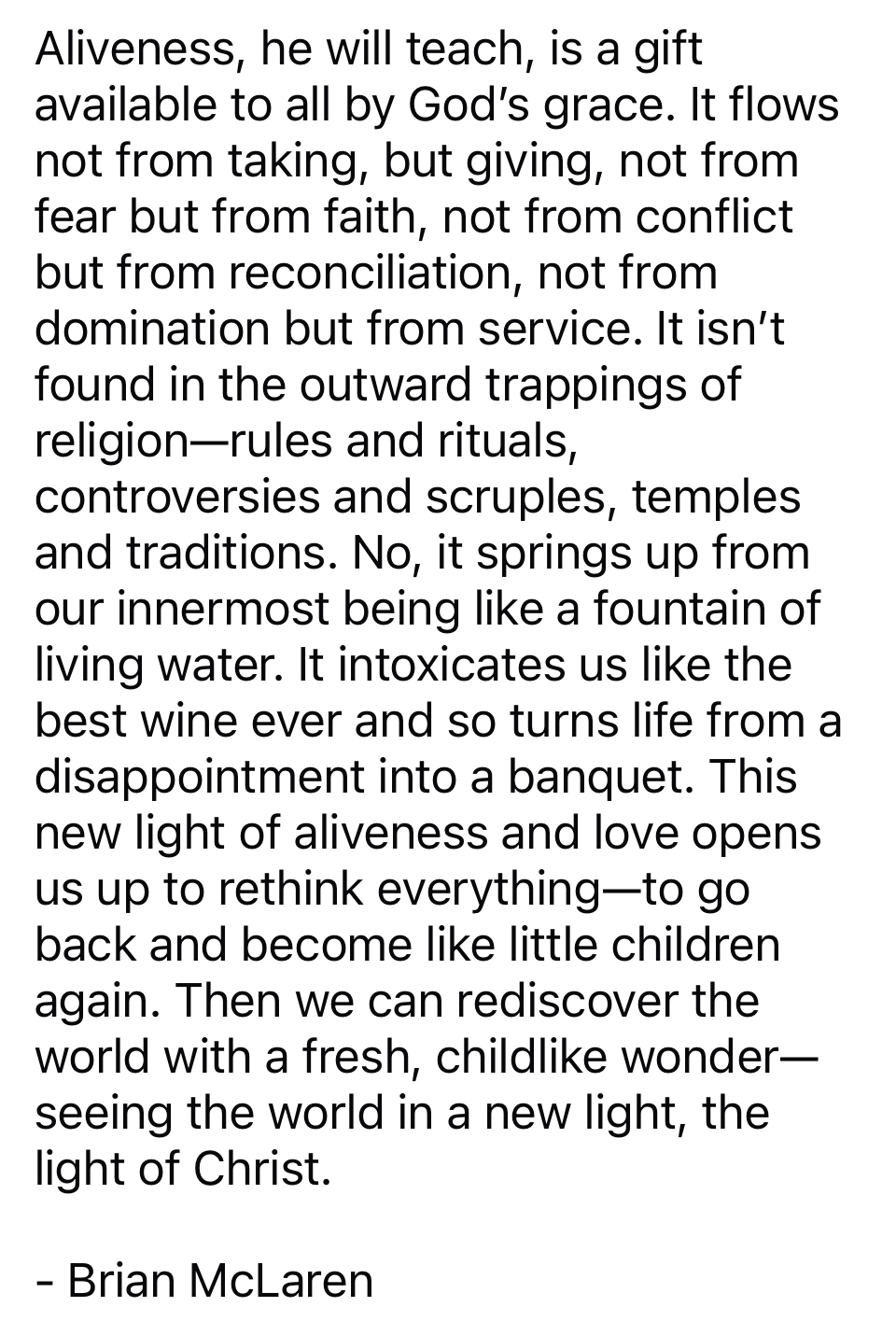
More synchronicity!