Tag Archives: post-traumatic growth

I’m Taking Voice Lessons Again!

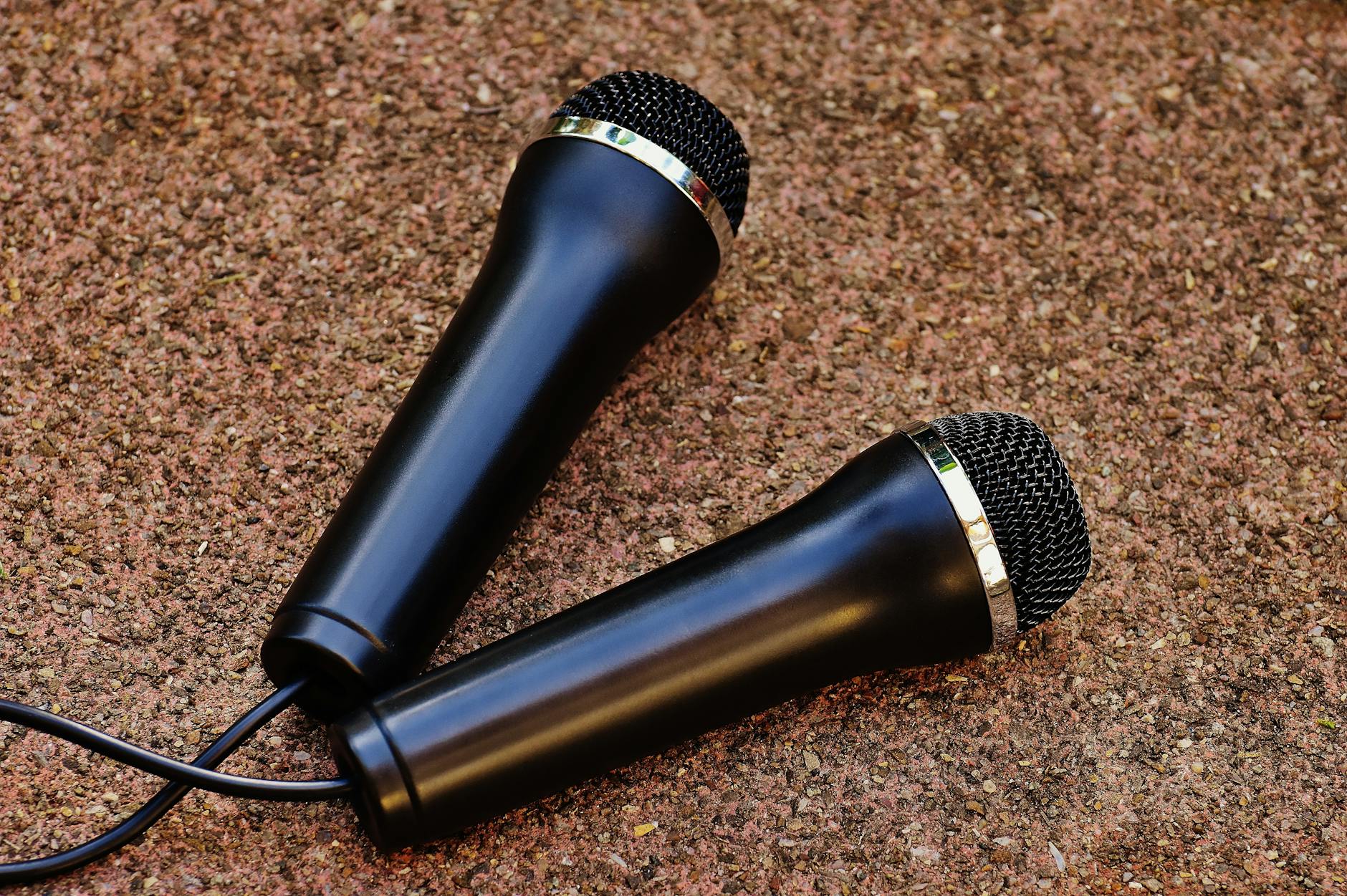
Photo by Pixabay on Pexels.com

So you know how much I love Karaoke. I am still singing, but my range is shot because of the damage done by my GERD (acid reflux) and some medications I was taking for 15 years (more on that in next post). Although the fundoplication surgery combined with compliance with my inhaler when exercising has really helped with my asthma and throwing up, my range hasn’t improved much.

I have debated on taking voice lessons over the past year because I see how much my friend Michelle and my niece Sadie have improved–and especially since I have an acting contract and can deduct the cost of the lessons–but I still thought it was a waste. It’s not like I sing for a living. My family and friends don’t care if I can’t hit the high notes when we sing Karaoke.

Luckily my family, friend, and niece wouldn’t let me give up. When I asked my brother if it made sense to get lessons if you had a broken instrument, he said that you can still improve the sound that you get from it. Michelle said that I just need to access my head voice for my high notes and that can be learned. And Sadie, the relentless optimist, said I won’t know unless I try. Plus she thinks I can be friends with Deanna, her voice instructor, and she’s always worried about me having friends because my closest friends are all in Roanoke.

So one day, I decided to research whether you can heal your vocal cords from GERD, and it turns out that you can with voice therapy. I figured voice therapy might not be that different from singing lessons, so I contacted Deanna and asked her if the two were similar. Not only did she say they were similar, but she also struggles with GERD and asthma and has learned to alter her techniques to accommodate these issues. So I was sold after that!

I’ve had 4 or 5 lessons now and already my range has improved, although the strength of my voice is still weak. The most amazing thing I’ve learned iis that the reason why I haven’t been able to sing high notes is that my tongue, vocal cords, throat, and larynx have been traumatized from all the throwing up. So essentially, I’m doing trauma therapy. I do exactly what I do with clients but with the focus on my tongue, jaw, neck, and throat. I am training these muscles to relax. Tell the muscles that they’re safe. We’re just releasing sound and air now.

The other thing that voice lessons have taught me is that I’m too hard on myself. I push until my body can’t take it anymore. A bunch of my loyal readers have told me that I’m too hard on myself but it’s hard to let myself off the hook. It’s hard to accept that I can go easy on myself, despite all the self-compassion practice. Although it’s much better than it was when I started this blog.

In lessons, I’m always trying to force the notes out rather than allow them to come out. Very similar to language used in mindfulness–allow, soften, create space, play. This also applies to why I need hip surgery. Because when my hip started hurting 10 years ago, it never occurred to me that I could have arthritis so I never went to the doctor. By the time I found out in January, I was already at the point that I needed hip replacement surgery.

Oh well. Old habits die hard so I’m trying to have compassion for myself. Pushing myself helped me to accomplish a lot of things, and it was the only tool I had in my tool box at that time. But practicing mindfulness and self-compassion have given me so many more tools, and taking voice lessons is helping me practice these tools in a different way.

And because I’ve also added the lovingkindness practice, I’ve finally discovered how to be happy in the present, in this moment. Even when I’m in pain, with little contact with anyone, and without being able to play pickleball.

The choice is ours to free ourselves from the obstacles we create in our minds. Luckily I have God, my family, my friend, Deanna, and myself to thank for this newfound freedom. And if there’s anything that you think is holding you back, it’s not too late for you to be free, either.

By the way, Deanna gives Zoom lessons and also teaches acting, so if you’re interested in working with her, let me know.

Client Spotlight: Meet Dee

“They”

I am currently working with a client who is smart, funny, irreverent, and inspires me so much that I asked her if I could write a blog post about her. Dee is 73 years old and entered therapy for the first time 2 years ago during the pandemic. Although Dee knew that she needed help since she was a teenager, she was not given the opportunity to go as child because her mom didn’t believe in therapy. As an adult she didn’t have insurance until she started receiving Medicare. Nevertheless, she didn’t resign herself to a life of suffering and sought therapy when it became an option.

Therapists often say that they learn as much from their clients as clients learn from them. Here are some of the things I’ve learned from Dee:

  1. If you live long enough, you will probably experience trauma. Dee lost her dad when she was 15 and her mom was not able to help her navigate her grief. As a result she turned to her first boyfriend for support, only to lose him to a motorcycle accident, thereby doubling her grief. After that she had several more relationships with men who were bad for her in different ways–several of whom were outright abusive. Trauma inevitable if you live long enough. It would do us all some good to give ourselves permission to get help when we need it.
  2. Change is possible if you work hard at it. Even though change is possible, it isn’t probable unless you really want it, and most people don’t like change. Dee is diagnosed with depression, anxiety, trauma, and binge eating, and these conditions were exacerbated with the isolation of the pandemic, as it was for many people. The turnaround she was able to experience in improving her condition in a 2 year time frame is remarkable.
  3. A long life is a sign of resilience. Without access to therapy, Dee unknowingly created her own treatment to cope with her suffering: she began a business working one-on-one with individuals and families to train their own service dogs. These dogs were trained to the same high standards as national service dog organizations – a process that took 1-3 years. Partnering with her clients, she trained autism, medical alert, psychiatric, and mobility service dogs. And she was really good at her job. She found a way to combine her passion for dogs, the need for social connection and self-soothing, and with her need to make a living.
  4. Growth is always possible. In addition to focusing on ways to address her depression, anxiety, trauma, and eating issues, our work focuses on developing spiritual growth, gender identity, and intellectual and creative interests. Dee often talks about how lucky kids are today who have labels like transgender and nonbinary so that they don’t have to force themselves into a category that doesn’t fit. In the last few weeks Dee has begun exploring her identity as a lesbian–literally trying on new clothes, joining Facebook groups, and giving herself the opportunity for the social connection that she has gone without for her entire life.
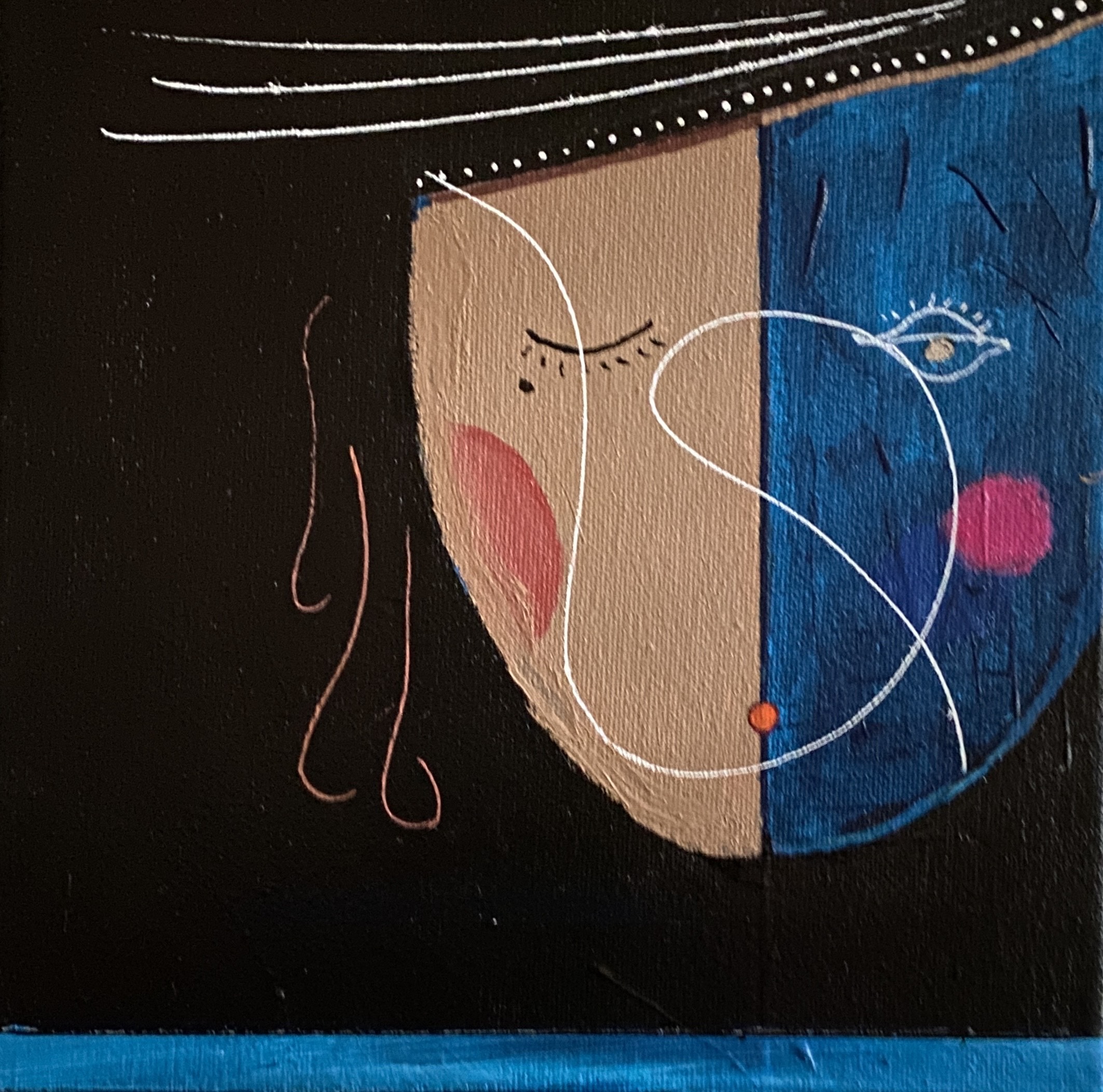
  5. You can teach an old dog new tricks. Less than a year ago Dee decided to take up painting, even though she had never done it before. In that short amount of time, she has her work shown in several local galleries and has sold several of her paintings–one of them to me! Dee recently decided to use her art to bring awareness to social justice issues by linking some of her pieces with information related to causes that are important to her. I encourage you to check out her art work at http://fullcircleartworkx.com. The painting above is a self-portrait that explores the commingling of masculinity and femininity that she entitled They. I bought the piece below, entitled Heartfelt. Which I find poetic because Dee told me in a session that she always knew that she would fall in love later in life, and she did–with painting.
“Heartfelt”

Trauma and Resilience

977155d0ceed9e6cded2e0b4e3033f42

So I’m at this conference on mindfulness, trauma, and addiction right now. For some reason, I seem to be drawn to these topics. Just like for some reason, I seem to be drawn to guys who’ve been traumatized. And to therapy, in general.

Actually, I think I know why. It occurred to me earlier this year that my interest in trauma may be more than just intellectual curiosity. I am always “jokingly” saying that I was traumatized by my some of my past relationships. I have mini-flashbacks. I shut down when people yell at me. I have an exaggerated startle response.

And I had anxiety attacks during the presentations on trauma at this conference. Yesterday afternoon I had to take an Ativan because I felt like I was drowning. I couldn’t go back to the conference today; two days of listening to examples of my relationship history were all I could tolerate.

Still, like my clients, I look back at the events of my life and think, was it really that bad? There are lots of people who had it worse than me. But the more I learn, the more I realize that everyone has experienced some trauma.

In my case, having a parent with a mental illness was traumatic. Having a spouse with a mental illness was traumatic. And coping with my own mental illness while I tried to help the people I loved with theirs was also traumatic.

I was reminded during this conference that many therapists have experienced trauma. Helping others is a way to have a sense of mastery over our past. That’s why it seems depressing to most people to spend all day listening to other people’s problems, but it isn’t to us.

You would think that realizing that I have been traumatized would make me feel bad about myself, but the opposite is true. Instead of thinking that I’m weak and pathetic because I get overwhelmed easily and shut down and can’t function, now I think, look how awesome I have coped with everything! I kick ass!

In fact, resilience, post-traumatic growth, and grit are the new darlings of positive psychology. Some people thrive in the face of traumatic events. Sometimes they even find a way to turn it into something good–usually by trying to help other people.

For example, the student organization that I supervise, Active Minds, was founded by Alison Malmon, whose brother committed suicide while he was a student at the University of Pennsylvania. He had not told anyone that he was suffering from schizoaffective disorder, including his family. Alison recognized that many students probably lived in secrecy like her brother did, so she created Active Minds, whose goal is to raise awareness and reduce stigma about mental illness on college campuses.

Let me make clear that I am not in any way saying that everyone should be able to overcome traumatic experiences if they try hard enough. Some of it is luck. I have many resources that other people do not, for which I am thankful, but I didn’t do anything to earn them.

Still, for me, finally acknowledging that I have lived through traumatic experiences doesn’t make me feel broken. It actually makes me appreciate how strong I am.