Category Archives: Sports

Head Games

Competition can bring out the worst in people. It is not uncommon to see anger outbursts on the tennis court from people who are ordinarily even-tempered. They’ll yell, hit the net, or knock the ball out of the park. You don’t see too many people break their racket at our level, but I had a partner do it once because he was mad that I wasn’t coming to the net.

I actually think that I have a better attitude in tennis than I do in real life.  For example, since I obsess about money, I would never break a $200 racket. Plus, I try to not let my opponents know that I’m upset because that gives them a mental advantage. Plus, I love my racket in part because it’s purple, and if I had to get a new model it would not be purple.


Some people will use head games to gain an advantage. They will intentionally make bad line calls or accuse you of making bad line calls. They will argue about the score, time violations, lineup changes, coaching, and bathroom breaks. Or they’ll do seemingly positive things to disrupt your concentration like crack jokes, be chatty, or tell you how awesome you’re playing.


I admit, sometimes I’ll use positive head games to counteract negative ones. I try to capitalize on the fact that it’s hard to be mean to someone who is being fair and kind. Last year I played against this person who is known for causing drama and making bad line calls, so I was super nice to her from the start. It worked for the most part but she still made one bad call. My partner went ballistic but she insisted the ball was way out, which was a flat out lie. I said “it may have been out, but it wasn’t way out,” just to end the argument. There were no other disputes about line calls and no hard feelings by the end of the match.


In a relationship, however, if my partner uses head games I yell at him for trying to manipulate me.


Another common way to deal with frustration is to blame your partner for blowing the point. If my partner criticizes me I either ignore it, call them on it, or never play with them again. This is one place where I won’t try to make the relationship work at all costs.


I rarely criticize my partner on the court. In fact, I take pride in being able to bring out their best game. I praise them for the things they’re doing well. I help them stay focused and positive. I get them to dig deep when we’re on the verge of losing.


However, in real life I am pretty sure my exes would tell you that I have no problem doling out the criticism.


I am also less critical of myself in tennis than I am in life. Most of the time I’m able to let mistakes go and focus on the next point. I don’t get too upset about losses. In fact, my current record is 7-11. But I play so much tennis that another opportunity to win is just around the corner.


In relationships I focus on all the negative outcomes and wonder what I’m doing wrong. In tennis, I focus more on the process than the result. As long as I’m happy with how I played, I don’t mind losing. And it’s fun to win, but the thrill of winning doesn’t last as long as the joy of trying to get better, looking forward to the next match, and fighting for the win on the court.


Maybe I should treat my next relationship like a tennis season.

100th Post!

One of my favorite books of all time is What Alice Forgot, by Liane Moriarty. It was our most popular book in our Remedial Book Club; we actually had a meaningful discussion about it for the entire meeting. Ordinarily we talk about the book for 30 minutes–mostly about who would play the characters if the book were turned into a movie–and then we eat, drink, and gossip about people in the tennis community for 2 hours.

The book is about a woman who falls off her bike in spinning class and loses her memory of the past 10 years. In her current life, she is about to turn 40, has 3 children, and is going through a bitter divorce. After the accident, she thinks she is 29, madly in love with her husband, and is about to have her first child. The book also follows the stories of Alice’s mom, sister, and grandmother, all of whom are in the process of letting go of grief. In addition to being hiLARious, the book also makes you reflect on who you have become and what you thought your life would be like.

I am now in the process of filing for divorce, at my husband’s request. I am glad that I waited until he was ready, because now he understands why our marriage can’t work. I have a better appreciation for the significance of rituals. Even though it’s just a formality, since we’ve been apart for almost 4 years, the legal aspect of it has reawakened my grief about losing him. Of all the people I’ve been with, he is by far the one who was the most stable, reliable, and trustworthy. It saddens me that this wasn’t enough to make things work.

I will be 45 in a few months, and I would have never predicted that this is what my life would look like. Although it is still sad and scary to be alone at times, I am thankful for this opportunity to get to know myself better. I am still experiencing compassion fatigue from my last relationship, and I really want my next one to be different.

I’m currently reading The Art of Empathy, by Karla McLaren. It’s the first book I am aware of that teaches hyperempaths like me how to keep from burning out. I’m hoping that this will help me be more intentional about my next relationship. I’m hoping that it’s possible to break the pattern of relationships that you’ve grown up with and that you’ve followed all your life and to start anew.

Since I have reached my goal of 100 posts, I thought I would also take stock of my blogging life, which is much more positive. This blog is the first time that I’ve shared my writing with others, and I am so proud of what I have written so far. Even prouder than I was when I finished my dissertation.

I’ve been trying to write on and off for about 10 years now but only took it seriously a few years ago. Until then, I never realized how demon-filled the writing process was. Every time I sat down to write, Perfectionism, the Inner Critic, and the Drill Sergeant were all there to meet me, reminding me of how much I suck. So to commit to blogging 3 times a week–and to share the most vulnerable parts of myself in every post–is a huge accomplishment.

However, now that I’ve learned more about publishing, I am forced to accept that the odds of writing a best seller are not great, and even if it does happen, it won’t be any time soon. I’m not going to give up, of course, because I never give up, but I’m trying to focus more on the process of writing rather than the end result.

I’m trying to approach blogging the way I approach tennis. I’ve made $60 in prize money, which was several years ago when I won the 35 and over singles division of a tournament. (I was also the #1 rated 35 and over singles player in Virginia that year!) But I spend hundreds of dollars a month on tennis, so as a money-making enterprise, it’s a failing business.

But that’s OK. I’m not doing it to make money. I play tennis because it’s fun, because it challenges me, and because I have made wonderful friends. Although my romantic relationships have been a disappointment, my friendships have far exceeded my expectations.

Blogging is also fun and challenging, and I enjoy getting to know my readers and other bloggers. And it’s way cheaper than playing tennis. So I’m going to set another goal, which is to write another 100 posts by my blog’s first birthday, which is September 24.

Hope to see you then!

Loyalty

When it comes to sports, I am loyal to a fault.

In a previous post, I talked about the delusional level of optimism that my brothers and I must channel at times to continue to cheer for UVA football. My brother emailed me recently to ask if I wanted to renew our season tickets–which I did. Even though we only won 2 whole games last season.

I captain several tennis leagues every year. And every year, I invite all of the players from the previous season back to the team unless they’ve done something I consider egregious–like not show up for a match. Or not respond to my emails. Or cause drama on or off the court. I can tolerate a player with a losing record, but I won’t tolerate a person who disrespects me or other people.

There are many captains who have the opposite recruiting strategy: they will tolerate a strong but less likeable player but get rid of a nice person who is a weak player.  Because the point of forming a team is to win, after all. I get that. And I’ve had winning teams. But I’ll admit, I sometimes choose loyalty over winning.

I’ve had friends leave my team and play for other captains because of this. I can’t really fault them for wanting to be on a winning team. But I am grateful for the friends who continue to play for me, because it makes our team feel more like a family. In fact, the tennis family that I featured in a previous post are all long-standing members of my mixed doubles team.

This team happens to be my winnningest team, too.  So loyalty does pay off sometimes.

This year, for the first time in 38 years, UVA won the ACC tournament in basketball. And for the first time ever, we were both the regular season and tournament champions. And we did it without any superstar athletes.  Without anyone noticing, really. Because when you win with defense, it’s not flashy.  So we didn’t get as much press as some of the high profile teams in our conference.

I was there when they won the tournament, and what impressed me the most about them–other than how awesome they are–is how humble they are. No one sticking their faces in the camera talking smack about how they proved their haters wrong. Not even any “we’re number one” stuff. No ego at all. Just a joyful celebration of their accomplishment as a team. As a basketball family.

It takes faith at every level to be loyal to a losing team. In the post-game interview, Tony Bennett thanked God for getting his team through the low times. Bennett had faith that a team without a single McDonald’s All-American player could accomplish great things. The players had faith that defense and unselfish play could win championships. And UVA fans had faith that someday, our basketball team could return to the glory days of the Ralph Sampson era.

So this post is dedicated to the 2014 ACC regular season and tournament champs. See you in Texas at the Final Four!

The Federer Fund

Have I mentioned that I obsess about money?

I know that money can’t buy happiness–or at least there is a point of diminishing returns–and I am past that amount. But despite this knowledge, I still buy into the illusion that my life would be better if I made just a little bit more.

It’s not like I want to be a millionaire or anything. But I would like to have more money in savings. Especially now that I’m single. Because if I were to get fired or become disabled, I can’t count on anyone to support me. And I can’t save enough to have the recommended 6 month cushion–even if I were to cut back on every unnecessary expense.

Plus there are some luxuries I’d like to be able to afford. Research says that people are happier when they spend money on experiences rather than on things. I would love to be able to go to all of the Grand Slam tennis tournaments. And I would love to be able to semi-stalk Federer. Not in a creepy way. Just go to whatever event he’s playing in, even if it’s in Dubai or Halle, Germany.

Like many writers, I have the fantasy of having a best seller and making millions of dollars. But the more I read about publishing, the more I realize that this is about as likely as winning the lottery. But we all need something to fantasize about. Plus, someone has to win the publishing lottery. Why not me?

Sometimes it’s hard to be patient and focus on writing these blog posts, which I make absolutely nothing for, knowing that it will probably take years before anything happens–if anything were to happen. Federer might be retired by then.

Don’t get me wrong–I’m glad my blog is helping people. That’s why I started it. But is some monetary compensation too much to ask for when I am potentially helping more people than I do in my real job?

I’ve been brain-storming some ways that I can make money from my blog now, while Federer is still playing. You know how when you go on a tour and the guide tells you at the end that tips are greatly appreciated? I could tell readers that if they liked the psychological tour provided by this post, they can make a donation to the Federer Fund.

I think this strategy is better than charging people for buying a mini-book or putting ads on my blog. Not that there’s anything wrong with those strategies. I just think it would be more consistent with the theme of my blog to appeal to people’s altruistic side. Sort of a reciprocity thing.

I could even do a YouTube video where I charm people into making donations. I think I’m much more convincing in person. I could video myself looking sad because I’m watching Federer play on my low definition small screen TV from thousands of miles away.

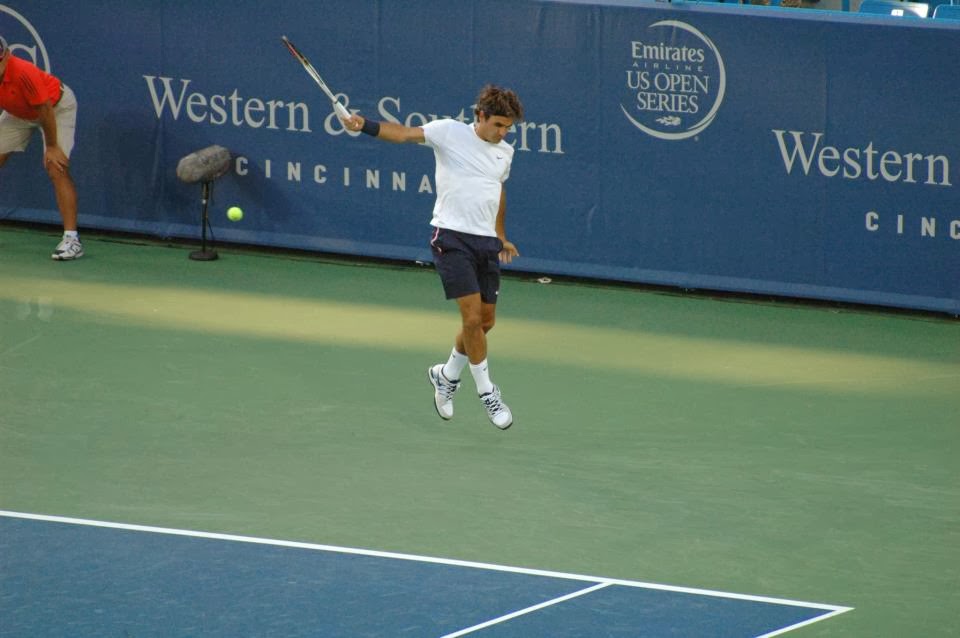
I mean, if you had a chance to see shots like this one in person, wouldn’t you do whatever it takes to make that happen?

Snow Days and Olympic Dreams

Today we finally got our big snow day. Enough for sledding, snow ball fights, building snowmen, and everything. But I am stuck home alone with no one to play with, so I didn’t go outside, except to take a few pictures. I’ve mainly been knitting a sweater–which I finished–and watching the Olympics.

I really want to be an Olympian. I don’t care about winning. I don’t even care if I come in dead last. I just want to wear the USA uniform. I want to attend the opening and closing ceremonies. Stay in the Olympic Village. Exchange pins with other Olympians. 

The main obstacles standing between me and my Olympic dream are that I’m not that athletic or talented. And I’m too scared to do flips in the air or go high speeds. Which pretty much eliminates all of the events except curling. But that seems really boring.

I could imagine myself as an ice skater. But I didn’t grow up near an ice skating rink. And apparently you have to wake up at 5 a.m. to get your practice in, which would have been hard for a night owl like me. Even if I had been motivated enough to do it, I probably would not have been able to talk my parents into taking me to the rink every morning, what with my lack of talent and all.

I’ve tried to think of ways to get around the lack of talent thing. Maybe I could do one of the events in the Summer Olympics, like badminton. I don’t play badminton, but how hard can it be to get good at it? It can’t be harder than playing tennis.

I thought I could also increase my chances of qualifying by competing for the Philippines. I might even get to carry the flag since they only send about 4 people. That’s a 25% chance. I would need dual citizenship, which would probably mean paying taxes in the Philippines or something. I barely have enough money to pay my bills, so that would be a problem. Without the talent to attract sponsors, I would at least need money.

Plus, I bet even the badminton players are in good shape. I couldn’t even talk myself into exercising for 30 minutes today, so I might lack the necessary discipline to be an Olympian. Even if I were disciplined, my allergies, GERD, and exercise-induced asthma make it hard for me to engage in sustained physical activity. It’s hard to be competitive when exercise makes you throw up.

Hmmm. Maybe there really isn’t any way I can be an Olympian. Maybe I’ll just have to settle for knitting and watching the Olympics on TV. I hear the accommodations in the Olympic Village are terrible in Sochi, anyway. 

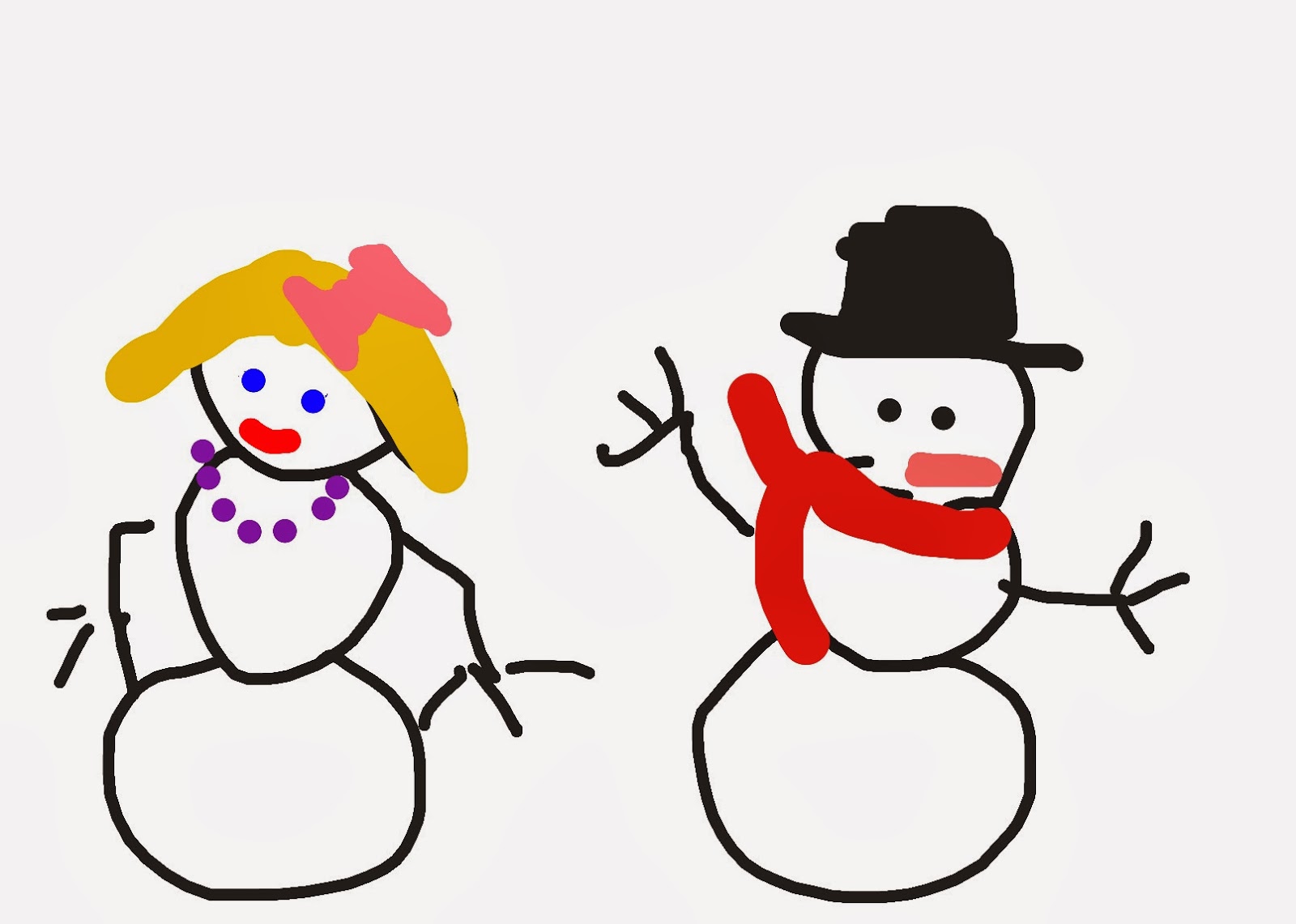
Sophie drew this picture for you.


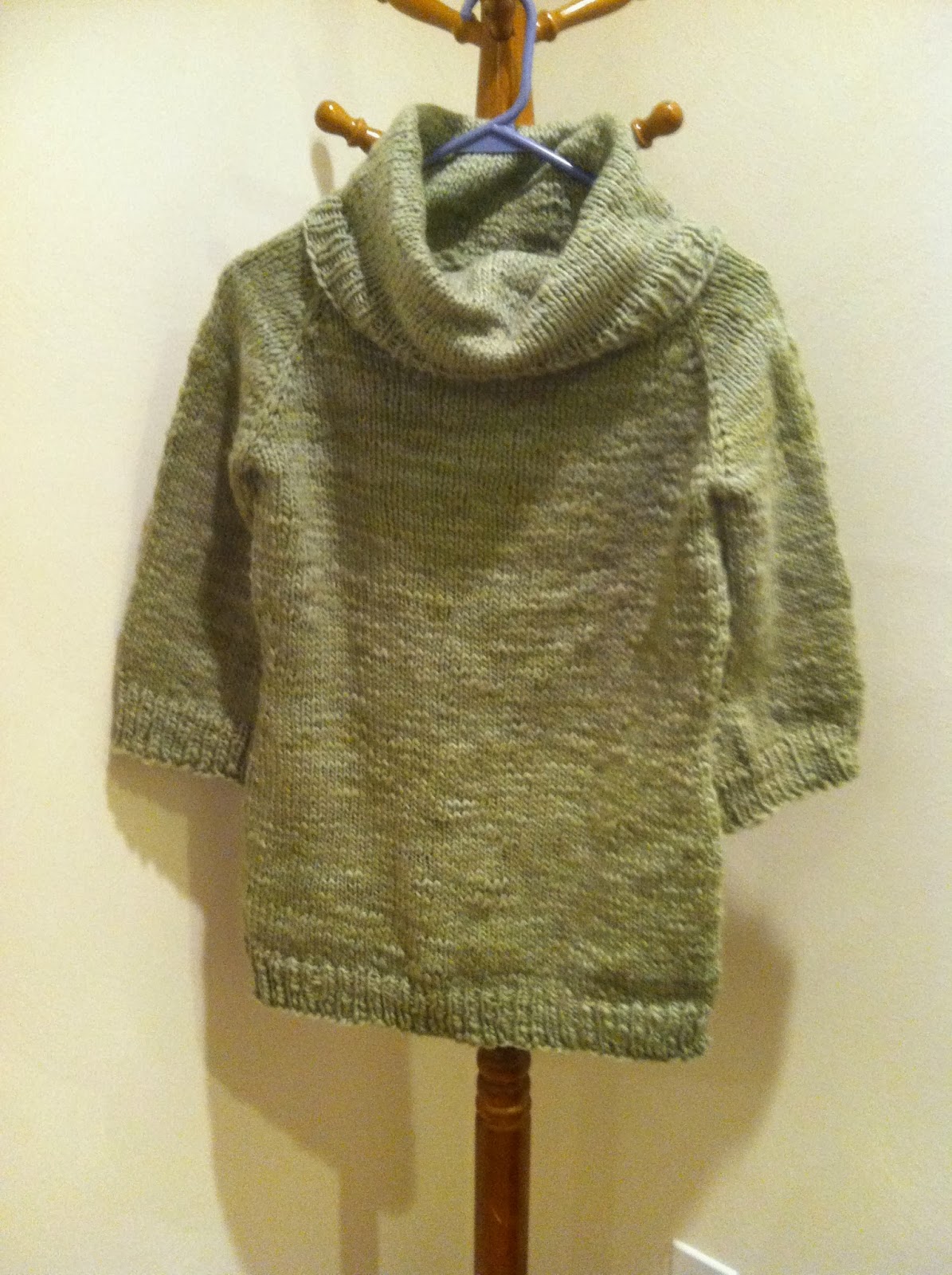
And here’s the sweater I knitted.


In Times of War

I find it fascinating to read accounts of the things people do to survive in times of war.  I will never forget reading this memoir of a refugee from Korea.  She described how one mother threw her baby in the river while she was fleeing. That has become my symbol of survival at all costs–throwing your baby in the river.

One of the things I love about tennis is that you get to see what people would be like in times of war. Competition can bring out the best and worst in people. There are tennis players like Federer and Nadal, who are warriors but also class acts on and off the court.

And then there are players who couldn’t be nicer off the court, but once get them in a losing match, then you’ve got rackets, curse words, and insults flying everywhere. They question every line call. They cheat. They resort to gamesmanship. They do whatever it takes to win, no holds barred. You probably know some of these people. I have no doubt that in a war, these people would have a better chance of surviving than I would.

I read this book called The Noonday Demon where the author interviewed people all over the world to get different perspectives on depression. One of the interviews was with this tribe that fought bitterly in a civil war to survive, but once the war was over many of them committed suicide. I couldn’t understand it. But my husband at the time said that he totally got it, because he had to do whatever it took to survive.

Apparently, the things you have to do to survive make it hard to live with yourself after you’ve won.

I try to play with people who are competitive but are still the same person on and off the court. That’s why in my mixed doubles partner ad, I said I wanted a partner who demonstrates good sportsmanship, has a positive attitude, and never stops fighting for the win. I want to win, but most importantly, I want to be around people whose company I enjoy. And I want to have fun. Because the winning lasts a moment. But it’s the act of playing that is the living part. That’s what really counts. Living to play.

I think that for the most part, I am the person I strive to be on the court. In fact, I find it easier to be the person I want to be in tennis than I do in real life because I’m very intentional about everything I do in tennis. But, in all honesty, because I don’t want to win at all costs, combined with the excessive empathy problem, I’d probably reduce my chances of survival by doing something like helping someone who has no chance of making it.

But then again, we never know how things are going to turn out. We don’t know if we’re going to win or lose, survive or perish–because all the factors aren’t in our control.  So I try to make choices that I can live with, regardless of the outcome. And helping someone who may seem like they have no chance to win while trying to survive myself is exactly the kind of person I want to be.

Warriorism

Warriorism

I captained 5 tennis leagues this year, which most people would describe as an exercise in torture. Rescheduling matches is a pain, and it’s hard to make everyone happy, but for the most part I enjoy it. I see it as an opportunity to be a sports psychologist. 

One of the messages I try to instill is the idea that, just as we all have inner children (Sophie, for me) we also have an inner warrior. A good time to channel your inner warrior is when there is a crucial point, like serving at 30-40 at 3-3. Granted, some warriors are more deeply buried and out of shape mentally and physically than others. For those players on the team, we have the Warrior in Training program (WIT).  

The levels of warriorism have evolved over the years.  Last year I had an asthma attack during a singles match. I’d had a few of them before but I just assumed I was out of shape. Which made no sense, since I played 5-7x/week. But that’s how your brain works.

My friends saw that my lips turned blue and I was wheezing, so after the match they told me I was having an asthma attack and that I should have retired. It was this match that made me finally go to the doctor, which is how I found out that, in addition to allergies and exercise-induced asthma, I also have GERD. 

For these reasons, I no longer play singles. But at the time, I just thought I needed an extra-strength dose of warriorism. I channeled my inner drill sergeant (we all have one of those, too) and started yelling at myself: soldiers in the jungles of Vietnam didn’t get to quit! They had to deal with fatigue and lack of sleep and mosquitos and rain and fear of getting killed. So what if you can’t breathe?  So what if you’re losing?  So what if you can’t move? You still have to finish the match!

My friends thought is was so funny that I used soldiers in the jungles of Vietnam for motivation that this became our new rally cry. Before a team mate got on the court, we would yell “jungles of Vietnam!” Later this got abbreviated to Jungles! for short. I even got my team mates pins to put on their tennis bags with the word JUNGLES on it in an army-looking font. 

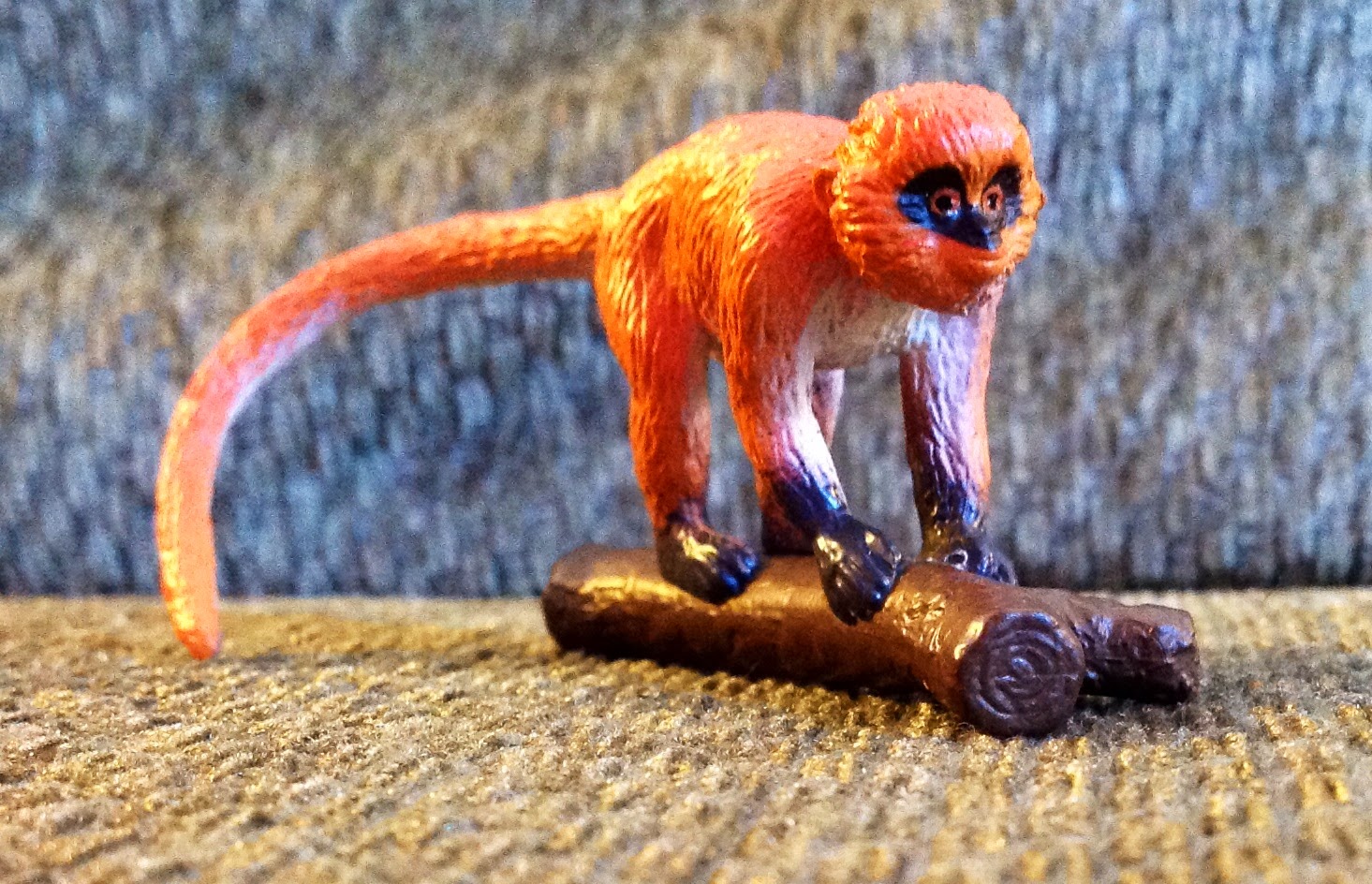
I also found some monkeys and apes, so I bought those, too.  I would have preferred a variety of jungle animals, but it was pretty amazing that they sold apes and monkeys at all, with exactly 12 per pack–one for each team member.  Even more amazing is that I was able to pick a monkey that represented each player.  So then our rally cry became ape and monkey calls for those team members who can imitate them. I can’t, so I still yell jungles.

The last level of warriorism is when you are in the trenches of the jungles of Vietnam.  This would apply when you’ve lost the first set and are down match point in the second set.  Or when you haven’t slept in over 24 hours and have to play at districts in the deciding match, which happened to me this past summer. Because it requires you to channel so deeply, this level should only be used in dire circumstances. The hill you are willing to die on.

I remember at the end of that match, after mentally preparing myself for battle the entire day and spending a good amount of time in the trenches, I was shocked that we still ended up losing. Then I realized that in war, there are warriors on both sides, and half of them will lose. In fact, a bunch of warriors on the winning side will get killed, too. So it’s not a fail-proof strategy.

Still, if I’m going to be in the trenches, I’d rather be there with my warrior in charge than any other part.

Hard Core Fan

Hard Core Fan

I often get asked why it doesn’t depress me to listen to people’s problems all day. I guess it’s because I find people’s stories fascinating–like a puzzle to solve. And I genuinely enjoy getting to know someone who is ready to deal with their problems. It takes courage to acknowledge that you need help and to do something about it.

But probably the biggest reason why it doesn’t depress me is because I am an optimist. I believe people can change and make their lives better. This trait comes in handy when you’re following a losing team.

My brothers and I are avid UVA fans because we went there. It’s different to be committed to a team because you went there or because they’re from your state than when you choose a team because they’re good. Anyone can cheer for a winning team.  Being a hard core fan, on the other hand, takes dedication, patience, and optimism.

One of my brothers is such a hard core fan that before the game he spends weeks researching the stats of our team and of our opponents, checking out the scouting report, the spread, comparing how our offense matches up to their defense and vice versa.  And he always has these grand predictions for the season.  In fact, it borders on being delusional, but in a good way. If that’s possible.

For example, this year he predicted that we would be 8-5, which includes a win at a bowl game.  At best, we will win 3 games, and that will require some divine intervention to win the last one since we’re clearly so sucky and we always lose to our rival.  I remember one year when we had a similar season, he had an epiphany as we watched another loss.  He turned to me and said, “you know, I’m beginning to think we’re not that good.” Which I thought was hilarious, that he was just figuring this out.

This year as we sat through the Duke game, which we lost splendidly in the 4th quarter, in the midst of frustrated fans cursing our coach and quarterback as they exited the bleachers, there was one woman who perkily said “see you next week!” to the usher on the way out.  My brother and I were struck by how unfazed she was by the loss.  We realized that we had briefly waivered in our faith in our team and channeled another source of optimism to motivate us to have hope that we could win the next weekend.

And then we lost again. And again. And again. 

We had another conversation about that perky woman and concluded that she must live in Charlottesville, so she could afford to be optimistic because it probably only took her at most 30 minutes to get to the game since there is no traffic and no problem parking. We, on the other hand, had to drive 2-3 hours, spend money on gas and food, and make the long drive home in a bad mood. 

Still, my brothers and I plan on going to the showdown against Tech on Thanksgiving weekend.  I’m prepared to throw some punches if necessary to avenge any negative comments launched against my team in the event of a loss.

And if we end up being 2-10, then I can take comfort in the fact that basketball season has begun, and we’re supposed to be good at that.

The Uses of Prayer

LOVE UVA (2)

I often wonder whether God responds to prayers about sports.

I remember watching this football game where Boston College and Notre Dame were playing, and it was really close and dramatic. I can’t remember what year. Some time in the ’90’s. I’m sure there are sports fans out there who remember this game in more detail than I do. Anyway, they showed the players of both teams on the sidelines, kneeling and holding hands in prayer. I can’t remember who won, but clearly God could not answer the prayers of both teams.

Most of the time I try to pray for “noble” things when it comes to sports. For example, before my tennis team plays, I’ll pray that everyone stays injury-free, that we play to the best of our abilities, and that we are kind to ourselves, our partners, and our opponents.

And when I’m desperate, I pray that we win. But since I’m ambivalent about whether this is a good use of prayer, it usually goes something like this:

I know you’re busy with more important things and you probably don’t intervene in things like sporting events, but if it’s OK to pray for, please let my team win. I read that angels can intervene if you let them, so maybe you could just send one angel our way. If you say no, I totally understand.

It’s sort of a neurotic prayer, I know, but I’m a neurotic person, so what did you expect?

Today I really wanted UVA to win. My prayer was sort of like a conversation with God during our last drive:

God, you must have intervened when Maryland completed that pass on 3rd and 23, so if there’s any way you can keep this drive alive for us, please do so. Please let us get this one win. We really need it. In fact, if we win, I’ll make my blog post about prayer today.

And I have to say, there were some pretty miraculous things that happened to give us a chance to win: calls that went our way, unexpected turnovers on Maryland’s part, penalties that helped us complete first downs. Everything seemed to be poised for an upset. In the end our 2nd string kicker had a chance to win the game with a field goal, but he didn’t make it, so we lost by 1 point.

It was a heartbreaking loss, but I do believe my prayer was answered. I think the most we can ask for is to be given the chance to make something happen for ourselves, and we had that. The rest is up to us.

So I decided to write a blog post on prayer, anyway.

P.S.  My friend who is a hard core ND fan knew what game I was talking about:
Nov. 20, 1993:  ND (#1) vs. BC (#17) in the last regulation game of the season; BC won 41-39.

P.P.S. They just showed Texas A&M players kneeling and holding hands while Johnny Manziel leads them in prayer. Their kicker makes a field goal with 4 seconds left, beating Ole Miss 41-38.

Tennis Courtships

Tennis Courtships

Finding a tennis partner is a lot like dating. There’s this nervousness and excitement about asking someone to play with you, wondering whether they like your game, and whether they want to enter a tennis relationship. As with dating, some people don’t like to commit to a single partner and get upset if you play around. Other people will only play competitively with you. I can fall on either side, depending on who the player is.

Once my friend set me up with one of her colleagues who was a really good tennis player. He was a 4.5 and I am a 3.5 and we were going to play an 8.0 mixed team together. The first time we practiced I was really nervous about whether he thought my game was any good. I got hit in the eye pretty badly by our opponent so I wasn’t really able to play my best tennis. Plus I was worried about whether I was going to have to go to the eye doctor the next day so I was a wee bit distracted.

Afterwards I tried to get the scoop from my friend: Did he like me? Did he ask about me? Did he think I was any good? Unfortunately, we did not win any matches during the season so I don’t think he had that much fun and he never asked me to play again. I wasn’t too upset because he really was out of my league. Literally.

In many cases, spouses do not make good tennis partners. Usually the husband has high expectations for how he believes his wife should play, and this tends to get expressed as criticism on the court. Then the wife will get mad and tell the husband to worry about his own game. In fact, it’s often a useful strategy when playing a married couple to try to get them to fight during the match.

I used to try to play with my ex socially, even though my friends discouraged me from doing so even if we were in Mexico and he had to play every day and I was the only person who could possibly play with him. I guess they were right, because by the end of the week I was crying. And like baseball, there should be no crying in tennis.

He was clever enough to give me the name of my mixed doubles team which was full of couples. He wasn’t on my team, of course. After his suggestion, we were forever known as Mixed Troubles.

While tennis divorces are not as painful as real divorces, they can cause hurt and angry feelings and potentially end the friendship. Often tennis marriages end when one player moves up in rating, the pair goes on a long losing streak because now they are less competitive, or one partner cheats on the other partner by playing in a tournament and/or league with someone else.

I once had a tennis divorce when my partner moved up to 4.0. While we dominated at 7.0, I was not good enough to hold my own at 8.0.  He started to get frustrated with my game and was asking me to make shots that I didn’t possess at the time. I told him I thought we should both try to find someone stronger to play with and he was surprised and hurt by this. After some tense conversations, we were able to part on good terms.

Because I live in a small town, you pretty much know everyone’s game and who is involved in a tennis relationship. But if you live in a big city, it might be nice to have a tennis dating website that could help you find a partner. It could be called tennismatch.com and the slogan could be: we’ll help you find a winning partnership.

My description might go something like this:

Female 40 and over player with a 3.5 rating looking for a mixed doubles partner to compliment my game. I’m a lefty with a great backhand and serve and I am crafty with my use of spins and lobs. I prefer the baseline and play great defense but I am comfortable at the net and will put the ball away when I have the chance. I like a partner who demonstrates good sportsmanship, has a positive attitude on the court, and never stops fighting for the win. Must be willing to eat out after the match, win or lose.

That makes me sound like an appealing partner, don’t you think?