Tag Archives: mindfulness

I’m Ready to Write My Book!

Photo by Mike on Pexels.com

Last week on September 24 my blog turned 12. I have learned a lot about myself, relationships, human nature, love, and life through blogging. But that wasn’t the reason why I started my blog. If you’ve been reading it since I started it, then you already know that I started a blog because I wanted to write a book. But no one had ever read any of my writing, so I didn’t even know if I was any good at it.

Well, now I feel pretty confident that I can write in a way that sounds like me. I’m less focused on being good than I am on being authentic. And my posts are definitely authentic. Thank goodness you have to take a deep dive through hundreds of posts to know what all my flaws are. And for those of you who have done so, thank you for letting me know how helpful it was to hear about my flaws rather than judging me for them. I had no idea that I would be helping so many other people in the process of learning how to be vulnerable, as BrenĂ© Brown suggested in Daring Greatly.

Since my hip surgery, I have unconsciously been doing things that have been moving me closer to writing my book. First, instead of resting during that first week after surgery, I was asked to write an article for an online magazine on any topic of my choosing. So of course I chose mindfulness. And since my family was taking care of me at the time, I read the article to them to get feedback from people who knew nothing about mindfulness. My sister-in-law was especially helpful in terms of the questions she asked me about practicing mindfulness.

In the second week of recovery, because working full time 2 weeks after surgery was not enough productivity for my drill sergeant and inner critic, I also started making short videos of the epiphanies I was having about my recovery. All of the epiphanies are rooted in mindfulness and self-compassion, not surprisingly. I thought making videos might also be helpful in securing an actual assignment as a UGC creator.

The third thing that happened is by the 5th week of recovery I hit a wall. I had been working more than I did before hip surgery and was pushing myself on the weekends socially and physically. I realized that it was my blog anniversary last week and I was still struggling to practice self-care and set boundaries–2 of the major topics I blogged about. This epiphany made me step up my game and finally give myself permission to move to 4 days a week in January 2026. That way, I won’t have enough hours in the week to say yes to everyone.

Part of what enabled me to do this is that, despite taking a lot of days off and having a lot of medical bills, I was still able to pay all my bills without using any savings. I think I might have even added a little to savings. So I finally got God’s message: I don’t have to worry about money.

The final sign that I’m ready to write my book came while I was reading “The Let Them Theory.” So many of my clients have mentioned the book and said they found it helpful. And I can see why it’s helpful. It simplifies one of the basic tenets of mindfulness practice, which is called equanimity. The mantra for equanimity is “may we all accept things as they are.” This means 2 things: 1) accept the ups and downs of life, our moods, our successes and failures; and 2) accept that although we may want people to change, we can’t take responsibility for their behavior.

So “let them” eat junk food and watch TV all day. And “let me” learn to regulate my own emotions about losing them to a heart attack. I have recommended the book to many clients since reading it, and I recommend that you read it, too, if you find it hard to let go of controlling other people.

Although I liked the book for my clients, for me personally, I recognized that the Let Them theory is not really a theory. It’s more of a mantra. She admits in the book that she came up with the phrase and found it helpful. Then, after the fact, she found experts who could tell her why it’s helpful and mentioned them briefly in the book. As a psychologist, I prefer books that are rooted in theory and/or research, like The Anxious Generation, which I also highly recommend if you’re wondering why going on social media makes you feel like crap but you doom scroll for hours a day, anyway.

Plus, the goals she suggested in the book are often materialistic and superficial in nature. Which is fine, in that people can set whatever goals they want. I admit, when I first had the idea of writing a book, I wanted fame and fortune. I think that’s why I wasn’t ready to write it. Because those weren’t the appropriate goals for me. I’ve never prioritized making money. I often regret that I didn’t prioritize it, and because I didn’t, that’s why I’m always worried about money. But the truth is, I know what my purpose is. It’s to help people.

For me, mental health isn’t about being sick. People need therapy because life is hard and full of trauma and tragedy. We need help in identifying our values, having some kind of spiritual practice, prioritizing play and creativity, and learning how to love and be loved.

What I am meant to do in this lifetime is help more people find their purpose without having to see each of them individually in therapy. So once I start my 4 day work week, I will start writing my book, which will be called something like How to Practice Mindfulness in Everyday Life.

If you’re interested in watching the videos I’m making, I’m including the latest one below because it’s probably the one that best shows my personality–unatheltically athletic, determined, goofy, and relentlessly optimistic.

Oh, and feel free to follow my Instagram page as well, so that you’ll know when to buy the book!
Hip Recovery Update

For those loyal readers following my hip replacement surgery, I wanted to give you an update.

Despite not playing pickleball, not being able to go to barre classes with my family, and being far less social this summer, I was in fairly good spirits until a few weeks before surgery. I had to start asking for help from my family, and I hate asking for help. Or perhaps it would be more accurate to say that I don’t like asking for help because I’m sensitive to rejection. My inner critic is always telling me no one cares about me, so it’s easy for me to interpret people’s actions as not caring.

In addition, my surgery got moved up by a week. To most “normal” people, that would be good news. But I had been planning for 3 months to have the surgery on a particular day, and the change required me to cancel additional appointments, cancel my friend’s visit–which I had been looking forward to all summer–and stop my pain meds immediately. Not that they were helping. But still. It required a lot of change.

I was also dreading feeling more pain than I was already experiencing, since it had become excruciating. And I was determined to do my exercises every day until the surgery. I ended up skipping my exercises the night before surgery because I had to wake up super early and by that point it seemed irrelevant.

The good news is that I was super relaxed and joking with all the staff, nurses, and doctors while I waited for my surgery. I fell asleep before they even started the anesthesia because they gave me something for anxiety. And after I could feel my legs and they made me walk, I walked effortlessly. And because they gave me an epidural, I wasn’t in pain until about 12:30 am Saturday morning.

I have to admit, the next 2 days were pretty excruciating. Mainly because I was trying to be compliant and get up and walk every hour or 2 while I was awake, and it was torture getting on and off the couch. l only used the pain meds to sleep because I was so paranoid about addiction, so mainly I sucked it up. Luckily by Monday I was good.

This was also when I had my first PT session and he said I was in the top 5% of people in recovery. And you know how I like getting A’s. He said I didn’t need to use the walker anymore and that I would be able to drive later in the week, which is 3 weeks earlier than expected. And as he predicted, by Thursday night I moved back home and by Friday I was walking unassisted and drove 3 times.

My progress has continued to improve rapidly, but because my entire body had been compensating for my hip, I have become more aware of my back pain, which had been present before the surgery but I guess I didn’t register it. But since I dove into work the second week because of my irrational fear of not having money, I had a knot in my back that I had to try to massage and stretch out 5-6 times a day. I would have much preferred to take all the time I had set aside to be off and watch the U.S. Open but the drill sergeant was not having it.

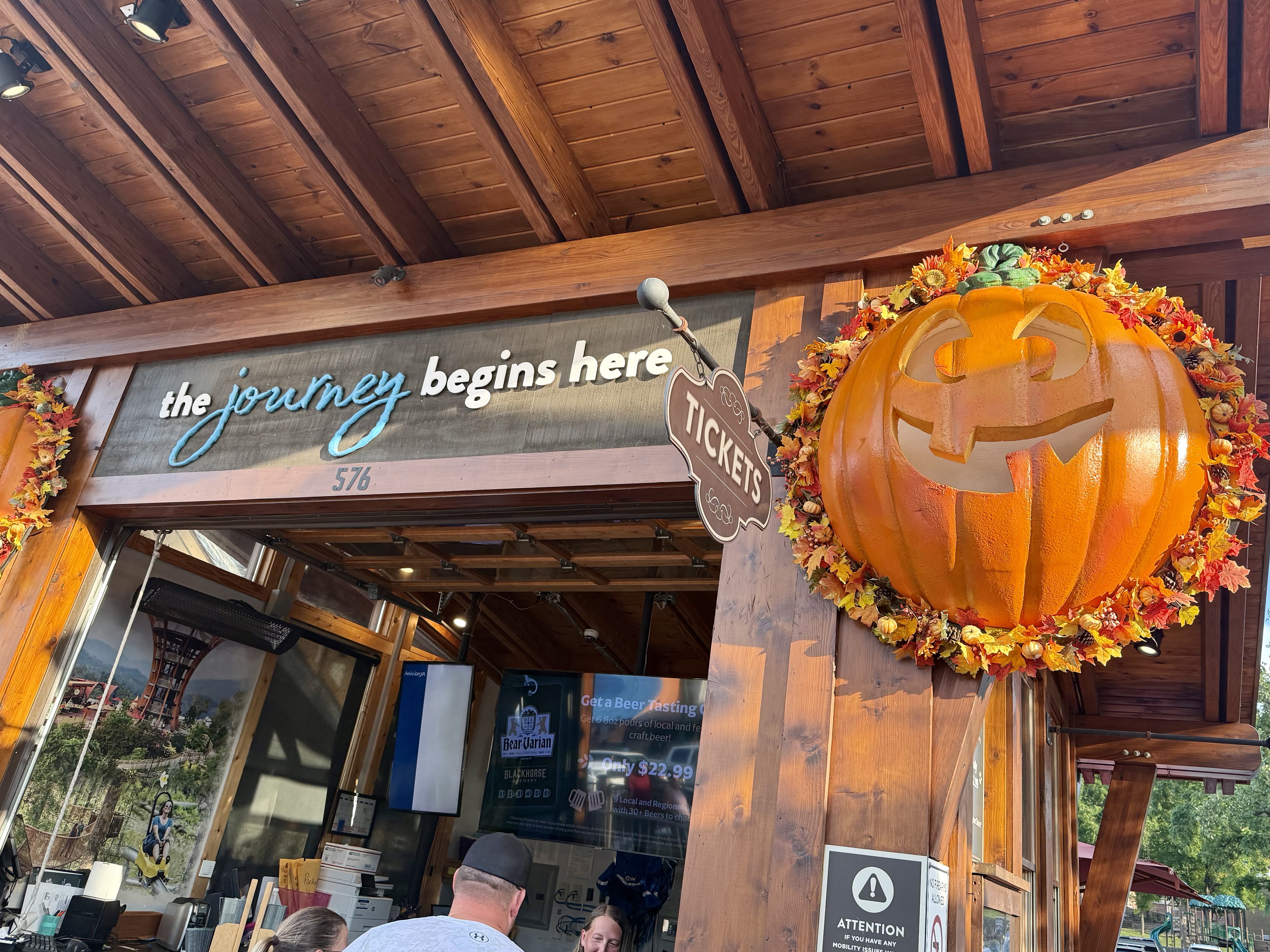
On a positive note, my friend did get to visit me over Labor Day weekend, which worked out better because I was able to walk and drive. We even went to Anakeesta, which ended up being a bust. But I made a video about it that I thought was funny, even if no one else on the trip did.

I’ve learned a lot of lessons from this experience, some of which I’ve shared on my Instagram page if you want to check them out. But I’ll share theme here, too.

  1. People care. As always, when I’m vulnerable, my inner critic is the loudest, but it is always wrong. My family took great care of me. My friend drove for me and gave me tons of positive reinforcement. My friends checked on me. Even my clients asked about me. It’s true that it is an illusion that we are separated from love. We are always connected.
  2. Pain tolerance is a mixed blessing. Had I gone to the orthopedist sooner, like 3 years ago when I had planned, perhaps I could have delayed my surgery. But if it weren’t for my determination to be as strong as possible and do the exercises for 3 months before my surgery, perhaps I wouldn’t have recovered so quickly.
  3. Patience is a virtue. I argued in a former blog post that it is not, but that’s because I was, and still am, impatient. But having to wait for hip surgery, and having to wait another 4 weeks to play is helping me practice, and I think I’m the better for it.
  4. I have much to be grateful for. It’s true that in any given moment, we can look at what we don’t have, or we can look at what we have. We can look at both, even, and perhaps that’s the better option. Rather than “bright-siding” it, which is dismissive of our pain, we acknowledge everything and then decide what in this moment we want to focus on. Right now, the thing that keeps me going is the hope that I can play tennis again, after 6 long years of not being able to. And even if I can’t, I want to be active and see my friends again.

I’m Taking Voice Lessons Again!

Photo by Pixabay on Pexels.com

So you know how much I love Karaoke. I am still singing, but my range is shot because of the damage done by my GERD (acid reflux) and some medications I was taking for 15 years (more on that in next post). Although the fundoplication surgery combined with compliance with my inhaler when exercising has really helped with my asthma and throwing up, my range hasn’t improved much.

I have debated on taking voice lessons over the past year because I see how much my friend Michelle and my niece Sadie have improved–and especially since I have an acting contract and can deduct the cost of the lessons–but I still thought it was a waste. It’s not like I sing for a living. My family and friends don’t care if I can’t hit the high notes when we sing Karaoke.

Luckily my family, friend, and niece wouldn’t let me give up. When I asked my brother if it made sense to get lessons if you had a broken instrument, he said that you can still improve the sound that you get from it. Michelle said that I just need to access my head voice for my high notes and that can be learned. And Sadie, the relentless optimist, said I won’t know unless I try. Plus she thinks I can be friends with Deanna, her voice instructor, and she’s always worried about me having friends because my closest friends are all in Roanoke.

So one day, I decided to research whether you can heal your vocal cords from GERD, and it turns out that you can with voice therapy. I figured voice therapy might not be that different from singing lessons, so I contacted Deanna and asked her if the two were similar. Not only did she say they were similar, but she also struggles with GERD and asthma and has learned to alter her techniques to accommodate these issues. So I was sold after that!

I’ve had 4 or 5 lessons now and already my range has improved, although the strength of my voice is still weak. The most amazing thing I’ve learned iis that the reason why I haven’t been able to sing high notes is that my tongue, vocal cords, throat, and larynx have been traumatized from all the throwing up. So essentially, I’m doing trauma therapy. I do exactly what I do with clients but with the focus on my tongue, jaw, neck, and throat. I am training these muscles to relax. Tell the muscles that they’re safe. We’re just releasing sound and air now.

The other thing that voice lessons have taught me is that I’m too hard on myself. I push until my body can’t take it anymore. A bunch of my loyal readers have told me that I’m too hard on myself but it’s hard to let myself off the hook. It’s hard to accept that I can go easy on myself, despite all the self-compassion practice. Although it’s much better than it was when I started this blog.

In lessons, I’m always trying to force the notes out rather than allow them to come out. Very similar to language used in mindfulness–allow, soften, create space, play. This also applies to why I need hip surgery. Because when my hip started hurting 10 years ago, it never occurred to me that I could have arthritis so I never went to the doctor. By the time I found out in January, I was already at the point that I needed hip replacement surgery.

Oh well. Old habits die hard so I’m trying to have compassion for myself. Pushing myself helped me to accomplish a lot of things, and it was the only tool I had in my tool box at that time. But practicing mindfulness and self-compassion have given me so many more tools, and taking voice lessons is helping me practice these tools in a different way.

And because I’ve also added the lovingkindness practice, I’ve finally discovered how to be happy in the present, in this moment. Even when I’m in pain, with little contact with anyone, and without being able to play pickleball.

The choice is ours to free ourselves from the obstacles we create in our minds. Luckily I have God, my family, my friend, Deanna, and myself to thank for this newfound freedom. And if there’s anything that you think is holding you back, it’s not too late for you to be free, either.

By the way, Deanna gives Zoom lessons and also teaches acting, so if you’re interested in working with her, let me know.

Birthday Reflections, Part 2

You know how people ask you how you feel to be a year older and you usually say the same? Well this year I felt great! And I haven’t felt great in a long time. Which is why I haven’t written a blog post about myself for a few years. So I figured it was time for an update.

It’s been almost 4 years since I’ve moved, and it has taken a long time for me to feel like myself again. Like, in the past few months I had gone through a long depressive episode that was the worst I had ever experienced. And I was already feeling pretty bad, since I moved because I was under so much stress I thought I was going to die before I got to retirement age. So to think that things were going to get better and instead have them get worse for 2-3 years really made me question my relentless optimism.

But I still pushed myself to make a life here–without friends who I considered family, without tennis, which was my life, without financial security, and without a partner. I did lots of things out of my comfort zone. I went to Meetups. I forced myself to go to fitness classes. I started playing pickleball even though I sucked at it. I went on dating apps even though I hated it.

The only things that were successful were pickleball and dating apps. I have made some good friends now, and I met someone who I’m still seeing. He’s a lot younger than me, which was hard to reconcile at first, but now it actually helps me feel younger. In my first birthday blog post I said that I didn’t feel that mature, and I still kinda don’t. Maybe it’s because I am so in touch with my inner child. I don’t know if the relationship is going to last, but I’m becoming more comfortable with not knowing and just accepting what is.

I’m also trying a lot of new things this year, which is also helping me feel more joyful. I’m into Lego flower sets, in addition to my other hobbies. I signed an acting contract with a local talent agency in December and last month I signed a contract as a UGC creator, despite not having any acting experience or not knowing what a UGC creator was. So it’s been an interesting journey. I’m not expecting to make a lot of money, but it gives me other ways to express myself and be creative. And just to see what happens without any expectations.

For my birthday, one good friend came down to visit me, another good friend sent me a meal, the guy I’m seeing came down to surprise me, and I celebrated dinner with my family and with one of my pickleball groups. So I ate well for several days. And all of the Happy Birthday wishes really moved me. I feel so grateful that people took out time to wish me happy birthday. Sometimes several times. Although that might have been an accident. I do that, too. Now I understand what senior moments are. Or what I like to call brain farts.

The other evidence that I’m getting older is that I’m scheduled for hip replacement surgery on August 21. I’ve obviously had arthritis for decades, and I knew my hip was hurting, but I didn’t realize how advanced it was until I fell while playing pickleball back in January. We were going to Disney World in February and I was going to have to walk 20,000 steps a day, so I decided to go to an orthopedic doctor. For some reason, it never occurred to me that the pain could be arthritis. Even more shocking was that it was so advanced that he didn’t think the injection would help and that I would need hip surgery soon. I didn’t believe him but he was right. The first injection lasted just short of 3 months, and the 2nd injection didn’t work at all.

Despite these telltale signs of aging, I’m still in pretty good spirits about it. The prognosis looks good. I should be able to return to pickleball pretty quickly. And I have people to look after me while I’m healing. Financial insecurity and not having anyone to rely on have been 2 of the biggest anxieties of late. It turns out I don’t have to worry about either. For now.

But that is another place where I’m trying to practice mindfulness and be in the moment. My favorite quote is that mindfulness is the process of constantly letting go. Maybe one of the reasons I started practicing is because I knew it was going to be hard to let go of all of the things you lose in life. And to accept all of the things that I had already lost. Plus I wanted to be aware of all of the things I still have to be thankful for. And since I’ve started practicing lovingkindness as well, I’m better able to feel other people’s love rather than question it, worry about losing it, or be anxious about not being loved at all.

I also mentioned in my first birthday blog post that having people read my blog was a gift that I had not anticipated. People would tell me how much it meant to them, when I was just sharing the things that made me feel so flawed. I had no idea how great that would feel. Now I only write occasionally, but people still read my blog, even though I do nothing to promote it anymore. And I’m thankful for that, too.

So brain farts and hip replacement surgery vs. all of the love and new experiences I have in my life. I’ll take that ratio. And speaking of numbers, 56 is divisible by 2 and 7, and is therefore not a prime number. If you read my first birthday post, you know how I feel about prime numbers.

Lovingkindness in Times of Need

Photo by GEORGE DESIPRIS on Pexels.com

Today in our group lovingkindness meditation we made sure to include all the people affected by Hurricane Helene, from the victims to the rescue workers and volunteers. To those of you who asked about my safety, I appreciate your concern. Luckily, Knoxville was not affected, but Sadie’s college, Furman, is in Greenville, SC. Helene is the worst hurricane to ever hit South Carolina. She was out of school for over a week, and as many of you know a good portion of I-40 was washed out, as is the city of Asheville in general. It will be inconvenient for the next several years to pick her up and take her back, but that’s a small price to pay compared to those who have lost their homes, their cities, and their loved ones in the 6 states that have been affected by Helene.

I’ve heard lots of stories about people helping others in obscure places where help had not yet arrived. They were checking on one another, sharing food and resources, even though everything was scarce and their survival was not guaranteed. It seems that times of disaster often bring out compassion, tangible aid, donations, volunteers, as well as prayers and gifts of lovingkindness. I’m always moved to hear these stories. It gives me hope that maybe somehow we can cross the divide and care about other people, despite their differences from ourselves.

During this time I’ve also been reading Braiding Sweetgrass, a series of anecdotes written by Robin Wall Kimmerer. She is a Native American poet with a Ph.D. in Botany and so has studied the earth as an object of scientific investigation as well as a mother that provides for all the living creatures on earth. If you check it out, I recommend the audio book because she is the narrator. Not surprisingly, her story is filled with sexism, racism, and dismissiveness for thinking that there can be a reciprocal loving relationship between things like plants, bodies of water, trees, fish, and people. Since industrialization our relationship with nature has been anything but that. Nature’s gifts are something we feel we can take, as much as we want, without worrying about what the consequences will be when these gifts run dry.

I found out about this book because someone in our mediation group recommended it to me. There is a point during the lovingkindness meditation in which we send our gifts to all sentient beings. Things like, may they be safe. May they be happy. May they be healthy. May they live with ease. Before I practiced regularly, I defined sentient beings as all the people on earth that we didn’t individually mention. But the more I mediate, the more my definition of sentient beings grows. I realized that animals are sentient beings. If you believe that there is life on other planets in the universe, then extraterrestrials are included as well. And I thought maybe plants could feel. Possibly. After reading Braiding Sweetgrass, now I know that not only can plants feel, but they have their own language. They suffer and they thrive depending on how well they are cared for. Just like us. So now I extend my gifts of lovingkindness to Mother Earth as well.

To be in the midst of the damage of Helene and reading this book at the same time, I realized that in times of need, the angel on our shoulder is more likely to take over and we give without thinking about the categories that have become so polarized in the last 8 years. We don’t care if they are from the North or South, rural or urban, Democrats or Republicans. We remember that we are all people, more alike than different, all worth helping and saving, comforting and caring for.

But why does it take a disaster to bring out this side of us? Wouldn’t it be nice if this is the mindset we cultivated all the time? Instead of seeing the other as the enemy, in competition for goods and resources, some seeming more human than others, better or worse than others. To me, it doesn’t matter which religion you belong to, or if you just think of yourself as being spiritual in general. But however you define your spirituality, I hope that it comes with a practice.

This was my goal in creating this mediation group. I don’t know what the specific religious beliefs are of most of the people in the group, but I know that if you consider yourself a spiritual being then love must be central to what you believe in. So in this time of crisis, I hope you do practice loving in some way. And in times of plenty, I hope you do the same. I know that in this year of practicing lovingkindness more regularly, I hear a call to reach out and help more often, and my commitment is to say yes to every call. And like I said in my last post, the love always comes back to you.

If you’d like to join the meditation group, email me at cbarongan@gmail.com and I’ll put you on the mailing list.

The Power of the Pause

Remember how I said I have trouble with transitions? Well, it turns out that everyone has trouble with transitions. And I thought it was just me! (By the way, if you ever think that something is just you, it’s not true. This is really how everyone thinks and feels.)

This summer, in an effort to recoup after a challenging academic year, I decided to up my mindfulness practice by pausing more often in transition from one thing to the next. Because I had this mini epiphany that mindfulness is actually about creating pauses. At the most basic level, it’s about pausing between a thought or feeling and how I respond to it.

For example, I started having anxiety attacks the week before work started because I kept getting work emails asking me to answer questions, check my schedule, review this thing, take this assessment, etc. I tried to ignore them, but once they popped up on my screen, I had to read them. You know. Because I’m OCD. If you’re thinking, well why don’t you just turn off those notifications, Christy? It’s because while I was single for 4 years and never got any texts, every time I looked at my phone, my inner demons would be like, don’t even bother checking. No one gives a crap about you. So I turned on my notifications for everything so I could be like, take that, demons! You don’t know me!

But I digress. What was I saying? Oh yeah. Pauses. Actually, that’s a good example of a pause. Those inner demons are constantly trying to make us think we are worthless, and without taking a pause, we believe them. If you put a pause between the thought no one gives a crap about you and the automatic thought that comes up after that, which is something like, I’m unlovable, lots of useful things can happen. You can ask yourself, is that thought true? No, actually. It’s not. I just had dinner with a friend last night. And I’m playing tennis with more friends tonight. So some people must like me. That’s just my inner demons, doing what they always do. Persistent little buggers.

So then, based on something a client said (clients often have really good ideas), I decided to insert more pauses into my daily routine. Before I ate something to give thanks. Before I turned on the TV to see if there was something else that would be more helpful. Before reading the next chapter, to let what I just read sink in.

And it really helped. Before I used to go through my self-care routine like a to do list. Meditate–check. Take meds–check. Stretch–check. Just going through the motions, trying to get them out of the way. But then I remembered how another client had talked about a book she was reading that encouraged treating even the most mundane activity as though it were sacred. Which is what mindfulness is about. This moment, while you’re folding clothes, matters. Regardless of how you feel about it. Or what you have to do afterwards. Be here. Experience it. It will never come again.

Perhaps sometimes that’s what we want when we’re bored or sad. Or filled with dread about school starting. But perhaps when you look back at some point you’ll think, wow, I spent that last week of vacation obsessing about school so much that I didn’t even get to enjoy it. Or, remember when I had a job? Those were the good old days. Or some other thought that makes you realize that there were a lot of good things going on in that moment when you thought it wasn’t so great.

And you know how we can try not to take those things for granted? With pauses. They require no special training. No therapy needed. No self-help books. You can’t do it wrong. And even taking one will make a difference.

Try it out. See what you think.

How to Predict the Future

fullsizeoutput_4403

If you’re psychic, this blog post does not apply to you, because you already know how to predict the future. For the rest of us, there are a range of options for predicting the future, each with their pros and cons. In this blog post, I will review the primary strategies so that you can be more informed and mindful about employing whichever one you choose.

  1. Worst-case scenario. This is the most common strategy I see in therapy. It involves things like predicting you will fail your test, and then your class, and then college altogether, and then you’ll end up flipping burgers at McDonald’s. People who use this strategy are not delusional; they know they are picking the worst-case scenario. Their argument is that if things go poorly they will be mentally prepared, and if things go well they will be pleasantly surprised. The problem with this strategy is that it causes unnecessary stress, since the worst-case scenario is not likely to happen. And, if you’re trying to practice self-care, your goal is to eliminate unnecessary stress. Plus, even if the worst-case scenario does happen, you can prepare for it then, just as well as you can prepare for it now, and save some energy.
  2. Optimism. In this strategy, people assume that things will turn out in their favor, even in cases when this might be statistically unlikely. In fact, even if your optimism is not based in reality, there is research to suggest that it is still effective in creating positive outcomes and feelings of happiness. One recommendation for how to capitalize on the benefits of optimism is to write your goals down as though you have already accomplished them. (I’m trying this out for myself and have started writing I’ve lost 10 lbs. every day to see if it works. I’ll let you know.) The downside to this strategy is that, from a mindfulness perspective on happiness, we do not need to rely on any particular outcome to be happy. Well-being can be created by learning to be fully present in this moment, whatever it looks like. Assuming that things will turn out the way we want them to, on the other hand, makes our happiness dependent on a favorable outcome.
  3. No expectations. This strategy is best illustrated in the expression “expect nothing but be prepared for everything,” which presumably came from an ancient samurai warrior, according to Jerry Lynch in The Way of the Champion. With this mindset, you do not assume that you will win, but you expect that you will do your best, regardless of the result, because doing your best is all you can control. And you expect that, whatever happens, you will learn more about yourself and become a better person because of it. This strategy is more consistent with a mindfulness approach because it does not assume that we have more control than we actually do. It also does not assume that a negative outcome is necessarily a bad thing. The biggest drawback to this strategy is that it forces us to live with the anxiety of not knowing what will happen. Our fear of uncertainty is so great that imaging ourselves failing out of school and flipping burgers at McDonald’s seems less anxiety-provoking than the ambiguity of the unknown.

It’s probably obvious what my bias is. I encourage my clients to have no expectations. When making predictions about the future, I encourage them to substitute their negative predictions with the mantra “I don’t know what will happen,” and reassure them that whatever happens, they can have faith that they will be able to figure out a solution when the time comes.

Self-Forgiveness

self-forgiveness

So I am trying out this new strategy in my self-compassion practice. I am trying to focus more on forgiveness. Forgiving others, of course, but more importantly, forgiving myself. Because I beat up on myself way more than I beat up on other people.

In the self-compassion retreat I attended a few years ago, they told us that trying hard will not stop our suffering. In fact, they called trying hard “the subtle aggression of self-improvement.” True acceptance is actually doing less.

We were all like, huh? What the heck are we doing in a 5 day meditation retreat if not trying hard to get rid of our suffering? Isn’t that the whole point?

It is still a difficult concept to wrap my head around. But I remember reading somewhere that we don’t practice self-compassion to get rid of our suffering. We practice it because we are suffering. Because in the midst of our pain, we need to do something that is loving, kind, and comforting, rather than judging, criticizing, and improving ourselves. Because self-improvement implies that it’s my fault that I’m suffering. That I’m the problem. When in reality, suffering is an unavoidable part of life.

One of the things I feel like I need to improve is my fitness. I’ve gained weight since my brother moved in and don’t play tennis as much, and it really shows. I used to play tennis almost every day–sometimes several times a day. I’m not saying that was healthier, but I was physically able to do it. Now I think 4 times a week would be a lot. And while I’ve never had a super great relationship with my body, it has significantly deteriorated in direct proportion to my weight gain. If I have nothing else to obsess about, my body, my fitness level, and my lack of exercise are the things that are on my mind. If I’m not trying to improve, what should my goal be?

The other thing that has taken a hit lately is my belief that I’m a good therapist. Taking that leave at the end of the term last year and all of the fallout that have resulted from it has really been tough on my self-esteem. I constantly have to remind myself that therapy is not about me. My goal is to be there for them. They don’t have to get better working with me so that I can feel like a good therapist.

I’ve tried to reason with myself, although I know that’s not always compassionate. I have tried not to look in the mirror as much, which is a little more compassionate, I think. I meditate and pray. I repeat my “I’m doing the best that I can” motto. Does all of this count as trying too hard?

I don’t think I know how to not try.

This self-forgiveness thing actually does seem to work. For every time I tell myself I’m fat, and then scold myself for telling myself I’m fat, and then reason with myself, and then tell myself that reasoning isn’t compassionate, and then go eat a Drumstick, I forgive myself.

For every client I worry I have disappointed, every time I make it about me, every time I tell myself that I suck, I forgive myself.

I will make mistakes. I will make it about me. I will be hard on myself. I will obsess. This is who I am, and it’s OK. I can forgive myself for all of it. Today, tomorrow, and every time it happens.

Wholeheartedly

fullsizeoutput_4178

I’m reading this book by Pema Chodron Called When Things Fall Apart.” She’s pretty funny for a Tibetan Buddhist. She talks about how she threw a rock at her husband when he said he was leaving her. She’s a nun now. Maybe that’s why.

But I digress. In one chapter she says

if we really knew how unhappy it was making this whole planet that we all try to avoid pain and seek pleasure–how that was making us so miserable and cutting us off from our basic heart and our basic intelligence–then we would practice mediation as if our hair were on fire.

I thought that was hilarious! I mean, I meditate every day, but if my hair were on fire, that is not the first thing that would come to mind as to what I should do. But apparently that’s a popular phrase, because in this meditation conference I just went to, Bill Morgan talked about people’s hair being on fire all the time. Maybe that happened a lot in Asian countries.

The focus of this conference was on how to make meditation practice work for Westerners. He thinks that most people in the West can’t get into meditating because sitting quietly just feels like an opportunity to let demons and thoughts of unworthiness run amok. And our attention span is so short that it feels torturous to sit still for even a few minutes. Plus, because we are so goal-oriented that we spend too much time striving, trying to make something happen.

So we spent the weekend learning ways to start meditating in a gentler, kinder way. Morgan suggested that when we begin a meditation practice, we start by creating an experience of comfort. This is a way we can learn to soothe ourselves. Often we would begin by standing up to stretch, shaking out any discomfort. Then when we sat to meditate we would begin with a memory, sound, or image that we find soothing. The face of your grandmother, perhaps. The sound of the ocean. Thinking about your pet. Playing with your niece.

This was revolutionary for me because, as you know, I really struggle with self-soothing. For the longest time I really had no idea how to comfort myself. I’m still not great at it. I realized during this conference that I primarily try to comfort myself by creating chaos–a common strategy for people with histories of trauma. Peace and quiet feel strange, foreign, so we recreate the experience of the chaos we grew up with, because it at least feels familiar.

My version of creating chaos involves taking on too much–signing up for Talkspace, moving, volunteering to captain a team that I don’t even have time to play on because they need another captain. Or by obsessively trying to practice self-care, which ends up stressing me out more than it reduces my stress. I just did my health assessment for my job and all of my health markers were worse than they were last year. So apparently I’m getting an F in self-care. Sort of like when you study really hard for you Calculus but still end up failing all the tests.

After spending time in meditation during the conference, I think I’ve figured out why practicing self-care hasn’t been helping. I’ve treated living with anxiety, depression, GERD, asthma, and allergies as a chore. I had been practicing self-compassion, but my attempts at self-care were driven by fear of crashing and burning. My routines were done resentfully, begrudgingly. As if I had a child who I thought was a pain in the ass but I have to take care of her because that’s my job.

In the meditations he taught us, he told us to pay attention to ourselves with the heart of a caregiver. I do that for my clients but not for myself. I do not listen to myself wholeheartedly. So that’s what I’m going to do. I’m not just going to go through the motions of checking in with myself. I’m going to try to listen with an open heart, as though I were someone who I cared for deeply. Because I want to be someone who I care for deeply.

Everything Ebbs and Flows

ebb and flow

One of the many things that’s helpful about having a blog that I’ve kept up for almost 5 years is that I see how much repetition there is in my life. I guess that shouldn’t be surprising. That’s the reason why therapy doesn’t work in a day. Even if you can identify in that first session what the client needs to do, it takes a lot of repetition to change your mindset and your behavior. And yet, every time I reread an old blog post, I’m like, what the heck? I was doing the exact same thing 4 years ago?

Yesterday I published an old post I had written about my guilt over my sleep cycle on my FB page (which I encourage you to follow, if you aren’t already doing so). In this post my therapist had given me permission to stop obsessing about not being able to regulate my sleep cycle over the break and said that, when I needed to wake up early, I would be able to do it. Which was helpful in forgiving myself for what I perceived as my sleep sins.

And yet, guess what I did this summer? I obsessed about not being able to regulate my sleep cycle. I thought about it nonstop. Tried different strategies, all to no avail. No matter what I do, my sleep cycle naturally gravitates to its night owl pattern– falling asleep around 3-4 am, waking up in the afternoon. My brain is like a manic vampire–I cannot shut it up at night, and it cannot stand the light.

But now I’ve started work and, although I’m not sleeping any earlier, I wake up when I’m supposed to. I’m sleep-deprived, but responsible. So I’ve come to the conclusion that it’s OK if I can’t change my sleep cycle. That when I have to wake up early, I will. The same conclusion I came to on July 27, 2014. The same conclusion that I’ve probably come to after every break.

Sometimes I still get caught up in thinking that if I were more disciplined, more of an adult, perhaps I could get this sleep thing under control. Perhaps I could be more like a normal person. But yesterday, in a presentation that I gave on resilience, I used the following quote from Paul Gilbert, author of “The Compassionate Mind:”

So much of what we are has, in a way, little to do with personal choice. Therefore it makes little sense to blame ourselves for some of our feelings, motives, desires or abilities or lack of them, or for how things turned out.

So I have stopped berating myself (in the moment) and repeat my self-compassion mantra. You’re doing the best that you can. Am I, though? Yes. You really are. You always do. (I have to go through the whole dialogue every time. Obsessive, I know, but I can’t help that, either.)

I also repeat my mindfulness mantra to remind myself that the cyclical nature of my sleep problems is just how it is. Everything ebbs and flows. Everything comes and goes. No matter how hard I try, how disciplined I am, it will always be like this–semesters filled with sleep-deprivation punctuated with periods of night owl syndrome over the breaks. This is the ebb and flow of my life.

So I’m trying to accept it, just as it is.