LinkedIn is Not a Dating App

Photo by Tima Miroshnichenko on Pexels.com

For some reason, as I feel more like my best self, more guys try to contact me on social media.

The latest guy contacted me in response to my videos trying to promote my free lovingkindness meditation, which everyone is still welcome to attend if you send me your email. Free opportunity to change your life!

But I digress. This guy said he was from California and he was some kind of Mind/Body Coach and had high end clients and wanted to collaborate. I was suspicious, but I figured I’d give him a chance because it’s pretty easy to block people.

So this was the craziest pitch I’ve ever heard. He said he was teaching tantric massage and other body work, and he was meant to meet me because I was the divine feminine and he was the divine masculine. He promised me he could help me reach my full potential by teaching me some body work exercises.

I tried to get him to give me more specifics about what he actually does. How are your conferences structured? What are some examples of the skills you teach? If this is a collaboration, why aren’t you asking me questions about what I have to offer as a clinical psychologist? His answers were always vague and that we just need to get to know each other better so could we talk more tonight?

Because of my problems with saying no, I reluctantly said yes, even though I didn’t have a good vibe. This makes me a target for scammers. Luckily, because I have family, friends, and God to look out for me, nothing ever comes of it. In this case, I messaged him back and said straight up that I looked at his posts and we do not have the same goals (i.e., they sucked), and there was something about our interactions that didn’t feel safe, so I declined and thanked him for thinking of me.

Well this threw him into a narcissistic rage, just like De Becker says in The Gift of Fear. He sent 3 scathing messages, calling me a liar, among other things. Honestly, the messages were so toxic I deleted them without reading them. Then he wrote a sarcastic comment on my video about forgiveness. I figured I couldn’t report an issue because I didn’t have any proof. Interestingly, the next day his profile was deleted. Maybe his messages got tagged on his end. Or maybe he realized his cover was blown.

I’ve also had someone on a dating app try to scam me. All my friends and family warned me that he was probably trying to get money for me, but I thought I’d play along and mess with him just for entertainment. So I’d send a selfie and be like, send me a selfie of you right now! And of course he’d always have some excuse about why he couldn’t send one in that moment and end up sending a very posed photo where he had to be using a camera stand.

Interestingly, my clever sister-in-law was scanning the photos very closely and saw a name on some article of clothing. So we looked the name up on Instagram and it was from this guy in China. I don’t think he was the scammer, because he didn’t speak English. But the scammer used all of his pictures for his profile and for whenever I asked for an impromptu photo.

So then I just called him out on it and told him that I knew he was a scammer and that I had evidence. His sweet tune turned quickly and he said I was overthinking it and he didn’t want to have anything to do with me anymore. Boo hoo! I blocked him, but then a few minutes later decided to unblock him and in that short amount of time he had already changed his name on WhatsApp!

By the way, that’s a telltale sign they’re scammers–they try to get you to move to WhatsApp quickly. Luckily, I had saved all the messages and reported him to WhatsApp and the dating site.

The most surprising “inquiries” have been on LinkedIn. The first 2 guys looked legitimate. They had a ton of work history, listed their schools, maybe even had some posts. But after complimenting me on my dedication to mindfulness or whatever, usually the 2nd or 3rd question was if I wanted to move to WhatsApp. And with both of them I said, are you trying to get me to invest in Bitcoin? And this seemed to genuinely confuse them. So either they were more clever than the dating app guy or maybe they were just trying to get to know me. Which seemed even stranger to me because LinkedIn is not a dating app! So then I was like, well why would we need to move to WhatsApp? And they gave some BS answer about shared interests or something.

Their comments are also gone. I checked just now. So I guess they were busted.

This last LinkedIn guy from a few days ago was definitely a scammer. He had a high up position in “clinical affairs” so I accepted his invitation. But when I went to look at his profile when he sent me a message, he hadn’t even added a picture or work history. This is literally the message that he sent me:

Hi Christy,I was truly moved by your long-term dedication to clinical psychology , it’s been such a consistent focus throughout your career. I currently work in clinical affairs for oncology drug development, and I often think about the importance of psychological support in treatment adherence and recovery. I’d really love to connect and exchange ideas with you, and perhaps explore opportunities for cross-disciplinary collaboration or shared interests in the future. 😊

Do your LinkedIn comments usually include emojis?

Prior to writing this blog I looked him up and he added a picture of himself and his cat, looking at each other. Very professional. Just to be funny, I replied:

You need more job history to look like a real profile.

But just now I saw he replied and here’s what he said:

Haha, serves me right! I’ve been meaning to address this! I actually work in oncology clinical affairs, focusing on integrating patient support and adherence strategies into drug development. That being said, I sincerely find your dedication to clinical psychology inspiring. I’d love to hear how you integrate mental health into patient care, if you’re willing to share. 😊

So what do you think? Clever scammer? Genuine interest in collaborating? Should I play along and see what happens? I’d love to get your feedback.
The Unathletic Athlete, 12 Years Later

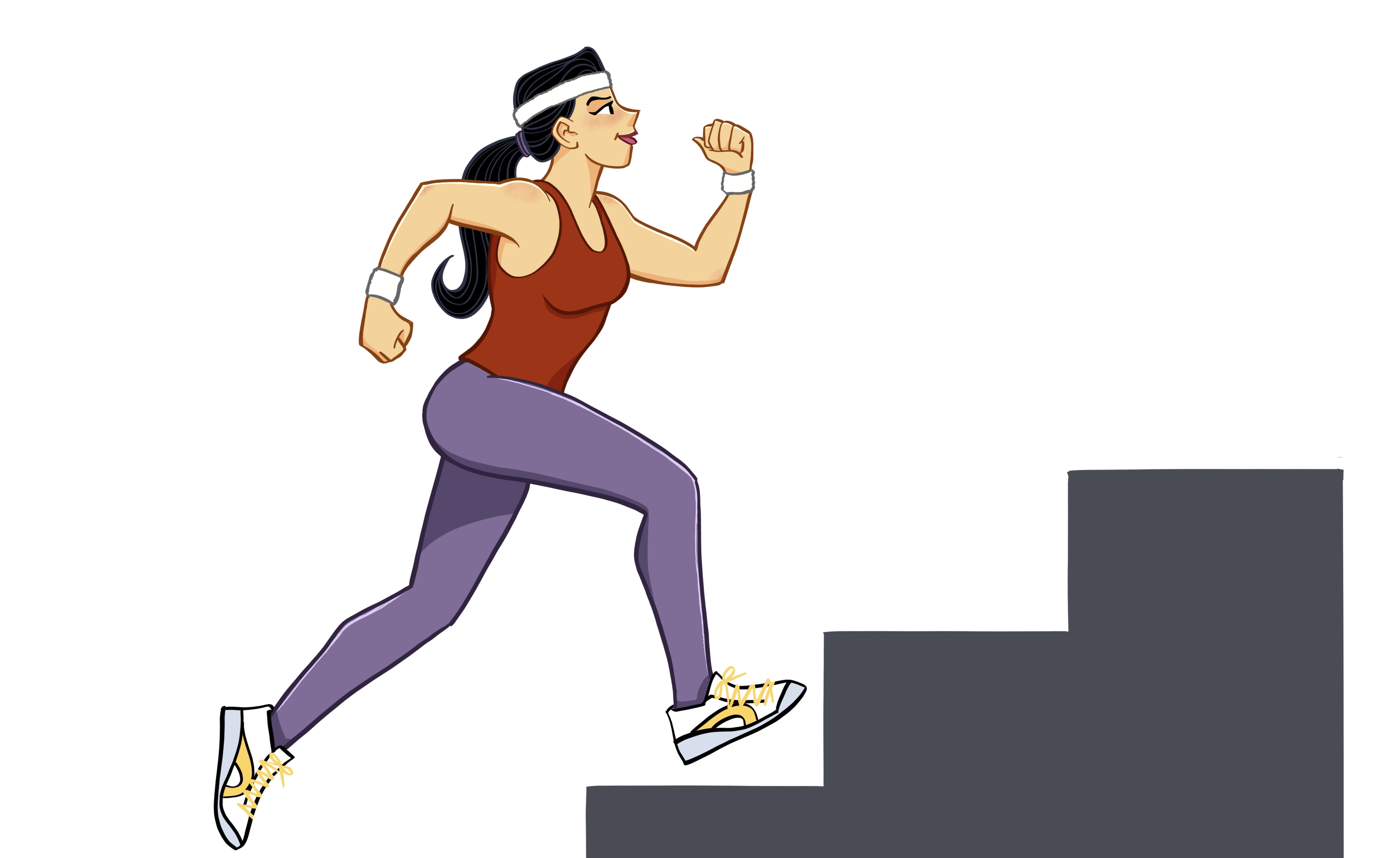
In my last post, I mentioned in passing that I considered myself an unathletic athlete. But the truth is, this hip recovery journey has helped me re-evaluate my unathletic status.

Just for kicks, I thought I’d ask my readers what they thought made someone athletic. The most common response was “you are definitely an athlete!” So thanks for that, for those of you who submitted that comment.

As far as being an athlete goes, some said that just engaging in physical activity or being on a sports team is sufficient. But you could still not be very good. Therefore, it is possible to be an unathletic athlete.

So what makes someone athletic?

Athletic skills were broken down into 2 categories: 1) physical qualities like being fast, fit, having hand-eye coordination, strength, agility, and balance; and 2) mental qualities like being fearless, competitive, and having excellent concentration.

Only 2 people made a distinction between being an athlete and being athletic, and their comments were the most thought-provoking.

One person said that an athlete is someone who contributes positively to their team, even if they compete individually. Being athletic, on the other hand, is someone who possesses qualities like the ones listed above. As a coach, she said that now she sees so many more ways that less athletic players can contribute to a team than she used to.

For me, this calls to mind Tony Bennett, UVA’s former head coach. He purposely picked less athletic players who were willing to earn their spot, work hard, and bought into his team philosophy. Even in his hey day no one thought he could ever win a national championship without great athletes. But he did.

Another person said that being athletic meant having the drive to challenge yourself to get better, a willingness to learn and to be coached, and a willingness to be a team player.

According to him, Jamie Tartt, who is seemingly the most athletic member of the fictional AFC Richmond soccer team on the show Ted Lasso, is not athletic because of his ego, his individualistic attitude, his lack of humility, and his unwillingness to be a team player. Although he learns how to be athletic. So it’s not just innate talent.

This definition also calls to mind Tony Bennett’s 5 pillars: 1) humility, 2) passion, 3) unity, 4) servanthood, and 5) thankfulness.

Consistent with those definitions, Carlos Alcaraz is known for his speed and shot arsenal, but also plays with tremendous joy. He even celebrates when his opponent hits a great shot. And that’s part of what makes him great.

Coco Gauff worked on her new serve with her new coach during the US Open—arguably the most important tournament for any American player. She could have played it safe and waited until the off season. Instead, she double-faulted her way through the tournament, sometimes through tears. And won a lot of matches, nonetheless.

I have to say, after this little experiment I feel way more athletic than I did before! And I was already feeling pretty athletic to begin with, because it turns out that having arthritis at such a young age is a result of being athletic.

My rate of recovery was also in the top 5% because I did the pre and post-op exercises they recommended. I always take pride in being a good student.

After 6 weeks post-surgery, I was already playing pickleball decently. And even though I air-balled 95% of the balls when I tried to hit on the ball machine 3 weeks ago, last weekend I was able to hit the majority of the balls with placement. And my serve was pretty good. So I must have some physical skills.

In terms of mental fortitude, I have always called upon my inner warrior in a losing battle, my inner Buddha when I’m feeling anxious, my inner Federer when I’m playing spastically, and my inner Nadal when I need relentless positivity.

As a team member, I try to get the best performance out of my partner. In fact, if they play well and I don’t, I still consider it a win. And if we go into a tiebreaker, I consider that a win. But some of my friends think that’s delusional. Although they secretly do it, too.

The research for this post was so interesting that you can expect another chance to participate soon!

I’m Ready to Write My Book!

Photo by Mike on Pexels.com

Last week on September 24 my blog turned 12. I have learned a lot about myself, relationships, human nature, love, and life through blogging. But that wasn’t the reason why I started my blog. If you’ve been reading it since I started it, then you already know that I started a blog because I wanted to write a book. But no one had ever read any of my writing, so I didn’t even know if I was any good at it.

Well, now I feel pretty confident that I can write in a way that sounds like me. I’m less focused on being good than I am on being authentic. And my posts are definitely authentic. Thank goodness you have to take a deep dive through hundreds of posts to know what all my flaws are. And for those of you who have done so, thank you for letting me know how helpful it was to hear about my flaws rather than judging me for them. I had no idea that I would be helping so many other people in the process of learning how to be vulnerable, as Brené Brown suggested in Daring Greatly.

Since my hip surgery, I have unconsciously been doing things that have been moving me closer to writing my book. First, instead of resting during that first week after surgery, I was asked to write an article for an online magazine on any topic of my choosing. So of course I chose mindfulness. And since my family was taking care of me at the time, I read the article to them to get feedback from people who knew nothing about mindfulness. My sister-in-law was especially helpful in terms of the questions she asked me about practicing mindfulness.

In the second week of recovery, because working full time 2 weeks after surgery was not enough productivity for my drill sergeant and inner critic, I also started making short videos of the epiphanies I was having about my recovery. All of the epiphanies are rooted in mindfulness and self-compassion, not surprisingly. I thought making videos might also be helpful in securing an actual assignment as a UGC creator.

The third thing that happened is by the 5th week of recovery I hit a wall. I had been working more than I did before hip surgery and was pushing myself on the weekends socially and physically. I realized that it was my blog anniversary last week and I was still struggling to practice self-care and set boundaries–2 of the major topics I blogged about. This epiphany made me step up my game and finally give myself permission to move to 4 days a week in January 2026. That way, I won’t have enough hours in the week to say yes to everyone.

Part of what enabled me to do this is that, despite taking a lot of days off and having a lot of medical bills, I was still able to pay all my bills without using any savings. I think I might have even added a little to savings. So I finally got God’s message: I don’t have to worry about money.

The final sign that I’m ready to write my book came while I was reading “The Let Them Theory.” So many of my clients have mentioned the book and said they found it helpful. And I can see why it’s helpful. It simplifies one of the basic tenets of mindfulness practice, which is called equanimity. The mantra for equanimity is “may we all accept things as they are.” This means 2 things: 1) accept the ups and downs of life, our moods, our successes and failures; and 2) accept that although we may want people to change, we can’t take responsibility for their behavior.

So “let them” eat junk food and watch TV all day. And “let me” learn to regulate my own emotions about losing them to a heart attack. I have recommended the book to many clients since reading it, and I recommend that you read it, too, if you find it hard to let go of controlling other people.

Although I liked the book for my clients, for me personally, I recognized that the Let Them theory is not really a theory. It’s more of a mantra. She admits in the book that she came up with the phrase and found it helpful. Then, after the fact, she found experts who could tell her why it’s helpful and mentioned them briefly in the book. As a psychologist, I prefer books that are rooted in theory and/or research, like The Anxious Generation, which I also highly recommend if you’re wondering why going on social media makes you feel like crap but you doom scroll for hours a day, anyway.

Plus, the goals she suggested in the book are often materialistic and superficial in nature. Which is fine, in that people can set whatever goals they want. I admit, when I first had the idea of writing a book, I wanted fame and fortune. I think that’s why I wasn’t ready to write it. Because those weren’t the appropriate goals for me. I’ve never prioritized making money. I often regret that I didn’t prioritize it, and because I didn’t, that’s why I’m always worried about money. But the truth is, I know what my purpose is. It’s to help people.

For me, mental health isn’t about being sick. People need therapy because life is hard and full of trauma and tragedy. We need help in identifying our values, having some kind of spiritual practice, prioritizing play and creativity, and learning how to love and be loved.

What I am meant to do in this lifetime is help more people find their purpose without having to see each of them individually in therapy. So once I start my 4 day work week, I will start writing my book, which will be called something like How to Practice Mindfulness in Everyday Life.

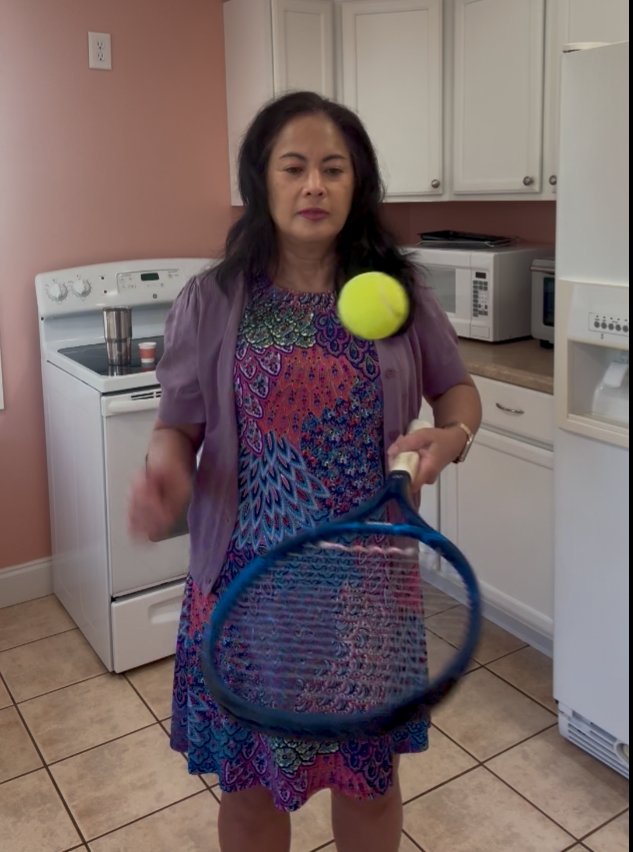
If you’re interested in watching the videos I’m making, I’m including the latest one below because it’s probably the one that best shows my personality–unatheltically athletic, determined, goofy, and relentlessly optimistic.

Oh, and feel free to follow my Instagram page as well, so that you’ll know when to buy the book!

Hip Recovery Update

For those loyal readers following my hip replacement surgery, I wanted to give you an update.

Despite not playing pickleball, not being able to go to barre classes with my family, and being far less social this summer, I was in fairly good spirits until a few weeks before surgery. I had to start asking for help from my family, and I hate asking for help. Or perhaps it would be more accurate to say that I don’t like asking for help because I’m sensitive to rejection. My inner critic is always telling me no one cares about me, so it’s easy for me to interpret people’s actions as not caring.

In addition, my surgery got moved up by a week. To most “normal” people, that would be good news. But I had been planning for 3 months to have the surgery on a particular day, and the change required me to cancel additional appointments, cancel my friend’s visit–which I had been looking forward to all summer–and stop my pain meds immediately. Not that they were helping. But still. It required a lot of change.

I was also dreading feeling more pain than I was already experiencing, since it had become excruciating. And I was determined to do my exercises every day until the surgery. I ended up skipping my exercises the night before surgery because I had to wake up super early and by that point it seemed irrelevant.

The good news is that I was super relaxed and joking with all the staff, nurses, and doctors while I waited for my surgery. I fell asleep before they even started the anesthesia because they gave me something for anxiety. And after I could feel my legs and they made me walk, I walked effortlessly. And because they gave me an epidural, I wasn’t in pain until about 12:30 am Saturday morning.

I have to admit, the next 2 days were pretty excruciating. Mainly because I was trying to be compliant and get up and walk every hour or 2 while I was awake, and it was torture getting on and off the couch. l only used the pain meds to sleep because I was so paranoid about addiction, so mainly I sucked it up. Luckily by Monday I was good.

This was also when I had my first PT session and he said I was in the top 5% of people in recovery. And you know how I like getting A’s. He said I didn’t need to use the walker anymore and that I would be able to drive later in the week, which is 3 weeks earlier than expected. And as he predicted, by Thursday night I moved back home and by Friday I was walking unassisted and drove 3 times.

My progress has continued to improve rapidly, but because my entire body had been compensating for my hip, I have become more aware of my back pain, which had been present before the surgery but I guess I didn’t register it. But since I dove into work the second week because of my irrational fear of not having money, I had a knot in my back that I had to try to massage and stretch out 5-6 times a day. I would have much preferred to take all the time I had set aside to be off and watch the U.S. Open but the drill sergeant was not having it.

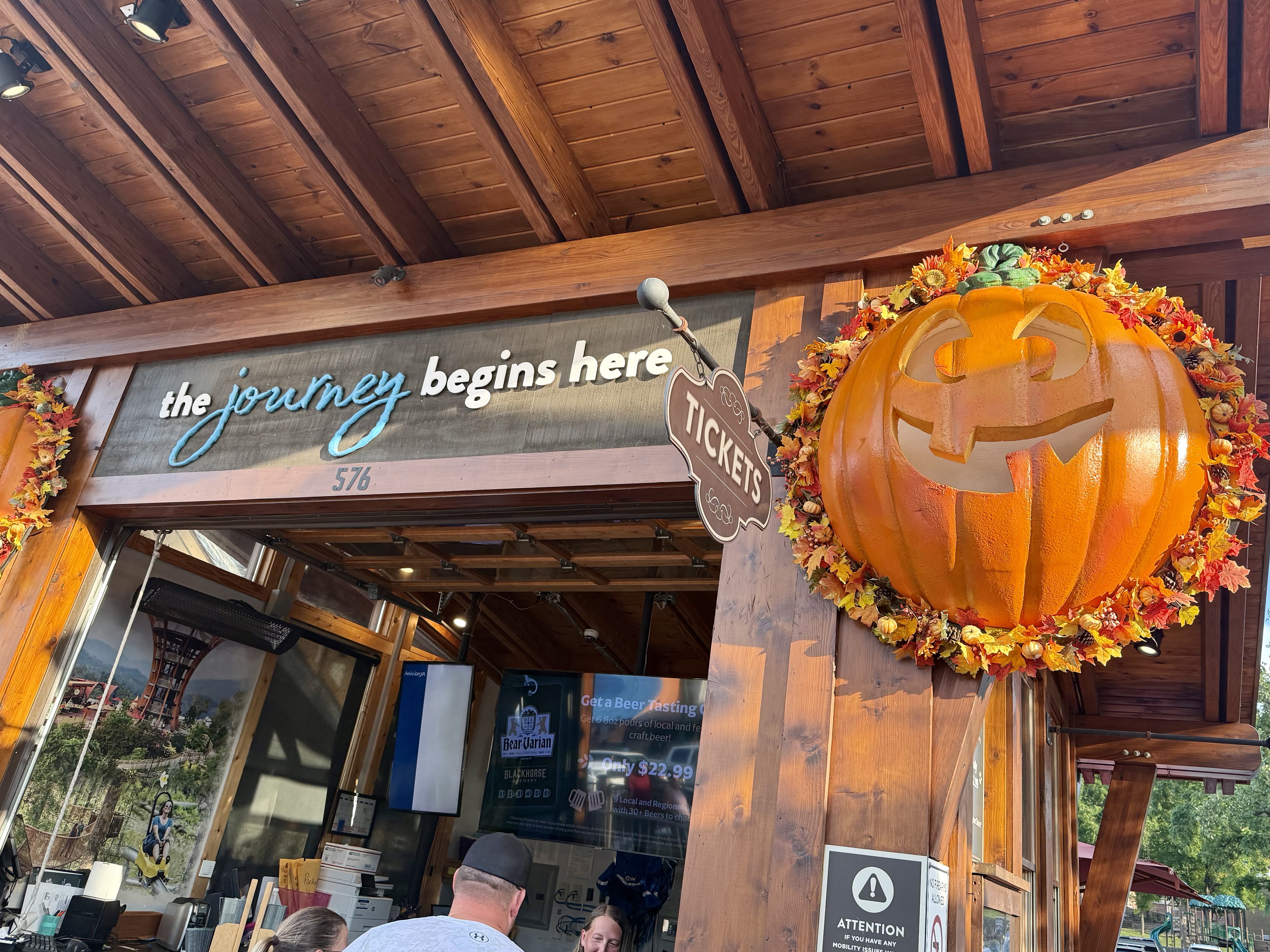
On a positive note, my friend did get to visit me over Labor Day weekend, which worked out better because I was able to walk and drive. We even went to Anakeesta, which ended up being a bust. But I made a video about it that I thought was funny, even if no one else on the trip did.

I’ve learned a lot of lessons from this experience, some of which I’ve shared on my Instagram page if you want to check them out. But I’ll share theme here, too.

  1. People care. As always, when I’m vulnerable, my inner critic is the loudest, but it is always wrong. My family took great care of me. My friend drove for me and gave me tons of positive reinforcement. My friends checked on me. Even my clients asked about me. It’s true that it is an illusion that we are separated from love. We are always connected.
  2. Pain tolerance is a mixed blessing. Had I gone to the orthopedist sooner, like 3 years ago when I had planned, perhaps I could have delayed my surgery. But if it weren’t for my determination to be as strong as possible and do the exercises for 3 months before my surgery, perhaps I wouldn’t have recovered so quickly.
  3. Patience is a virtue. I argued in a former blog post that it is not, but that’s because I was, and still am, impatient. But having to wait for hip surgery, and having to wait another 4 weeks to play is helping me practice, and I think I’m the better for it.
  4. I have much to be grateful for. It’s true that in any given moment, we can look at what we don’t have, or we can look at what we have. We can look at both, even, and perhaps that’s the better option. Rather than “bright-siding” it, which is dismissive of our pain, we acknowledge everything and then decide what in this moment we want to focus on. Right now, the thing that keeps me going is the hope that I can play tennis again, after 6 long years of not being able to. And even if I can’t, I want to be active and see my friends again.

I’m Taking Voice Lessons Again!

Photo by Pixabay on Pexels.com

So you know how much I love Karaoke. I am still singing, but my range is shot because of the damage done by my GERD (acid reflux) and some medications I was taking for 15 years (more on that in next post). Although the fundoplication surgery combined with compliance with my inhaler when exercising has really helped with my asthma and throwing up, my range hasn’t improved much.

I have debated on taking voice lessons over the past year because I see how much my friend Michelle and my niece Sadie have improved–and especially since I have an acting contract and can deduct the cost of the lessons–but I still thought it was a waste. It’s not like I sing for a living. My family and friends don’t care if I can’t hit the high notes when we sing Karaoke.

Luckily my family, friend, and niece wouldn’t let me give up. When I asked my brother if it made sense to get lessons if you had a broken instrument, he said that you can still improve the sound that you get from it. Michelle said that I just need to access my head voice for my high notes and that can be learned. And Sadie, the relentless optimist, said I won’t know unless I try. Plus she thinks I can be friends with Deanna, her voice instructor, and she’s always worried about me having friends because my closest friends are all in Roanoke.

So one day, I decided to research whether you can heal your vocal cords from GERD, and it turns out that you can with voice therapy. I figured voice therapy might not be that different from singing lessons, so I contacted Deanna and asked her if the two were similar. Not only did she say they were similar, but she also struggles with GERD and asthma and has learned to alter her techniques to accommodate these issues. So I was sold after that!

I’ve had 4 or 5 lessons now and already my range has improved, although the strength of my voice is still weak. The most amazing thing I’ve learned iis that the reason why I haven’t been able to sing high notes is that my tongue, vocal cords, throat, and larynx have been traumatized from all the throwing up. So essentially, I’m doing trauma therapy. I do exactly what I do with clients but with the focus on my tongue, jaw, neck, and throat. I am training these muscles to relax. Tell the muscles that they’re safe. We’re just releasing sound and air now.

The other thing that voice lessons have taught me is that I’m too hard on myself. I push until my body can’t take it anymore. A bunch of my loyal readers have told me that I’m too hard on myself but it’s hard to let myself off the hook. It’s hard to accept that I can go easy on myself, despite all the self-compassion practice. Although it’s much better than it was when I started this blog.

In lessons, I’m always trying to force the notes out rather than allow them to come out. Very similar to language used in mindfulness–allow, soften, create space, play. This also applies to why I need hip surgery. Because when my hip started hurting 10 years ago, it never occurred to me that I could have arthritis so I never went to the doctor. By the time I found out in January, I was already at the point that I needed hip replacement surgery.

Oh well. Old habits die hard so I’m trying to have compassion for myself. Pushing myself helped me to accomplish a lot of things, and it was the only tool I had in my tool box at that time. But practicing mindfulness and self-compassion have given me so many more tools, and taking voice lessons is helping me practice these tools in a different way.

And because I’ve also added the lovingkindness practice, I’ve finally discovered how to be happy in the present, in this moment. Even when I’m in pain, with little contact with anyone, and without being able to play pickleball.

The choice is ours to free ourselves from the obstacles we create in our minds. Luckily I have God, my family, my friend, Deanna, and myself to thank for this newfound freedom. And if there’s anything that you think is holding you back, it’s not too late for you to be free, either.

By the way, Deanna gives Zoom lessons and also teaches acting, so if you’re interested in working with her, let me know.

Birthday Reflections, Part 2

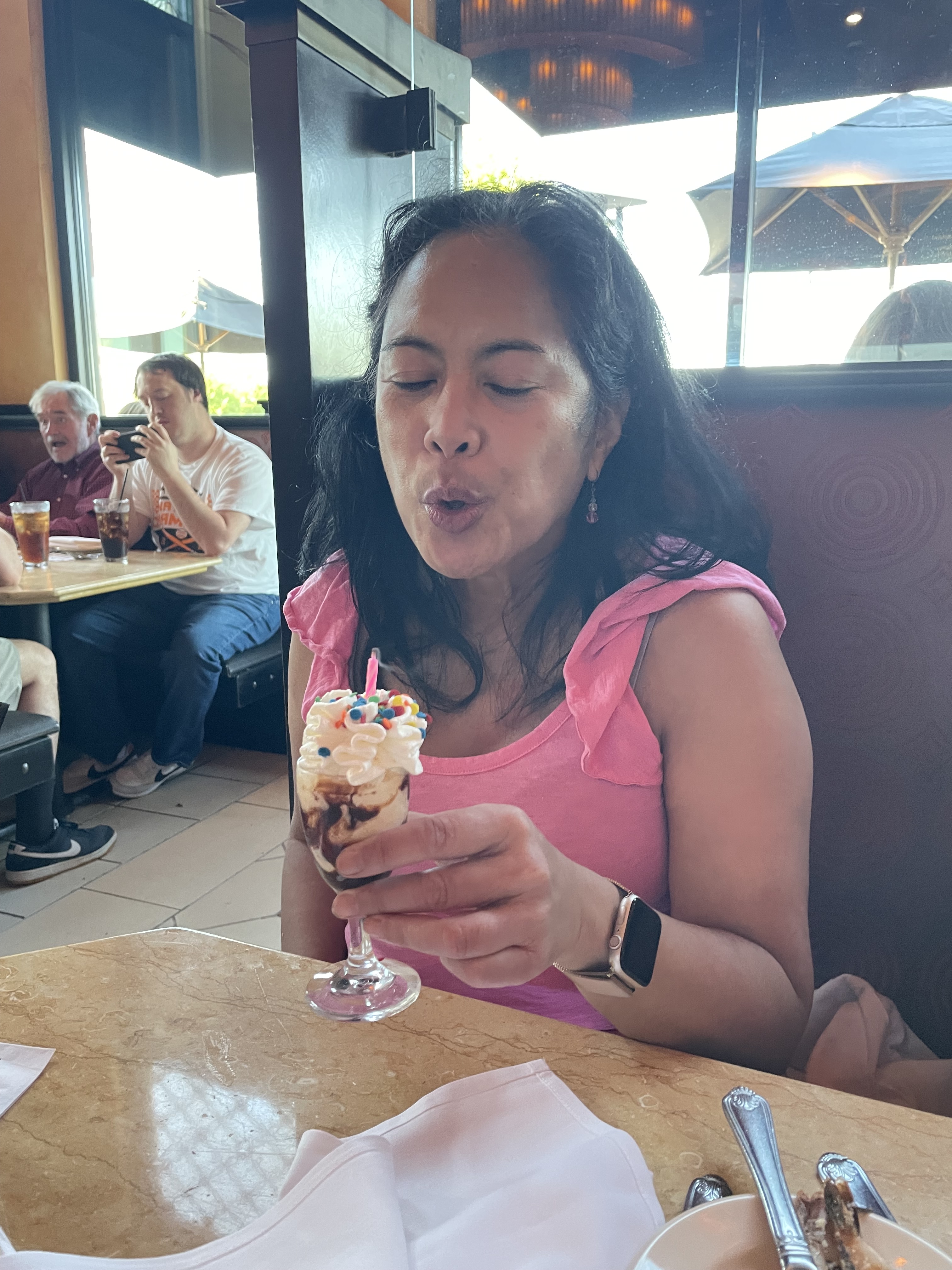
You know how people ask you how you feel to be a year older and you usually say the same? Well this year I felt great! And I haven’t felt great in a long time. Which is why I haven’t written a blog post about myself for a few years. So I figured it was time for an update.

It’s been almost 4 years since I’ve moved, and it has taken a long time for me to feel like myself again. Like, in the past few months I had gone through a long depressive episode that was the worst I had ever experienced. And I was already feeling pretty bad, since I moved because I was under so much stress I thought I was going to die before I got to retirement age. So to think that things were going to get better and instead have them get worse for 2-3 years really made me question my relentless optimism.

But I still pushed myself to make a life here–without friends who I considered family, without tennis, which was my life, without financial security, and without a partner. I did lots of things out of my comfort zone. I went to Meetups. I forced myself to go to fitness classes. I started playing pickleball even though I sucked at it. I went on dating apps even though I hated it.

The only things that were successful were pickleball and dating apps. I have made some good friends now, and I met someone who I’m still seeing. He’s a lot younger than me, which was hard to reconcile at first, but now it actually helps me feel younger. In my first birthday blog post I said that I didn’t feel that mature, and I still kinda don’t. Maybe it’s because I am so in touch with my inner child. I don’t know if the relationship is going to last, but I’m becoming more comfortable with not knowing and just accepting what is.

I’m also trying a lot of new things this year, which is also helping me feel more joyful. I’m into Lego flower sets, in addition to my other hobbies. I signed an acting contract with a local talent agency in December and last month I signed a contract as a UGC creator, despite not having any acting experience or not knowing what a UGC creator was. So it’s been an interesting journey. I’m not expecting to make a lot of money, but it gives me other ways to express myself and be creative. And just to see what happens without any expectations.

For my birthday, one good friend came down to visit me, another good friend sent me a meal, the guy I’m seeing came down to surprise me, and I celebrated dinner with my family and with one of my pickleball groups. So I ate well for several days. And all of the Happy Birthday wishes really moved me. I feel so grateful that people took out time to wish me happy birthday. Sometimes several times. Although that might have been an accident. I do that, too. Now I understand what senior moments are. Or what I like to call brain farts.

The other evidence that I’m getting older is that I’m scheduled for hip replacement surgery on August 21. I’ve obviously had arthritis for decades, and I knew my hip was hurting, but I didn’t realize how advanced it was until I fell while playing pickleball back in January. We were going to Disney World in February and I was going to have to walk 20,000 steps a day, so I decided to go to an orthopedic doctor. For some reason, it never occurred to me that the pain could be arthritis. Even more shocking was that it was so advanced that he didn’t think the injection would help and that I would need hip surgery soon. I didn’t believe him but he was right. The first injection lasted just short of 3 months, and the 2nd injection didn’t work at all.

Despite these telltale signs of aging, I’m still in pretty good spirits about it. The prognosis looks good. I should be able to return to pickleball pretty quickly. And I have people to look after me while I’m healing. Financial insecurity and not having anyone to rely on have been 2 of the biggest anxieties of late. It turns out I don’t have to worry about either. For now.

But that is another place where I’m trying to practice mindfulness and be in the moment. My favorite quote is that mindfulness is the process of constantly letting go. Maybe one of the reasons I started practicing is because I knew it was going to be hard to let go of all of the things you lose in life. And to accept all of the things that I had already lost. Plus I wanted to be aware of all of the things I still have to be thankful for. And since I’ve started practicing lovingkindness as well, I’m better able to feel other people’s love rather than question it, worry about losing it, or be anxious about not being loved at all.

I also mentioned in my first birthday blog post that having people read my blog was a gift that I had not anticipated. People would tell me how much it meant to them, when I was just sharing the things that made me feel so flawed. I had no idea how great that would feel. Now I only write occasionally, but people still read my blog, even though I do nothing to promote it anymore. And I’m thankful for that, too.

So brain farts and hip replacement surgery vs. all of the love and new experiences I have in my life. I’ll take that ratio. And speaking of numbers, 56 is divisible by 2 and 7, and is therefore not a prime number. If you read my first birthday post, you know how I feel about prime numbers.

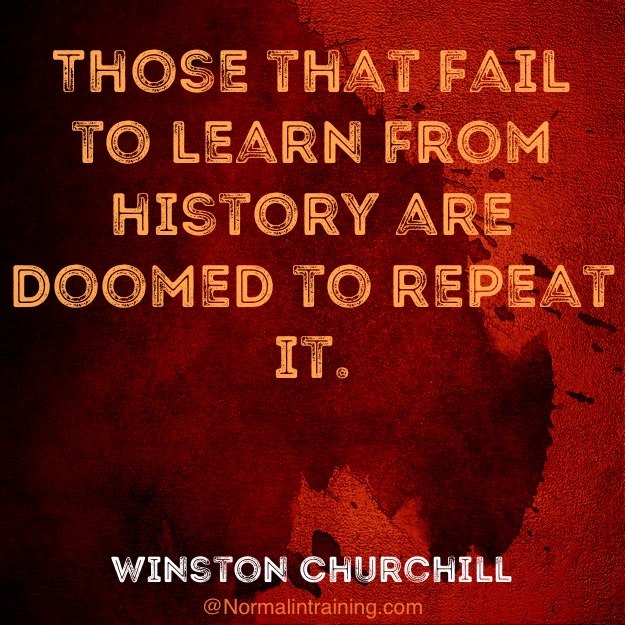
Can We Really Learn From the Past?

We are facing a difficult time in American history. A time that is eerily similar to previous periods of history where lots of bad things happened–in our country and around the world. People often say that we study history so that we can avoid repeating it. But I’m not sure that’s a given. Take the Bible, for example. In Genesis we learn early on about a sibling rivalry that turned murderous. And when God asked Cain where his brother was, he asked sarcastiically if he was his brother’s keeper. So murdering of family members, denial, lies, and gaslighting have been around for the entire existence of the human race.

Moreover, when Jesus was preaching about how to enter the kingdom of God, he did not primarily use history lessons from the Old Testament as teaching tools. He didn’t have a parable on the Ten Commandments that talked about how not killing others came from the first murder with Cain slaying his brother Abel. In fact, he primarily utilized parables about made-up people like the Prodigal Son, the Good Samaritan, and that poor guy who made a donation even though he had nothing, and therefore will more likely make it to the kingdom of God than some rich dude who donates a lot of money.

For those of you who don’t take the Bible literally or don’t see it as a historical text to be studied in this manner, I’ll use some examples from history. While it’s true that I’m no historian, I read a lot of historical fiction, and I’ve learned a lot more about history from books than I ever did in history classes. And in piecing together all the information I’ve learned from different books, it has become clear to me that war never ends. There is rarely a period of peace before we have to worry about another enemy who we eventually end up fighting.

For example, I just finished reading The Huntress, by Kate Quinn, which I highly recommend. This is not an important detail of the story, so just as a heads up, I’m not ruining anything for you. I learned from the book that after WWII, the US was not particularly concerned about bringing Nazis to justice. That was in the past, and we should just forget about it and move on. In addition, I remember from the movie Oppenheimer that even before we got involved in the war, we were much more worried about Communists. And as soon as WWII was over, we went back to snuffing out Communists. And this fear of Communism eventually led to another war, the Vietnam War, among other related wars around the world, without a whole lot of peace resulting from the war that was supposed to end all wars.

As a psychologist, I do feel confident in my observations about whether knowing about our personal history can help us from repeating our past, both from a personal perspective and from being a licensed therapist for 25 years. Spoiler alert: the short answer is yes, it’s possible, but it’s not easy, and in my opinion, not common.

A lot of psychologists have discredited Freud, the grandfather of talk therapy, but he actually made some fairly astute observations, in addition to his wacky ones. One of the astute observations was the idea of the repetition compulsion. This term refers to a pattern of behavior in which we continue to choose partners who are similar to someone from our past where the relationship didn’t go so well. Usually this person is a parent, since they are the first people we have a meaningful relationship with. Often this repetition is unconscious, and our goal, unbeknownst to us, is to have a similar relationship to the one from our past and to have it turn out better than it did the first time. We believe this will give us some sense of mastery, some assurance that it wasn’t our fault, a sense of agency, and hope that that not everyone who is broken (our parent, ourselves) is doomed to a miserable existence. Unfortunately, usually what happens in a repetition compulsion is that things turn out exactly as they did in the past, and we end up getting hurt over and over again in the exact same way.

One of the goals of therapy is to help the person see that they are making the same mistake over and over again in their choice of partner so that they can learn to choose something different and have a chance of a different outcome. But this is not easy to do. People like Cain, who hurt others and use denial, lies, and gaslighting to blame others for their mistakes, don’t usually go to therapy, and when they’re forced to go they don’t usually benefit from therapy. They don’t learn why they were so jealous in the first place, and what they can do besides murdering people when jealousy arises. So the violence usually gets repeated.

Even with the people who are sincere about wanting to change, to learn from their mistakes, change happens very slowly. Take me and my blog, for example. If you’ve been reading it all these years, then you know that I keep making the same mistakes over again, despite practicing, being in therapy, being a therapist, and writing about my experiences. Have things gotten better? Yes. I’m way better off than before I started therapy, my blog, my job, and my mindfulness practice. But it has taken a long time. And I’m still in therapy. And I still keep making the same mistakes.

Changing history is akin to making a big life change, like changing your eating and exercise habits because you’ve had a heart attack. It’s a lifelong practice that you have to work on regularly. The more effort you put in, the sooner you see results, but it will still take a while. And as soon as you stop putting in effort, you lose all your progress and have to start over again.

So can we learn from our mistakes and keep from repeating history? Yes, but it will require hard work. And we all have to be on board, because like in the military or as a member of a sports team, one person’s mistake makes the whole group suffer.

Going back to the Bible, the best way to start is by taking Jesus’s non-historical advice: rather than looking at the speck in your brother’s eye, pay attention to the log in your own eye. In other words, spend less time worrying about what’s wrong with what other people are doing and think about how you can free yourself from your own mistakes.

P.S. For a closer read on the sibling rivalry between Cain and Abel, check out John Steinbeck’s East of Eden.

Lovingkindness in Times of Need

Photo by GEORGE DESIPRIS on Pexels.com

Today in our group lovingkindness meditation we made sure to include all the people affected by Hurricane Helene, from the victims to the rescue workers and volunteers. To those of you who asked about my safety, I appreciate your concern. Luckily, Knoxville was not affected, but Sadie’s college, Furman, is in Greenville, SC. Helene is the worst hurricane to ever hit South Carolina. She was out of school for over a week, and as many of you know a good portion of I-40 was washed out, as is the city of Asheville in general. It will be inconvenient for the next several years to pick her up and take her back, but that’s a small price to pay compared to those who have lost their homes, their cities, and their loved ones in the 6 states that have been affected by Helene.

I’ve heard lots of stories about people helping others in obscure places where help had not yet arrived. They were checking on one another, sharing food and resources, even though everything was scarce and their survival was not guaranteed. It seems that times of disaster often bring out compassion, tangible aid, donations, volunteers, as well as prayers and gifts of lovingkindness. I’m always moved to hear these stories. It gives me hope that maybe somehow we can cross the divide and care about other people, despite their differences from ourselves.

During this time I’ve also been reading Braiding Sweetgrass, a series of anecdotes written by Robin Wall Kimmerer. She is a Native American poet with a Ph.D. in Botany and so has studied the earth as an object of scientific investigation as well as a mother that provides for all the living creatures on earth. If you check it out, I recommend the audio book because she is the narrator. Not surprisingly, her story is filled with sexism, racism, and dismissiveness for thinking that there can be a reciprocal loving relationship between things like plants, bodies of water, trees, fish, and people. Since industrialization our relationship with nature has been anything but that. Nature’s gifts are something we feel we can take, as much as we want, without worrying about what the consequences will be when these gifts run dry.

I found out about this book because someone in our mediation group recommended it to me. There is a point during the lovingkindness meditation in which we send our gifts to all sentient beings. Things like, may they be safe. May they be happy. May they be healthy. May they live with ease. Before I practiced regularly, I defined sentient beings as all the people on earth that we didn’t individually mention. But the more I mediate, the more my definition of sentient beings grows. I realized that animals are sentient beings. If you believe that there is life on other planets in the universe, then extraterrestrials are included as well. And I thought maybe plants could feel. Possibly. After reading Braiding Sweetgrass, now I know that not only can plants feel, but they have their own language. They suffer and they thrive depending on how well they are cared for. Just like us. So now I extend my gifts of lovingkindness to Mother Earth as well.

To be in the midst of the damage of Helene and reading this book at the same time, I realized that in times of need, the angel on our shoulder is more likely to take over and we give without thinking about the categories that have become so polarized in the last 8 years. We don’t care if they are from the North or South, rural or urban, Democrats or Republicans. We remember that we are all people, more alike than different, all worth helping and saving, comforting and caring for.

But why does it take a disaster to bring out this side of us? Wouldn’t it be nice if this is the mindset we cultivated all the time? Instead of seeing the other as the enemy, in competition for goods and resources, some seeming more human than others, better or worse than others. To me, it doesn’t matter which religion you belong to, or if you just think of yourself as being spiritual in general. But however you define your spirituality, I hope that it comes with a practice.

This was my goal in creating this mediation group. I don’t know what the specific religious beliefs are of most of the people in the group, but I know that if you consider yourself a spiritual being then love must be central to what you believe in. So in this time of crisis, I hope you do practice loving in some way. And in times of plenty, I hope you do the same. I know that in this year of practicing lovingkindness more regularly, I hear a call to reach out and help more often, and my commitment is to say yes to every call. And like I said in my last post, the love always comes back to you.

If you’d like to join the meditation group, email me at cbarongan@gmail.com and I’ll put you on the mailing list.

Loneliness and Lovingkindness

A few weeks ago I went with Sadie’s parents to drop her off to college. I was honored to be invited to this rite of passage because I’ve been babysitting Sadie since she was 3. If you’ve been following my blog, then you know that Sadie is more than a niece to me. She’s the twin sister to my inner child Sophie. When she was younger she always wanted to pretend we were sisters. I was more than happy to be the age she picked for me, which was usually something like 16 while she was 7. Still a large age gap between sisters but in reality I’m older than her parents.

Because she is an empath, emotionally intelligent, and wise beyond her years, she worries about my mental health. She knows that I feel lonely when their family goes on vacation so she’ll often call me while they’re in France or Italy or wherever they are. I feel guilty that she can feel it and tries to make me feel better, but that is definitely one of the reasons why we are so similar, since I obviously do the same thing, being a therapist and all.

My dad got depressed when I went to college, and because I am also an empath, I got depressed, too, although I didn’t realize that was the reason at the time. In some ways, he never recovered. I was the first of 4, so the nest kept getting emptier and emptier year after year. My dad coped with his loneliness by living in a state of mania. Ironically, in the end this has resulted in him being completely cut off from the family. But in his fantasies he wins the lottery and he buys a hotel and we all leave our jobs and work at the hotel together, running the family business. Strange how our coping mechanisms for loneliness end up leaving us feeling even lonelier than we were before.

To make matters worse, I’ve been seeing someone for the past few months who often leaves me feeling lonely because he’s long distance and doesn’t need a lot of contact to feel connected. Or perhaps more accurately, he doesn’t want to feel lonely so he doesn’t let anyone get too close. I often wonder if this is some repetition of my own trauma to be with someone who makes me feel lonely. I talk to my therapist about it a lot, and she and I both think it’s me. I read a book about parentified children that captured my loneliness well. When you’ve had to be the one to tend to other people’s feelings and haven’t had someone care about your feelings, you always feel lonely, like you have to it all on your own.

I think there’s something about the immigrant experience that heightens the feeling of loneliness because you are so far away from your family and you don’t go back often. It leads to intergenerational trauma for the descendants of immigrants. Whether parents tell you or not, you carry the struggle with how to feel connected to a place with people who are different from you, who may not even accept you.

My dad’s first depression was when he came to the U.S. for residency in medicine. He wanted to go back to the Philippines but Marcos had declared martial law so going home wasn’t an option. I think he married quickly and had children as an antidote to his loneliness. In fact, my younger brother and I were both born while my parents were still in residency, which is pretty rare.

So far it hasn’t been too bad since Sadie left, thanks to cell phones. We’ve talked several times, we text. Also, because I’ve been practicing lovingkindness regularly and in my weekly meditation, I am constantly reminded that we are always connected, and that loneliness is an illusion. Just like my not feeling loved is an illusion. When I first started meditating, I could feel other people’s feelings more clearly–new clients, friends I hadn’t seen. Several months ago I made a deal with a client that we would practice lovingkindness as a way to heal our country, and since then I have felt other people’s feelings even more intensely. As a result, I started wondering about how a particular client was doing who I was no longer seeing. I reached out to her and found out that she was not doing well and was feeling lonely so we start meeting again. It is because of her that I started the lovingkindness group and have started blogging again. In fact, she gives me more homework than I give her. So although I reached out to her because I felt her loneliness, it turns out that she has helped me feel more connected, as well.

Lovingkindness is like a boomerang–it always comes back to you. So now when I’m feeling lonely, I send lovingkindness to the person I’m missing and ask them how they’re doing. Most of the time I feel connected again.

If you’d like to join the weekly meditation, send me an email at cbarongan@gmail.com and I’ll put you on the list. There’s no cost, no obligation to attend, or even to stay for the full meditation. I’ll also send a recording of the meditation for that week so that you can listen to it on your own time if you prefer. Hope to see you there. It truly is an antidote to loneliness.

Lovingkindness Experiment: Month 1

Since my announcement that I am offering a group lovingkindness meditation once a week to anyone who is interested, I’ve had 5 meditation sessions so far with varying numbers of people attending. I wasn’t really sure what to expect, and so far the group meditation has been small in number but powerful in impact. Here are some of the things I’ve witnessed so far:

  1. It really works. I’ve been doing the lovingkindness meditation on my own for several months and I can already tell it’s changing me. Like, one day I was lost in this huge medical complex and couldn’t figure out what building I was supposed to go to for my appointment. When I parked and got out of my car, after driving the entire perimeter of the complex, I looked around and thought, wow, so many people hurting in this small space. So I decided to send out lovingkindness to everyone in the area. It was just a spur or the moment thing. I had even forgotten that I had done it until much letter. But lately, I’ve had the urge to do that sort of thing.
  2. It’s even more powerful with others. I know Jesus said something like “when 2 or more are gathered together in my name…” something happens. Maybe it’s something like your prayers will be answered, but I don’t necessarily believe that all prayers are answered. Like God is a genie in a bottle or something. But I think when people come together for loving purposes, the love is magnified. A synergistic effect. Like mixing benzos with alcohol. But don’t do that. That’s bad for you. Come to the meditation instead and see what it’s like to feel the power of love magnified.
  3. We can ease our own pain. I decided on a whim that rather than just focusing on the lovingkindness I would start with a breathing meditation and body scan just to give people the feel of what a full meditation is like. After the first session, the people who had attended that session acknowledged that they had all been experiencing chronic pain but by the end of the meditation it was gone. Not forever, of course. But that’s why it’s called a practice. Check in with yourself every now and then. Send comfort to where you feel pain. It will make you feel better.
  4. It’s getting easier to “love my enemy.” This step is one of the hardest parts of the practice–sending lovingkindness to someone who you find difficult to love. Perhaps because they’ve hurt you, someone you care about, or people in general. But people who hurt are hurting, and if they weren’t hurting they might be lifting others up instead, as this group has committed to do. Sometimes you have to send them different gifts. Maybe things like, may they feel compassion. May they be self-aware. May they feel their feelings. These are, after all, the things that help people in therapy.
  5. I will show up for myself. In my first post, I said that even if only one person shows up, I will meditate with them. It has never been the case yet that no one has shown up, but if that happens, I’ve decided that I’m going to do the lovingkindness meditation anyway and send the recording out to people on the list. Maybe no one will listen, but maybe someone will and it will make a difference. And ultimately, the practice is for me first and foremost. So I will show up for myself every week.

I’m continuing to do the weekly lovingkindness meditation, so if you were toying with the idea of joining before, you can still do so and see for yourself if it has any benefits for you. There are no obligations to stay the whole session, to speak, or to continue to participate after signing up. Just email me at cbarongan@gmail.com and let me know that you’d like the information.

Hope to see you there!